
 Worksheets
Review Cells, Characteristics of life, Genetics, Evolution
Total questions: 99
Worksheet time: 2hrs 30mins
Name
Class
Date
1.

Which part of the cell is often called "the brain of the cell"?
a)
nuclear membrane
b)
endoplasmic reticulum
c)
nucleus
d)
mitochondria
2.
What is found in both plant and animal cells but is much larger in plant cells?
a)
Nucleus
b)
Mitochondria
c)
Chloroplast
d)
Vacuole
3.
Where are proteins made?
a)
Golgi body
b)
Mitoichondria
c)
Chromosomes
d)
Ribosomes
4.
I am the jelly like substance found between the cell membrane and nucleus. What am I?
a)
Cytoplasm
b)
Ribosomes
c)
E.R.
5.
When you step out into the cold, your body shivers in order to keep its temperature at 98.6F.
a)
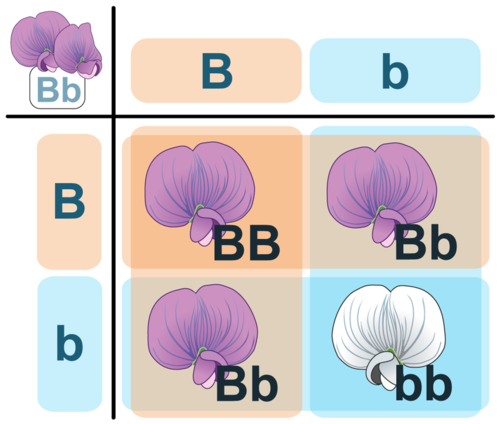
All living things use energy
b)
All living things contain cells
c)
All living things maintain homeostasis
d)
All living things grow
6.
Green plants produce their own food through the process of photosynthesis.
a)
All living things use energy
b)
All living things contain cells
c)
All living things maintain homeostasis
d)
All living things grow
7.
A baby song bird hatches from its egg with both parent songbirds watching.
a)
All living things reproduce
b)
All living things maintain homeostasis
c)
All living things use energy
d)
All living things grow
8.
A pill bug (roly poly) eats a carrot.
a)
All living things contain cells
b)
All living things use energy
c)
All living things maintain homeostasis
d)
All living things grow
9.
A camel has eyelashes that work to keep the dust and sand out of its eyes.
a)
All living things adapt to their environment
b)
All living things grow
c)
All living things have cells
d)
All living things use energy
10.
A caterpillar hibernates in a cocoon and emerges as a butterfly.
a)
All living things adapt to their environment
b)
All living things use energy
c)
All living things respond to their environment
d)
All living things grow
11.
An amoeba is a unicellular organism. Which characteristic of life is this?
a)
All living things use energy
b)
All living things contain cells
c)
All living things respond to their environment
d)
All living things grow
12.
Over three years, Tim's height has increased from 5'4" to 5'11".
a)
All living things contain cells
b)
All living things maintain homeostasis
c)
All living things use energy
d)
All living things grow
13.
A cat is an organism that has a respiratory system that contains lungs and a trachea.
a)
All living things contain cells
b)
All living things maintain homeostasis
c)
All living things have different levels of organization
d)
All living things grow
14.
An adult hydra is producing its offspring through budding.
a)
All living things use energy
b)
All living things reproduce
c)
All living things contain cells
d)
All living things grow
15.
The roots of a plant grow towards a source of ground water.
a)
All living things use energy
b)
All living things reproduce
c)
All living things respond to their environment
d)
All living things grow
16.
Over many hundreds of years, a population of rabbits living in the woods adapts to its surrounding with brown fur.
a)
All living things adapt to their environment
b)
All living things grow
c)
All living things use energy
d)
All living things have cells
17.
YOU are a multi-celled organism but an amoeba is a single celled organism.
a)
All living things have cells
b)
All living things grow
c)
All living things use energy
d)
All living things respond to their environment
18.

Non-Living or Living?
a)
Living
b)
Non-Living
19.
Unicellular is
a)
1 cell
b)
2 cells
c)
many cells
20.
multicellular is
a)
1 cell
b)
0 cells
c)
many cells
21.
Reproduction that involves 2 parents is called
a)
asexual
b)
spontaneous generation
c)
sexual
d)
conduction
22.
is a simple cell that does not have a nucleus or membrane bound organelles
a)
autotroph
b)
heterotroph
c)
eukaryote
d)
prokaryote
23.
Organelle responsible for photosynthesis
a)
Mitochondria
b)
Chloroplast
c)
Rough E. R.
d)
Vacuole
24.
Which organelle creates proteins?
a)
Vacuole
b)
Cell Wall
c)
Cytoplasm
d)
Ribosome
25.
Which organelle contains RNA?
a)
Nucleus
b)
Cytoplasm
c)
Nucleolus
d)
Cell Membrane
26.
This cell structure, supports and protects the cell.
a)
Cell Wall
b)
Cell Membrane
c)
Cytoplasm
d)
Cell organelles
27.
What do both plant and animal cells have?
a)
Chloroplast
b)
Semipermeable membrane
c)
Cell Wall
d)
Photosynthesis
28.
The man who studied genetics and came up with genetics is
a)
Watson
b)
Crick
c)
Mendel
d)
Darwin
29.

Genotype refers to the ...
a)
physical expression of the genes
b)
the possible combination of alleles in a gene
c)
whether an allele is dominant or recessive
d)
how an organism will appear
30.

Squidward has light blue skin, and his genotype for this trait is Bb. Would Squidward be considered a purebred or hybrid for light blue skin?
a)
Purebred
b)
Hybrid
31.

An offspring will receive how many alleles from each parent to determine a specific trait?
a)
one
b)
two
c)
three
d)
five
32.
Which of the following is a phenotype?
a)
BB
b)
Bb
c)
bb
d)
Blue eyes
33.
What is a phenotype
a)
The genetic make up (code)
b)
The physical trait
34.
the passing of genetic traits from parent to offspring.
a)
heredity
b)
trait
c)
gene
d)
allele
35.
having two of the same genes for the trait (sometimes called purebred).
a)
homozygous
b)
hetrozygous
c)
protein
d)
chromosome
36.
having two different genes for a trait (sometimes called hybrid).
a)
protein
b)
homozygous
c)
heterozygous
d)
genotype
37.
Magda is a tall, 11 year old drummer. She has a scar on her right cheek. She is good at swimming. Which of her traits did Magda most likely inherit?
a)
height
b)
the scar
c)
ability to swim
d)
ability to play drums
38.
G = green, g = yellow
The genotype for a yellow plant is...
The genotype for a yellow plant is...
a)
GG
b)
Gg
c)
gg
d)
all of the choices result in yellow
39.
An allele whose trait only shows up when no dominant allele is present.
a)
hidden allele
b)
dominant allele
c)
recessive allele
d)
present allele
40.
Two heterozygous (Tt) tall pea plants are crossed. Which describes their offspring?
a)
50% tall and 50% short
b)
75%tall and 25% short
c)
100%short
41.
What is the definition of phenotype?
a)
The physical expression of a trait
b)
The genetic combination of alleles
c)
A gene on the DNA strand
42.
What is the definition of genotype?
a)
The physical expression of a trait
b)
The genetic combination of alleles
c)
the genes on a DNA strand
43.
One form of a gene is called_______________
a)
a DNA
b)
a Phenotype
c)
a trait
d)
an allele
44.
Where, in the eukaryotic cell, is DNA located?
a)
ribosomes
b)
nucleus
c)
E.R.
d)
cytoplasm
45.
Which of the following will only show if two alleles are present?
a)
a dominant trait
b)
a recessive trait
46.
Which of the following genotypes would be considered heterozygous?
a)
BB
b)
gg
c)
Ff
d)
TT
47.
Which of the following is a phenotype?
a)
Bb
b)
Black fur
48.

What is the percentage of offspring that have green pods?
a)
100%
b)
75%
c)
50%
d)
25%
49.

What is the phenotype of the heterozygous parent in the punnett square?
a)
green
b)
yellow
c)
hybrid
d)
purebred
50.
In this punnett square, which is the dominant trait?
The B stands for bud.
The B stands for bud.
a)
purple flower bud
b)
white flower bud
c)
dominant
d)
recessive
51.
An allele whose trait always shows up in the organism when the allele is present.
a)
recessive allele
b)
dominant allele
c)
hidden allele
d)
present allele
52.
An allele whose trait only shows up when no dominant allele is present.
a)
hidden allele
b)
dominant allele
c)
recessive allele
d)
present allele
53.
genetic makeup
a)
phenotype
b)
genotype
c)
heterzygous
d)
allele
54.
having two of the same genes for the trait (sometimes called purebred).
a)
homozygous
b)
hetrozygous
c)
protein
d)
chromosome
55.
father of genetics
a)
Gregor Mendel
b)
James Watson
c)
Dr. Robbins
d)
Francis Crick
56.

If T=Tall & t=short, what is the genotypic ratio?
a)
1:3
b)
3:1
c)
1:2:1
d)
2:2
57.

A heterozygous yellow pea plant's genotype would be:
a)
YY
b)
yy
c)
Yy
d)
Yg
58.

What phase is shown in the picture?
a)
anaphase 1
b)
anaphase 2
c)
metaphase 1
d)
telophase 1
59.

Identify the stage of mitosis.
a)
interphase
b)
prophase
c)
metaphase
d)
anaphase
60.

Identify the stage of mitosis.
a)
interphase
b)
prophase
c)
anaphase
d)
cytokinesis
61.

Identify the stage.
a)
interphase
b)
metaphase
c)
anaphase
d)
telophase
62.

Identify the stage of mitosis.
a)
interphase
b)
prophase
c)
anaphase
d)
cytokinesis
63.

Fruit fly body cells have 8 chromosomes. After mitosis, you would expect a resulting fruit fly daughter cell to have ...
a)
16 chromosomes.
b)
46 chromosomes.
c)
8 chromosomes.
d)
4 chromosomes.
64.

Structure (b) is a ____.
a)
chromosome
b)
chromatid
c)
centromere
65.

Structure (a) is a ____.
a)
chromosome
b)
chromatid
c)
centromere
66.

Structure (c) is a ____.
a)
chromosome
b)
chromatid
c)
centromere
67.

Name the phase:
a)
Anaphase
b)
Telophase
c)
Metaphase
d)
Prophase
68.

Name the phase:
a)
Anaphase
b)
Telophase
c)
Metaphase
d)
Prophase
69.

Name the phase:
a)
Prophase
b)
Metaphase
c)
Anaphase
d)
Telophase
70.

Name the phase:
a)
Prophase
b)
Metaphase
c)
Anaphase
d)
Telophase
71.

Name the phase:
a)
Prophase
b)
Metaphase
c)
Anaphase
d)
Telophase
72.

Name the phase:
a)
Prophase
b)
Metaphase
c)
Anaphase
d)
Telophase
73.

The stages of mitosis in order
a)
Metaphase, Anaphase, Prophase, Telophase
b)
Prophase, Anaphase, Metaphase, Telophase
c)
Prophase, Metaphase, Anaphase, Telophase
d)
Anaphase, Prophase, Telophase, Metaphase
74.
The cell spends most of it's life in ________________.
a)
mitosis
b)
cytokinesis
c)
Interphase
d)
None of the above
75.
Interphase has 3 stages; G1, S, and G2. What happens during synthesis?
a)
Cells grow and carry out normal functions
b)
Cells copy organelles and prepare for a critical checkpoint
c)
The cell splits into two new daughter cells
d)
The cell makes a copy of its DNA
76.
This holds the eye piece and connects it to the objective
a)
Arm
b)
Base
c)
Body Tube
d)
Objective
77.
This bring the specimen into sharp focus
a)
Coarse Adjustment Knob
b)
Fine Adjustment Knob
c)
Eyepiece
d)
Diaphragm
78.
Connects to the base and helps carry the microscope easily
a)
Arm
b)
Base
c)
Body Tube
d)
Revolving Nosepiece
79.
Used to control the amount of light reaching the specimen
a)
Illuminator
b)
Stage
c)
Eyepiece
d)
Diaphragm
80.
This supports the microscope to stand and provides stability
a)
Stage
b)
Stand
c)
Base
d)
Arm
81.
Used to hold the slides in place
a)
Stage
b)
Stage Clips
c)
Diaphragm
d)
Arm
82.
Part that holds two or more objectives
a)
Stage
b)
Stage Clip
c)
Revolving Nosepiece
d)
Body Tube
83.
The flat surface where the slide with the specimen is placed
a)
Base
b)
Arm
c)
Stage
d)
Diaphragm
84.

Uses a beam of electrons to create an image of the specimen.
a)
Binocular Microscope
b)
Compound Microscope
c)
Electron Microscope
d)
Simple Microscope
85.
Cells are the base unit and function of living things.
a)
True
b)
False
86.

Which part of the microscope is this?
a)
fine focus
b)
stage
c)
occular lens
d)
objective lens
87.
This moves the specimen up or down to adjust the slide containing specimen
a)
Fine Adjustment Knob
b)
Coarse Adjustment Knob
c)
Stage
d)
Diaphragm
88.
The invention of the microscope allowed scientists to see
a)
cells
b)
bacteria
c)
microorganisms
d)
all of the above
89.
Van Leeuwenhoek took samples from his _______ to view under a microscope and found living organisms.
a)
foot
b)
lip
c)
teeth
d)
nose
90.
Who was the first person to discover cells and where?
a)
Robert Hooke
b)
Amber Hale
c)
Van Leeuwenhoek
d)
Zacharias Jansen
91.

Which of the following scientists contributed to the cell theory?
a)
Rudolf Virchow, Robert Hooke, Anton van Leuwenhoek
b)
Matthais Schleiden, Theodor Schwann, Rudolf Virchow
c)
Robert Hooke, Theodor Schwann, Anton von Leuwenhoek
d)
Theodor Schwann, Matthais Schleiden, Robert HookeOption 4 (optional)
92.
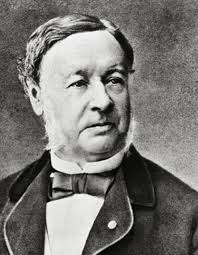
Which of the following scientists concluded that all animals are made of cells?
a)
Rudolf
Virchow
b)
Matthais
Schleiden
c)
Robert
Hooke
d)
Theodor
Schwann
93.

Which of the following scientists was the first to observe bacteria?
a)
Anton
van Leuwenhoek
b)
Matthais
Schleiden
c)
Robert
Hooke
d)
Theodor Schwann
94.
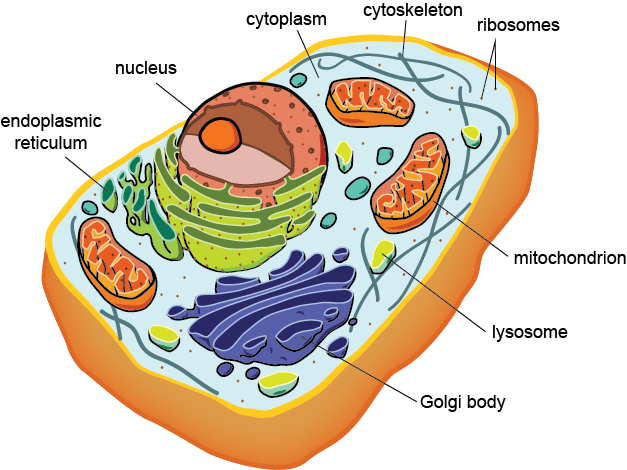
Which of the following statements is not part of the cell theory?
a)
Cells are the basic unit of structure and function in all living things.
b)
All cells are produced from other cells.
c)
Only animal cells are composed of cells.
d)
All living things are composed of cells.
95.

What is one way in which all living things on Earth are alike?
a)
All living things have hair.
b)
All living things are made of cells and come from other cells.
c)
The cells of all living things have chloroplast.
d)
All living things can move.
96.

Which statement reflects one of the major components of the cell theory?
a)
All living things are multi-cellular.
b)
Organs are the basic unit of structure and function for all living things.
c)
All cells come from previously existing cells.
d)
Every organism has a reproductive system to ensure survival of the species.
97.
What structures distinguish a plant cell from an animal cell?
a)
Plant cells have cell walls and ribosomes.
b)
Plant cells have cell walls and chloroplasts.
c)
Plant cells have chloroplasts and ribosomes.
d)
Plant cells have chloroplasts and mitochondria.
98.
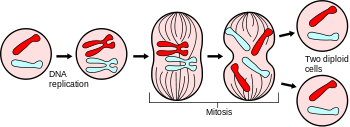
When cells are damaged, new cells are created by cell division. How does the cell theory support this fact?
a)
It states that all cells have a nucleus which divides.
b)
It states that all living things are made up of one or more cells.
c)
It states that cells come from previously existing cells.
d)
It states that the basic units of structure and function are cells.
99.

Which organism is made up of cells that have both a cell membrane and a cell wall?
a)
desert mouse
b)
human
c)
maple tree
d)
zebra
100 %

