Worksheets
Gravity in Galaxies and The Solar System
Total questions: 25
Worksheet time: 2hrs 5mins

What does the strength of the force of gravity depend on?
The masses of the objects and their speed.
The mass and weight of the objects
The masses of the objects and the distance between them
The length of the object and its speed.

What is the definition of inertia?
The force of a push or a pull on an object
The force pulling us towards the Earth
increasing force because of increased mass of an object
The tendency of an object to resist change in motion.

What controls the orbits of objects in our solar system?
Speed and light
Inertia and gravity
Gravity and speed
Momentum and inertia

Our solar system is part of the
Milky Way Galaxy
Andromeda Galaxy
Magellan Galaxy
Perseus Galaxy
How many stars are estimated to be in the Milky Way Galaxy?
1,000
10,000
1,000,000
At least a billion (1,000,000,000)
The gravitational force of the sun is the sole reason the planets and other bodies orbit around it, holding the solar system together.
True
False
Any object with mass experiences gravity
True
False
The mass of most objects are too small for them to experience gravity between them.
True
False
As distance increases, gravitational forces:
Decrease
increase
Disappear
Stay the same
As mass increases, gravitational forces:
Increase
decrease
stay the same
disappear

What planet is closest to the sun?
Mars
Earth
Venus
Mercury
What are the four inner planets?
Earth, Uranus, Mercury, Venus
Mercury Venus Earth Saturn
Mars, Earth , Mercury, Venus
Mars, Earth, Neptune, Mercury
What are the outer planets?
Jupiter, Saturn, Earth, Neptune
Saturn, Neptune, Mars, Uranus
Uranus, Saturn, Neptune, Jupiter
Mercury, Venus, Earth, Mars
What is at the center of our solar system?
asteroid belt
Earth
sun
moon
Which planets are made of solid surfaces and rocky cores?
terrestrial
gas giants
outer planets
Which planets are mostly made of gases?
terrestrial
gas giants
inner planets
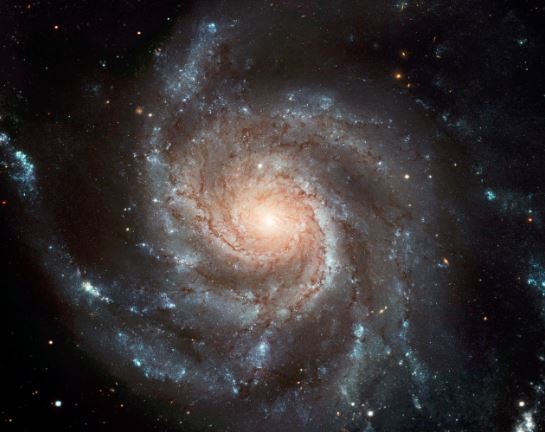
Without gravity, the stars, planets and all objects in the universe would _______.
continue to orbit each other
move in a random direction
move in a straight line
stop moving
A(n) _____ is the curved path of an object around a point/object in space.
orbit
rotation
revolution
phase

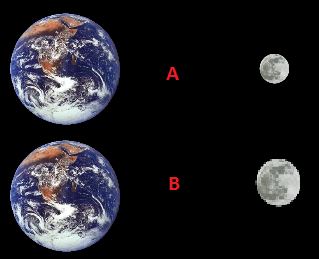
Choose the image that has the most gravitational pull: