
 Worksheets
Marine Fishes
Total questions: 48
Worksheet time: 27mins
How many years ago did fish first appear?
500,000
5 million
50 million
500 million
How many years ago did fish first appear?
500,000
5 million
50 million
500 million
Cartilage is different from bone because
It's more flexible
It's lighter
Both answers are correct
What is composed of bony plates and protects bony fish gills?
Gill rakers
Gill arches
Operculum
Gill slits
Fish that live in the open ocean have dark backs, silvery sides and a white belly; this is know as
Cryptic coloration
Counter shading
Disruptive coloration
Warning coloration

An octopus does not have a spine. An animal without a spine is an invertebrate. Is an octopus a fish or not?
Fish
Not a fish

All fish use gills.
True
False
Most fish have what covering their bodies
Scales
Gills
Skin
Feathers

What kind of fish / sea creature is it?
Stingray
shark
sailfish
puffer fish
What is the name of the internal structure that controls a bony fish's depth in the water?
Liver
Air Pocket
Lung Bladder
Swim Bladder
The tail fin of a fish is also known as the __________ fin.
Pectoral
Pelvic
Dorsal
Caudal
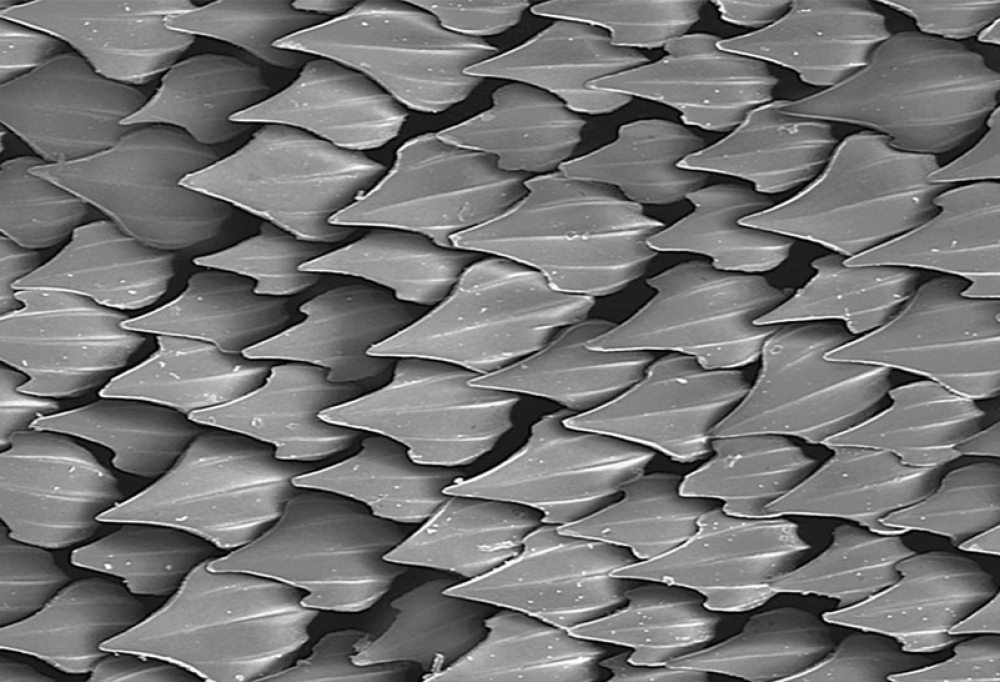
Lampreys and hagfish lack
teeth
heads
mouths
jaws
Which of these is not a class of fish?
Agnatha/Jawless
Condrichthyes/Cartilaginous
Osteichthyes/Bony
Osteonthyes/Boneless
This is the organ where gas exchange occurs in fish.
Gills
Lungs
Heart
Operculum
In fish, what is the name of the fluid-filled canal that detects movement and vibrations in water?
Lateral Line
Vertical Line
Horizontal Line
Lateral Spine
Hagfish produce and excrete this substance to make themselves harder to catch.
Mucous
Sweat
Ink
Air
What does the fish class name "Agnatha" mean?
Jawless
Cartilage fish
Bony Fish
Toothy
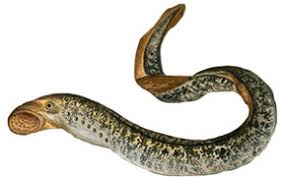
Which fish class would a lamprey be classified in?
Chondrichthyes
Agnatha
Osteichthyes
Amphibia
Which of the following fish would NOT belong to Class Chondrichthyes?
Shark
Trout
Skate
Ray
Lungs are to mammals as _____________ are to fish.
gills
feet
antennae
scales
A shark's skeleton is made of...
Bone
Cartilage

The major respiratory organ of a fish is the
swim bladder.
lung.
gill.
nephron.

The structure labeled #5 is the
dorsal fin.
gill filament.
operculum.
lateral line.

The structure labeled #9 is called the
pectoral fin.
operculum.
pelvic fin.
jaw.

The lateral line system enables a fish to
detect vibrations in the water.
see objects at a distance.
smell.
swim rapidly.

True or False.... A dolphin is a fish.
False
True
Sharks are fish
true
false

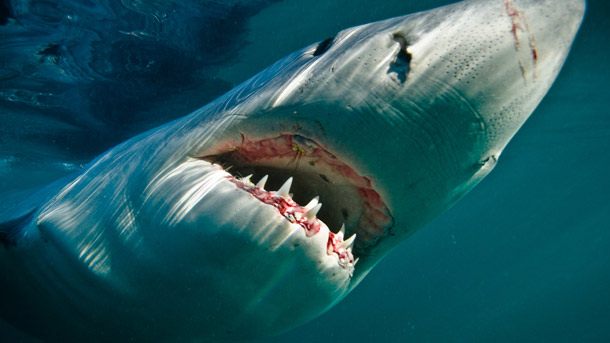


A hard, tooth like projection from the gill arch that prevents large particles of food & other materials from passing into the gill lamellae
Gill arch
Denticle
Gill raker
Isthmus
Which fish is least related to the others?
Shark
Skate
Ray
Tuna

A goldfish propels itself forward with its
caudal fin.
pelvic fins.
pectoral fins.
dorsal fins.
The firm but flexible tissue inside a shark
cartilage
pup
predator
grinding
The firm but flexible tissue inside a shark
cartilage
pup
predator
grinding

What is the name of this fin?
1st dorsal fin
2nd dorsal fin
caudal fin
Caudal fin that's built for speed
lunate
non differentiated
homocercal
heterocercal
Part of the gills where gas exchange occurs
rakers
lamaella
arches

Which of the following is not a class of fish?
Aves
Osteichthyes
Agnatha
Chondrichthyes

Describe the circulatory system of a fish.
2 chambered, double loop
2 chambered, single loop
3 chambered, single loop
4 chambered, double loop

Lamprey obtain food by acting as
herbivores
carnivores
parasites
scavengers

Finger-like projections that aid in sperm transfer during the mating of sharks
spiral valve
duodenum
cloaca
claspers

