wayground logo

Free Printable Worksheets

NEW

Font size

S
M
L
XL
Worksheets

Sun & Solar System

Total questions: 51

Worksheet time: 1hrs 10mins

Name
Class
Date
1.
What is the largest planet in our solar system?
a)
Earth
b)
Saturn
c)
Jupiter
d)
The Sun
2.
The four planets that are nearest the sun are called the.........
a)
Inner planets
b)
Outer planets
c)
Small planets
d)
Gas giants
3.
 How long does it take the earth to rotate once? 
a)
12 hours
b)
24 hours
c)
20 hours
d)
36 hours
4.

Which of the following planets are the gas giants, outer planets?

a)

Mercury , Venus, Mars

b)

Jupiter, Saturn, Uranus

c)

Mars, Jupiter, Venus

5.

What is the center of our solar system?

a)

Moon

b)

Earth

c)

Sun

d)

Jupiter

6.
What describes the earth going around the sun?
a)
rotation
b)
revolution
7.

This is the first planet from the Sun; it is very hot in the day and very cold in the night.

a)

Mercury

b)

Neptune

c)

Earth

d)

Jupiter

8.

What are large chunks of rocks and metal in space?

a)

Earth

b)

Comet

c)

Asteroids

d)

Gibbous

9.

The fourth planet from the Sun; also known as the "red planet."

a)

Neptune

b)

Mercury

c)

Earth

d)

Mars

10.

These are the 4 planets (Mercury, Venus, Earth, Mars) are known as

a)

terrestrial planets

b)

gas giants

c)

dwarf planets

d)

solar planets

11.

Where is the Asteroid Belt located in the Solar System?

a)

near Neptune

b)

between Mercury and Venus

c)

between Mars and Jupiter

d)

around the Sun

12.

The sixth planet from the Sun; known for its large rings.

a)

Saturn

b)

Mercury

c)

Earth

d)

Mars

13.
Besides Pluto, which planet is the furthest planet from the sun?
a)
Mercury
b)
Earth
c)
Neptune
d)
Uranus
14.

Which is the hottest planet in the solar system?

a)

Mercury

b)

Venus

c)

Earth

d)

Mars

15.

Which planet rotates on its side?

a)

Venus

b)

Earth

c)

Saturn

d)

Uranus

16.
What is the Moon?
a)
It is a planet
b)
It is a satellite
c)
It is a star
d)
It is a comet
17.

What is the Sun?

a)

Satellite

b)

Star

c)

Comet

d)

Planet

18.
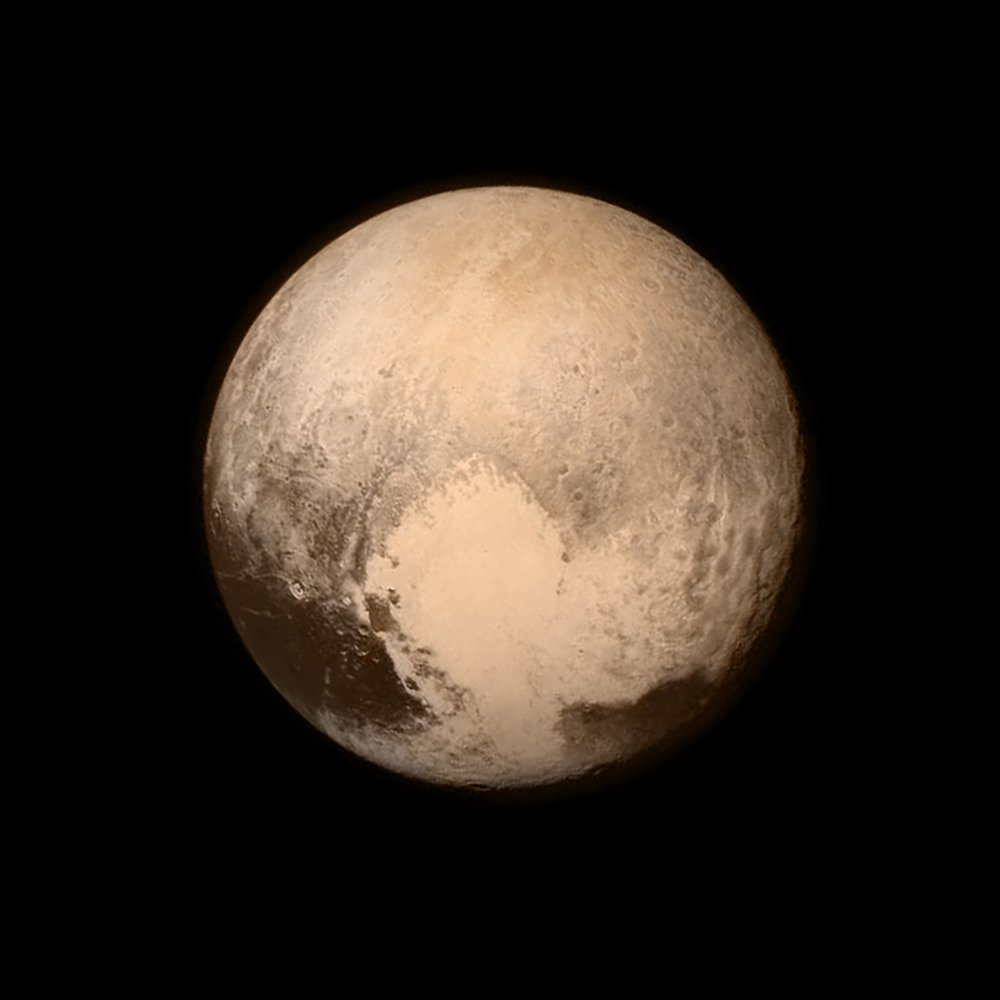
What is Pluto?
a)
An asteroid
b)
A planet
c)
A dwarf planet
d)
It doesn't exist
19.

What planets are these?

a)

Inner Planets (Rocky)

b)

Outer Planets (Gas Giants)

20.

The coldest planet is?

a)

Neptune

b)

Earth

c)

Mercury

d)

Jupiter

21.
What holds the planets in their orbits around the sun?
a)
gravity
b)
speed
c)
string
d)
air currents
22.
What is in the center of the Heliocentric Model?
a)
Sun
b)
Comet 
c)
Jupiter
d)
Earth
23.
Which choice shows the correct order of the planets?
a)
Mars, Venus, Earth, Mercury, Jupiter, Saturn, Uranus, Neptune
b)
Earth, Venus, Mars, Mercury, Jupiter, Saturn, Uranus, Pluto
c)
Mercury, Venus, Earth, Mars, Jupiter, Saturn, Uranus, Neptune
d)
Saturn, Venus, Mars, Mercury, Jupiter, Neptune Mercury, Uranus
24.
What planet is it?
a)
Jupiter
b)
Saturn
c)
Uranus
d)
Venus
25.
The four terrestrial planets all have
a)
Rocky surfaces
b)
Hot temperatures
c)
Deep atmospheres
d)
Large size
26.
What is the sun mostly made up of
a)
Helium
b)
Core
c)
Carbon
d)
Hydrogen
27.
What features can you see on the sun
a)
sunspots & prominences
b)
The core
c)
The moon 
d)
Earth
28.
What is this
a)
Prominice
b)
sun spot
c)
core
d)
Earth
29.
What happens during nuclear fusion
a)
Hydrogen reacts with Oxygen to create fire.
b)
Hydrogen atoms are forced together to create Helium
c)
Uranium and Plutonium split apart and release radiation.
d)
Helium atoms break down to make hydrogen
30.
Label part 1
a)
#1 Core
b)
#1 Radiation zone
c)
#1 Convection zone
d)
#1 Photosphere
31.
A dark spot on the photosphere of the sun
a)
corona
b)
solar flare
c)
sunspot
d)
magnitude
32.
What is the Sun mostly made of?
a)
Stars
b)
Hydrogen and Helium
c)
Oxygen
d)
Carbon Dioxide
33.
The outermost layer of the Sun's atmosphere
a)
Photospher
b)
Corona
c)
Sunspot
d)
Solar Flare
34.
Which statement is true about the sun?
a)
It is a star.    
b)
It is the largest star in our galaxy. 
c)
It is a planet close to Earth.
d)
It is a moon. 
35.
Identify part 9.
a)
sunspot
b)
solar flare
c)
granules
d)
prominence
36.

Like other stars, the Sun produces energy in its core by

a)

fusing hydrogen into helium.

b)

burning plasma gas.

c)

mostly unknown chemical reactions.

d)

fusing helium into hydrogen.

37.

The _____ is the "surface of the Sun or the lowest part of the Sun's atmosphere.

a)

corona

b)

chromosphere

c)

photosphere

d)

exosphere

38.

Surface features on the Sun include sunspots, which are hotter and brighter than the surface.

a)

True

b)

False

39.
Label part 1
a)
#1 Core
b)
#1 Radiation zone
c)
#1 Convection zone
d)
#1 Photosphere
40.
Label part 1
a)
#1 Core
b)
#1 Radiation zone
c)
#1 Convection zone
d)
#1 Photosphere
41.
Label Part 2
a)
#2 Core
b)
#2 Radiation zone
c)
#2 Convection zone
d)
#2 Corona
42.
Label Part 3
a)
#3 Chromosphere
b)
#3 Radiation zone
c)
#3 Convection zone
d)
#3 Photosphere
43.
Nuclear fusion is when
a)
the nuclei of two atoms join to produce lots of energy
b)
the nuclus of a large atom splits to release lots of energy
44.
Energy is created in the core when two _____________ atoms join together to form a ______________ atom.
a)
helium, hydrogen
b)
carbon, hydrogen
c)
nitrogen, helium
d)
hydrogen, helium
45.
The middle layer of the sun's interior that contains very tightly packed gas is called the _____________.
a)
photosphere
b)
chromosphere
c)
radiation zone
d)
convection zone
46.
In which area of the sun does gas rise as it heats up, then fall back down as it cools?
a)
the core
b)
the radiation zone
c)
the convection zone
d)
the corona
47.
When we look at the sun, what layer are we viewing?
a)
photosphere
b)
chromosphere
c)
corona
d)
convection zone
48.
What layer can be seen here?
a)
chromosphere
b)
corona
c)
photosphere
d)
core
49.
What is the sun mostly made up of
a)
Helium
b)
Core
c)
Carbon
d)
Hydrogen
50.
Where does nuclear fusion occur?
a)
Space
b)
Radiation Zone
c)
Photosphere
d)
The Core
51.

Which one is the meaning of plasma?

a)

Plasma is where two elements fuse together to form another element

b)

Plasma is the outer most layer of the atmosphere

c)

Plasma is what the core produces

d)

Plasma is a hot, electrically conducting gas