
 Worksheets
Chapter 4 Exam Review Quiz
Total questions: 54
Worksheet time: 3hrs 54mins
Name
Class
Date
1.

What element is this an atom of?
a)
nitrogen
b)
lithium
c)
beryllium
d)
carbon
2.
The building blocks of matter
a)
Mass Number
b)
Atoms
c)
Nobel Gases
d)
Isotopes
3.

Positively Charged Particle
Mass: 1 amu
Mass: 1 amu
a)
Proton
b)
Neuton
c)
Electron
d)
Isotope
4.

Neutral Charged Particle
Mass: 1 Amu
Mass: 1 Amu
a)
Proton
b)
Neutron
c)
Electron
d)
Isotope
5.

Negatively charged Particle
Mass: Almost Nothing
Mass: Almost Nothing
a)
Protons
b)
Neutrons
c)
Electrons
d)
Isotopes
6.

The total number of Protons and Neutrons.
a)
Mass Number
b)
Atomic Number
c)
Matter
d)
Ion
7.

Number of protons in an atom.
a)
Atomic Number
b)
Mass Number
c)
Isotope
d)
Valence electrons
8.

Electrons in the outermost orbital.
a)
Protons
b)
Neutrons
c)
Valence Electrons
d)
Isotopes
9.

Atoms of the same element but with different numbers of neutrons.
a)
Ion
b)
Isotope
c)
Mass Number
d)
electron
10.

An atom that has become charged by gaining or losing electrons.
a)
Ion
b)
Isotope
c)
Electron
d)
Valence Electron
11.
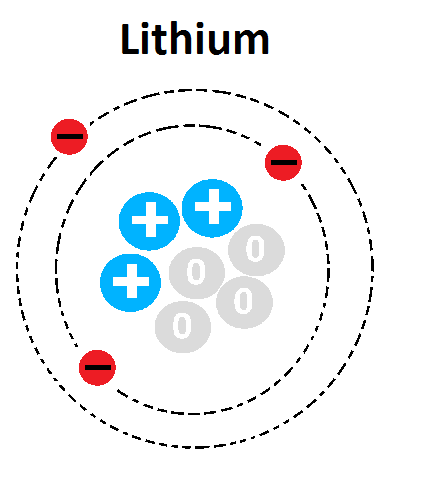
What is the atomic number of this atom?
a)
1
b)
3
c)
4
d)
7
12.
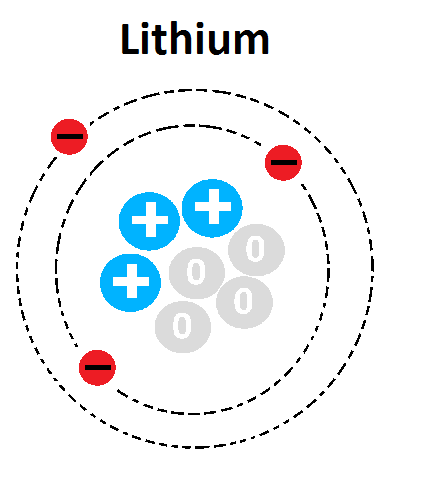
What is the mass number of this atom?
a)
1
b)
3
c)
4
d)
7
13.
Most of the mass in an atom is made up of _____________________?
a)
protons and electrons
b)
protons and neutrons
c)
neutrons and electrons
d)
electrons and quarks
14.
In order for an atom to be neutral what has to be true?
a)
The atom has more protons than neutrons
b)
The atom has more neutrons than protons
c)
The atom has the same number of protons and neutrons
d)
The atom has the same number of protons and electrons
15.
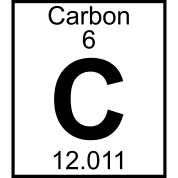
What does the C represent?
a)
atomic mass
b)
atomic number
c)
element name
d)
chemical symbol
16.

What does the 6 represent?
a)
Atomic mass
b)
atomic number
c)
chemical symbol
d)
element name
17.
How is the number of neutrons in the nucleus of an atom calculated?
a)
Add the number of e- and p+ together
b)
Subtract the number of e- from p+
c)
Subtract the number of p+ from the mass number
d)
Add the mass number to the number of e-
18.
What subatomic particles would you find in the nucleus of an atom?
a)
Protons only
b)
Protons and Neutrons
c)
Neutrons and Electrons
d)
Protons and Electrons
19.
An atom has 10 protons, 15 neutrons and 10 electrons what is its mass number.
a)
20
b)
10
c)
35
d)
25
20.
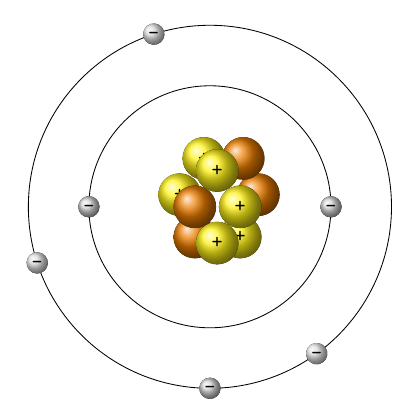
How many electrons does this atom have?
a)
2
b)
4
c)
6
d)
10
21.
The atomic number of an element that has 9 protons, 9 electrons, and 10 neutrons is _____.
a)
9
b)
10
c)
19
d)
28
22.
An element with a mass number of 11 and an atomic number of 5 has how many neutrons?
a)
11
b)
5
c)
6
d)
16
23.
An atom has an atomic number of 15 and a mass number of 31. How many protons are there in the atom?
a)
15
b)
31
c)
16
d)
47
24.
Which of the following determines the identity of an element?
a)
number of protons
b)
atomic mass
c)
number of neutrons
d)
number of shells
25.
What scientist is best known for his gold foil experiment?
a)
J.J. Tomson
b)
Ernest Rutherford
c)
John Dalton
d)
Democritus
26.
Who is the first scientist to think that the atom was the smallest unit of matter?
a)
J.J. Tomson
b)
Ernest Rutherford
c)
John Dalton
d)
Democritus
27.
What is the standard unit of mass at the atomic level?
a)
centimeters
b)
millimeters
c)
amu
d)
milligrams
28.
24.1% of all the isotopes of a an element have a mass of 75.23 amu, 48.7% have a mass of 74.61 amu, and 27.2% have a mass of 75.20 amu.
What is the average mass of this element?
What is the average mass of this element?
a)
74.92 amu
b)
24.97 amu
c)
75.01 amu
d)
74.51 amu
29.
Calcium has three different isotopes. One has a mass of 35.00 amu; another has a mass of 41.00 amu; and another has a mass of 40.00 amu. Which isotope is the most abundant of the three?
a)
40.00 amu
b)
41.00 amu
c)
35.00 amu
d)
impossible to tell
30.

Calculate the average atomic mass of silver.
a)
106.38649amu
b)
111.91896amu
c)
107.8677amu
d)
121
31.
A nuclear reaction where a nucleus splits into two smaller nuclei is...
a)
Fission
b)
Fusion
c)
Gamma decay
d)
Beta decay
32.
What happens when the number of protons in an atom changes?
a)
The number of electrons changes too
b)
Usually nothing happens, unless the atom is radioactive
c)
The atomic nucleus explodes
d)
It becomes a completely different atom, with different properties
33.

What element is the ?
a)
Ag-115
b)
Cd-115
c)
Pd-115
d)
Not Listed
34.

Which type of nuclear radiation is being emitted here?
a)
alpha
b)
beta
c)
gamma
d)
none
35.

Which type of nuclear radiation is being emitted here?
a)
Alpha
b)
beta
c)
gamma
d)
none
36.
Balance the following equation:
146C --> 0-1e + ________
146C --> 0-1e + ________
a)
145B
b)
146C
c)
147N
d)
42He
37.
Two or more nuclei combine to form one larger nucleus in the process of nuclear _____.
a)
Fusion
b)
Fission
c)
Tracing
d)
Decay
38.

This is an example of...
a)
Fission reaction
b)
Fusion reaction
c)
Decomposition reaction
d)
Combustion
39.
When nuclei decay, massive amounts of __________ is released.
a)
energy
b)
jello
c)
protons
d)
neutrons
40.

What type of reaction is this?
a)
alpha
b)
beta
c)
gamma
d)
quiet
41.
Has the highest penetrating power. Can penetrate our body. Even several cm thick of lead or several meters thick of concrete cannot stop all of it.
a)
Alpha
b)
Beta
c)
Gamma
42.
Has the lowest penetrating power. Can only penetrate 0.05 mm into the body and can be stopped by a piece of paper or clothing.
a)
Alpha
b)
Beta
c)
Gamma
43.

What type of nuclear reaction is this?
a)
alpha
b)
beta
c)
gamma
d)
hot
44.
The time needed for half of a radioactive sample to decay is called its __________.
a)
decay period
b)
period
c)
transmutation time
d)
half-life
45.

Arrange in order of increasing ability to penetrate matter.
a)
Beta, gamma, alpha
b)
Alpha, gamma, beta
c)
Gamma, beta, alpha
d)
Alpha, beta, gamma
46.
The half life of Thorium-234 is 24 days. What fraction of the element remains after 96 days
a)
1/2
b)
1/4
c)
1/8
d)
1/16
47.
Alpha particles have a _____ charge.
a)
+2
b)
0
c)
+1
d)
-1
48.
What does it mean when an element is radioactive?
a)
atom emits radiation
b)
nucei unstable due to uneven p to n ratio
c)
nuclei changes to become stable
d)
all of the above
49.
Which of the following is a disadvantage of nuclear energy as a power source?
a)
Nuclear energy produces less energy than the burning coal
b)
Nuclear energy produces air pollution
c)
Nuclear waste must be safely stored
d)
The fuel source is very limited
50.

The charge on a gamma particle is...
a)
-1
b)
0
c)
+1
d)
+2
51.

What fuel does the US typically use in fission reactors?
a)
Hydrogen
b)
Carbon
c)
Uranium
d)
Plutonium
52.

What is another name for an alpha particle?
a)
electron
b)
x-ray
c)
hydrogen nucleus
d)
helium nucleus
53.

What product of fission is necessary in order to establish a chain reaction?
a)
alpha particle
b)
two or more neutrons
c)
two or more protons
d)
gamma rays
54.

What is a beta particle?
a)
an emitted helium nucleus
b)
a high energy wave
c)
an energetic electron from a decomposed neutron
d)
none of the above
100 %

