Wayground logo

Free Printable Worksheets

Font size

S
M
L
XL
Worksheets

Free Body Diagrams and Newton's laws

Total questions: 14

Worksheet time: 19mins
Name
Class
Date
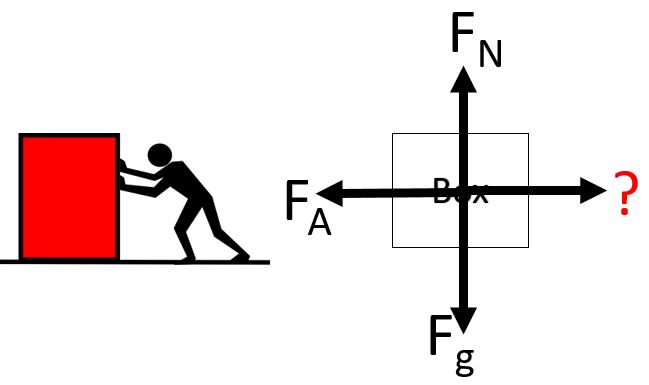
1.
Name the missing force...
a)
weight force
b)
normal force
c)
applied force
d)
frictional force
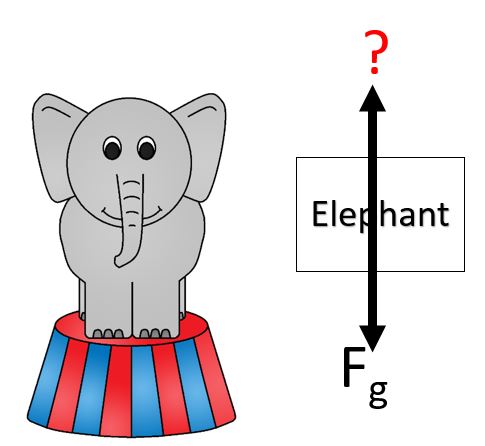
2.
Name the missing force...
a)
frictional force
b)
weight force
c)
thrust
d)
buoyant force
3.
Name the missing force...
a)
push
b)
weight force
c)
tension force
d)
drag
4.

A leftward force is applied to a crate to push it across the floor at a constant speed. Which is the correct force diagram?

a)
b)
c)
d)
5.

A rightward force is applied to a dresser to accelerate it to the right across the bedroom floor.

a)
b)
c)
d)
6.

A downward-moving skydiver who has just opened the parachute is slowing down.

a)
b)
c)
d)
7.
A magician pulls a tablecloth out from under dishes and glasses on a table without disturbing them.
a)
Newton's 1st Law
b)
Newton's 2nd Law
c)
Newton's 3rd Law
d)
None of them
8.
Rockets are launched into space using jet propulsion where exhaust accelerates out from the rocket and the rocket accelerates in an opposite direction.
a)
Newton's 1st Law
b)
Newton's 2nd Law
c)
Newton's 3rd Law
d)
None of them
9.
The change in velocity in a given time period is?
a)
Vi
b)
Vf
c)
a
d)
d
10.
Which would fall with greater acceleration in a vacuum—a leaf or a stone?
a)
the leaf
b)
the stone
c)
They would accelerate at the same rate.
d)
It is difficult to determine without more information.
11.

What is the Net Force and the direction of the object's movement as a result of the net force?

a)

5N, Right

b)

5N, Left

c)

9N, Right

d)

9N, Left

12.

What is the Net Force and the direction of the object's movement as a result of the net force?

a)

9N, Right

b)

9N, Left

c)

3N, Right

d)

3N, Left

13.

What is the Net Force and the direction of the object's movement as a result of the net force?

a)

11N, Right

b)

11N, Left

c)

1N, Left

d)

1N, Right

14.

If the net force (Fnet) is 0, _____

a)

the forces are balanced.

b)

All of these are correct!

c)

the object maintains its same speed and direction.

d)

the object maintains its velocity.

e)

the object does not speed up, slow down, or turn.