
 Worksheets
Quarterly 1 review
Total questions: 40
Worksheet time: 21mins

What kind of a boundary is this?
Convergent
Divergent
Transform
Reform

What kind of landform is being created here?
mountains
trenches
the San Andreas fault
the mid ocean ridge

What kind of a boundary is this?
Convergent
Divergent
Transform
Reform

What kind of a boundary is this?
Convergent
Divergent
Transform
Reform

What is happening in this picture?
Seafloor spreading
creation of new crust
a divergent boundary
all of these answers

What do we call it when there is a divergent boundary on CONTINENTAL crust?
a mid-ocean ridge
seafloor spreading
a rift valley
a hot spot

What is happening to the OCEANIC crust in the picture?
It is being pused up into volcanoes
It is being subducted into the Asthenosphere
It is shearing into a transform boundary
It is being pused up into mountains

A hot spot is located at the boundary of a plate
true
false
What geologic feature will occur at a hot spot ?
volcano
folded mountain
deep sea trench
crevasse

The study of the alignment of magnetic minerals in rock, specifically as it relates to the reversal of Earth's magnetic poles is _________________
Physics
Paleomagnetism
Oceanography
Anthropology
A prime example of an area over a hot spot is :
Japan
the Andes Mountains
the East African Rift
the Hawaiian Islands

The process by which one lithospheric plate is forced under another
Radiation
Convection
Conduction
Subduction
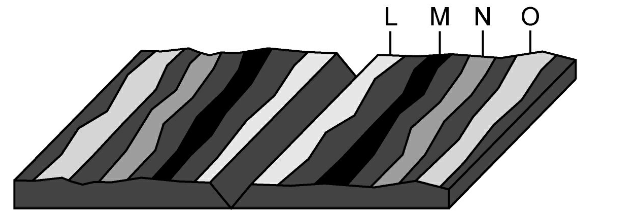
What happens at the boundary where a continental plate and an oceanic plate collide?
The two plates are moving
Mountains develop on edge of the oceanic plate
The continental plate slips under the oceanic plate
The oceanic plate is forced down under the continental plate
Subduction does not occur at which convergent plate boundary?
Oceanic - Oceanic
Oceanic - Continental
Continental - Continental

What was this ancient supercontinent called?
Pangea
Laurasia
Gondwanaland
Eurasia
What kind of stress is happening here?
Compression
Tension
Shear
Reform

Who created the Theory of Seafloor Spreading?
Alfred Wegener
Harry Hess
Charles Darwin
Charles Lyell
What kind of stress is happening here?
Compression
Tension
Shear
Reform

Who created the Theory of Continental Drift?
Alfred Wegener
Harry Hess
Charles Darwin
Charles Lyell

What kind of stress is happening here?
Compression
Tension
Shear
Reform

oceanic-to-oceanic convergent
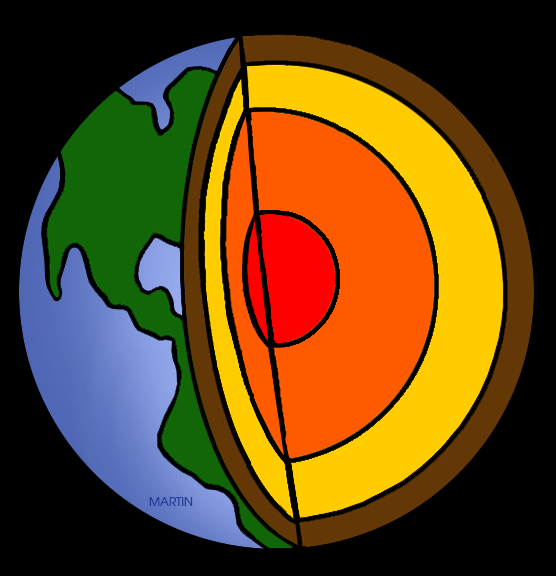
Which layer is shown in red?
crust
mantle
outer core
inner core
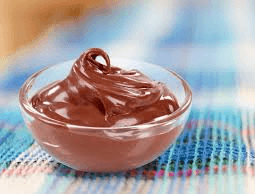
Which layer is made of "flowing" solid rock (think clay or pudding)?
crust
mantle
outer core
inner core
Which layer is shown in orange?
crust
mantle
outer core
inner core
Which layer is shown in yellow?
crust
mantle
outer core
inner core
Which layer is shown in brown?
crust
mantle
outer core
inner core
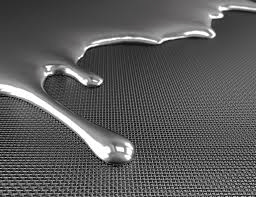
Which layer is made (mostly) of LIQUID iron and nickel?
crust
mantle
outer core
inner core

Which layer is made (mostly) of SOLID iron and nickel?
crust
mantle
outer core
inner core

Which layer of the Earth is the THICKEST?
crust
mantle
outer core
inner core
The __________ is the layer that is made up of the crust and the upper part of the mantle.
Lithosphere
Asthenosphere
Mesosphere
Thermosphere
The __________ is the layer that broken up into large moving plates we call "Tectonic Plates" which cause earthquakes, create mountains, volcanoes, and other landforms.
Lithosphere
Asthenosphere
Mesosphere
Thermosphere
The __________ is the layer that is just beneath the lithosphere and has convection currents which drive tectonic movement.
Lithosphere
Asthenosphere
Mesosphere
Thermosphere
What are TWO main pieces of evidence for continental drift?
Fossil evidence found on separate continents
Geologic evidence such as continent shape and rock formations
Magnetic bands which reverse and mirror each other on opposite sides of a ridge
mirroring bands of rock which get older and older as you get farther from a ridge
What are TWO main pieces of evidence for Seafloor spreading?
Fossil evidence found on separate continents
Geologic evidence such as continent shape and rock formations
Magnetic bands which reverse and mirror each other on opposite sides of a ridge
mirroring bands of rock which get older and older as you get farther from a ridge
What is the driving force / mechanism behind continental drift, seafloor spreading and plate tectonics?
The reversal of the magnetic poles
Radiation
Conduction
Convection

Which layer of the Earth is the THINNEST?
crust
mantle
outer core
inner core

