
 Worksheets
1.1-1.5 & 1.8 review
Total questions: 77
Worksheet time: 2hrs 24mins
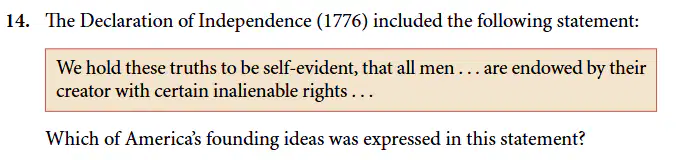
Which of America’s founding ideas was expressed in this statement?
rule of law
natural rights
due process of law
limited government
According to the Declaration of Independence, what was an “unalienable
right” that all governments should protect?
the right to social equality
the right to personal liberty
the right to religious equality
the right to elect government officials
In 1957, President Eisenhower sent the National Guard into Little Rock,
Arkansas, in order to prevent violence. Which goal of government, listed in
the Preamble, did this action illustrate?
to ensure domestic tranquility
to form a more perfect Union
to secure the blessings of liberty
promote the general welfare
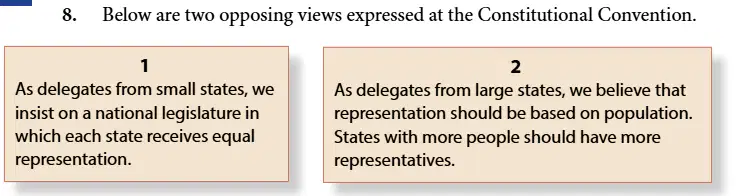
Which feature of American government today was the outcome of this
disagreement at the Constitutional Convention?
A Bill of Rights was added to the Constitution to protect individual
rights
Each state can decide how its own representation in Congress is
determined
Representation in both our federal and state legislatures is now based on
population.
States have equal representation in one house of Congress and
representation based on their population size in the other.
The illustration on the left, from a popular almanac in 1787, shows Captain
Daniel Shays.
Why did his rebellion send a wave of fear among wealthy merchants and
landowners?
Officers worried about losing their back pay.
Shays planned to take money from the rich and give it to the poor.
There was no national army to put down domestic unrest if it spread
Bankers and other lenders feared the loss of their loans to the national
government.

Which sentence completes the chart?
A king or queen inherits power.
Citizens elect their own representatives.
Judges are appointed to serve for life.
An all-powerful President controls the government.
When the President nominates an individual to serve as Secretary of State,
the Senate must confirm the appointment. Which constitutional principle,
limiting the power of government, does this illustrate?
checks and balances
individual rights
popular sovereignty
due process of law

Which sentence completes the chart?
Most city-states at this time had their own written constitutions.
Rules of conduct were based on ethical ideas of justice about right and
wrong.
All citizens were subject to the same rules, displayed in public on twelve
bronze tablets.
Women, children, foreign residents, and enslaved individuals had no
rights since they were not considered as citizens.
According to the Declaration of Independence, when do people have the
right to abolish their government and establish a new one?
whenever a government passes a law that is unpopular
whenever the majority party in control of government changes
whenever their government becomes oppressive and tyrannical
whenever a king attempts to act without the approval of Parliament
Which type of law protects our fundamental rights as individuals?
civil law
criminal law
constitutional law
military law
Why did the Federalists believe the national government would not become too strong if the Constitution was adopted?
The Bill of Rights ensured that individual rights would be protected.
The federal government would use its powers to protect, not threaten, individual liberties.
Elected government officials could not be trusted to protect individual rights.
A system of checks and balances would prevent the government from becoming tyrannical.
In the 1760s and 1770s, the British Parliament passed the Stamp Act,
Townshend Acts, Tea Act, and Intolerable Acts. What was the impact of
these British colonial policies?
Native Americans were able to keep their land.
Colonists began to think of becoming independent.
The British government was able to pay off its debts.
The French were defeated in the French and Indian War.
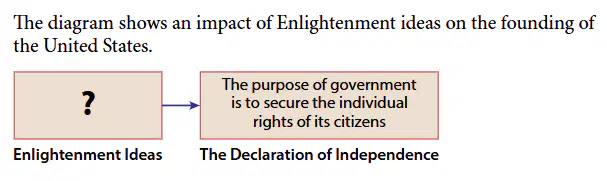
Which phrase completes the diagram?
Spread of scientific inquiry
John Locke’s social contract
Growth of religious tolerance
Montesquieu’s separation of powers
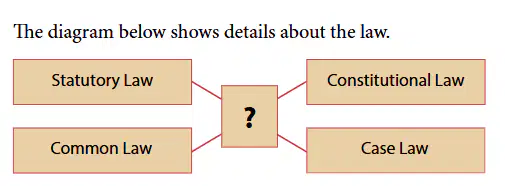
Which phrase completes the diagram?
Checks and Balances
Sources of American Law
The Separation of Powers
The Enforcement of Contractual Agreements
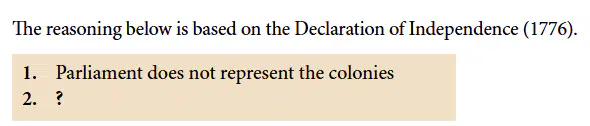
Which sentence completes the chart?
Britain should not expect any financial help from the colonies.
The King, not the Parliament, should decide whether to tax the colonies.
The number of colonial representatives in the Parliament should be
increased.
Only representatives chosen by the colonists have the right to impose
taxes on them.
Why did the
Preamble
to the Constitution begin with the phrase, “We the
People”?
to indicate that the national government had limited powers
to indicate that the American people were the ultimate source of its
authority
to indicate that the states had been associated in a confederation
o indicate that federal power was separated among three branches

Democrats vs. Republicans
Presidents vs. Governors
Federalists vs. Anti-Federalists
Communists vs. Capitalists
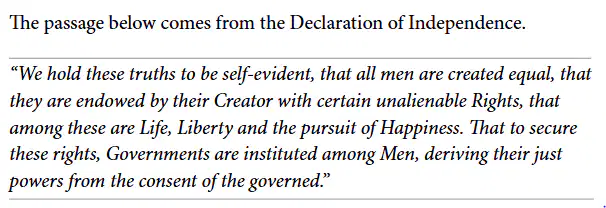
According to this passage, what is the principal role of government?
to protect the natural rights of citizens
to promote policies to benefit the wealthy
to deny individual rights
to create taxes or tariffs on goods
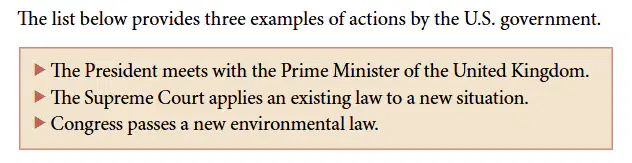
Which feature of the Constitution do these examples illustrate?
limited government
due process of law
individual rights
separation of powers
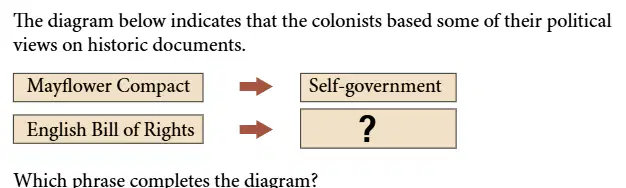
Which phrase completes the diagram?
Guarantees individual rights
Separation of Powers
Natural Law
Checks and Balances

This grievance of the colonists against the British from the Declaration of Independence is a consequence of which earlier Act?
Stamp Act
Tea Act
Sugar Act
Quartering Act
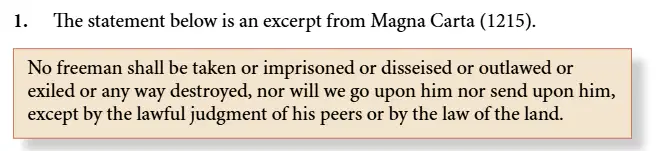
Which right was guaranteed in this excerpt from Magna Carta?
no taxation without representation
freedom of the press
freedom of religion
trial by jury

What Enlightenment philosopher influenced the following passage?
Baron de Montesquieu
John Locke
Thomas Paine
King George
Which statement identifies an important influence that Ancient Greece and Ancient Rome, related to things such as jury duty, voting, attending civic meetings, and serving in the military, have
on the Founders of American constitutional republic?
They believed in the equality of humankind.
They believed that religious liberty was a protected right.
They believed that ordinary citizens should participate in government.
They believed that a separation of powers would protect individual
rights.
How did Americans’ experience under British rule influence the form of
government they established under the Articles of Confederation?
The new legislature had two houses, just like the British Parliament.
The states were sovereign, just as the colonies had been under British rule.
The new central government was not given any power to direct the
m i l it ar y.
The new central government was not able to tax citizens as the British
government had tried to do
Why were historical law codes like Hammurabi’s Code and the Twelve
Tables of Rome significant?
They established official religions.
They established new economic systems.
They established democratic governments.
They established written laws for the entire community.

Which British policy caused concerns that led to this later amendment?
new taxes imposed by the Stamp Act
restrictions on printed materials and pamphlets
lodging of British troops in colonists' homes
special taxes on tea that led to the Boston Tea Party
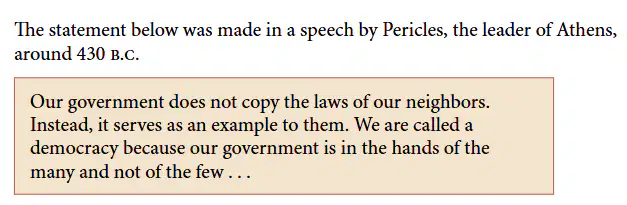
How did the example mentioned in this speech influence the founders of the
American constitutional republic, 2,500 years later?
They designed a system of checks and balances.
They gave political power to an all-powerful ruler.
They created an oligarchy to rule the country.
They placed the final power of government in ordinary citizens
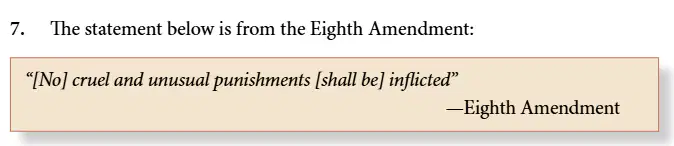
Which earlier document contained a similar right?
Magna Carta
English Bill of Rights
Mayflower Compact
Common Sense
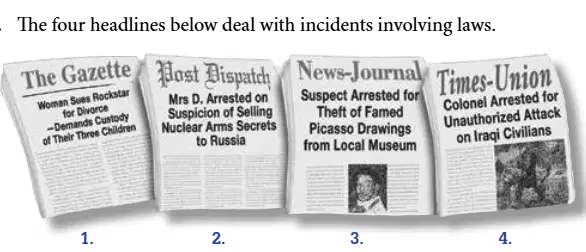
Which correctly identifies the type of law involved in each headline?
1. civil law
2. civil law
3. military law
4. constitutional law
1. civil law
2. criminal law
3. criminal law
4. military law
1. criminal law
2. civil law
3. criminal law
4. common law
1. juvenile law
2. criminal law
3. military law
4. constitutional law
What influence did Thomas Paine’s Common Sense (1776) have on the colonists?
It reconciled them with King George III of England.
It established the framework for their later system of government.
It persuaded them to declare their independence from Great Britain.
It divided Northern and Southern colonists by calling for an end to slavery.
Why did Parliament eventually repeal the Stamp Act, which taxed goods such as newspapers and playing cards?
The colonists established a blockade against British goods.
The colonists were able to produce their own goods.
The colonists started destroying British
goods.
The colonists began boycotting British goods.
This is an important principle that the colonists took from the Magna Carta that says people who are accused of crimes have the right to be tried by their peers or people equal to them.
trial by jury
natural rights
separation of powers
limited government

Which sentence completes the chart?
Congress can raise an army.
Congress has the power to tax.
The President has the power to tax.
The Supreme Court has the power of judicial review.

Which phrase completes the diagram?
The colonial theory of government
The colonial theory of government
Grievances of the colonists against Britain
False rumors spread by colonial newspapers

What was the main weakness of the Articles of Confederation?
the federal government was too weak
It had no legislative branch
The judicial was too powerful
The executive was too powerful

"We hold these Truths to be self-evident, that all Men are created equal, that they are endowed, by their CREATOR, with certain unalienable Rights, that among these are Life, Liberty, and the Pursuit of Happiness."
-Excerpt from the Declaration of Independence, 1776
Based on this excerpt what are natural rights? (Hint: Focus on the key word CREATOR)
God-given rights that all people should have
rights that exist in America but not in Europe
rights granted by English kings to their subjects
rights that can only be earned through bloodshed
What impact did the writings of Baron Montesquieu have on the Founding Fathers?
They kept a monarchical system of government.
They created a representative system of government.
They guaranteed each citizen the right to a trial by jury
They separated the powers of government into three branches.

Which phrase completes the chart?
regulate trade between states
borrow money
equip a navy
declare war

Which phrase completes the chart?
The colonists declared their independence from English rule.
The colonists declared their alliance with Parliament against the king.
The king agreed not to collect new taxes without the approval of Parliament.
A group of early colonists agreed to form their own government and to obey their own laws.

Which phrase completes the diagram?
Trial by Jury
Separation of Powers
Monarchical Government
Government by Consent of the Governed

Why did the colonists object to these measures?
They no longer respected the rule of law.
They wanted to elect their own representatives to Parliament.
They were already taxed even more heavily than people living in Great Britain.
They objected to taxes that were imposed without their consent or representation.

They considered its income taxes to be too high.
They feared the new government would threaten individual rights.
They thought the nation needed a monarch to provide greater stability.
They believed the new government would not be strong enough to overcome its challenges.

Which phrase completes the diagram?
Representative Government
Separation of Powers & Checks and Balances
Social Contract
Trial by Jury

How did the ideas from the passage influence the Founding Fathers?
"When the legislative and executive powers are united in the same person, or in the same body of magistrates, there can be no liberty"
They decided to establish a constitutional monarchy
They decided to establish a representative form of government.
They decided to divide the powers of government into three branches.

Which document completes the following chart?
Magna Carta
English Bill of Rights
Declaration of Independence
Mayflower Compact
Use the table to answer the question.
Weaknesses in the Articles of Confederation
Weakness
No power to enforce laws
No national executive or executive branch
No national court system or judicial branch
How did these weaknesses impact the writing of the Constitution?
The Founding Fathers gave Congress the power to legislate.
The Founding Fathers created a government with three branches.
The Founding Fathers gave the states the power to interpret national laws?
The Founding Fathers created the office of president to settle disputes.
According to the Declaration of Independence, the people have the right to alter or abolish a government if that government…
is a limited monarchy
violates or does not protect their natural rights
becomes involved in alliances
favors one religion over another
power shoud be divided betwee 3 branches of government
According to the Declaration of Independence, the fundamental purpose of government is to…
protect people’s natural rights to life, liberty, and pursuit of happiness
equalize opportunities for all citizens
provide for the defense of the nation
establish a system of free public education

What did Shays Rebellion demonstrate to the U.S. Confederal Government?
That the people were not to be trusted
That the Articles of Confederation was too weak and needed to be replaced
That state governments were too strong
That more laws needed to be passed

The image above symbolizes a right protected by the Bill of Rights and was taken from the Magna Carta. What constitutional right does this image symbolize?
speedy trial
trial by peers
legal representation
peaceable assembly
The statement below appeared in a 1787 essay by James Winthrop.
"It is impossible for one code of laws to suit Georgia and Massachusetts."
What does this statement reflect?
Federalist views
Anti-Federalist views
a cause of Shays’s Rebellion
a cause of the Great Compromise

Self-Government
Separation of Powers
Economic Freedom
Individual Rights
This right was taken from the English Bill of Rights and put into our Bill of Rights and gives us the right to ask the government to make a change by gathering signatures and is also a citizen responsibility or something citizens should do.
freedom of speech
freedom to petition
freedom of press
right to bear arms
What was one of the Anti-Federalists’ strongest arguments against the
Constitution?
It did not create a national executive.
It did not include a list of protected rights for individuals.
The new central government would be too dependent on the states.
The new central government would be too weak to protect American
interests abroad.

Natural Law
Separation of Powers
Divine Right of Kings
Rule of Law
According the John Locke, which agreements did individuals enter into to form their own society?
Constitution
Social contract
Mayflower Compact
English Bill of Rights
Why did the original U.S. government have a confederal form of government?
the national government wanted to share powers with the states governments
the states did not want to give too much power to the central government
they didn’t trust the state governments
the British forced them to
The Declaration of Independence lists a number of offenses committed by the British king against the American colonists. Which of the following offenses refers to a protection first established by Magna Carta?
For cutting off our Trade with all parts of the world
For quartering large bodies of armed troops among us
For depriving us in many cases, of the benefits of Trial by Jury
For transporting us beyond Seas to be tried for pretended offence
The Sixth Amendment to the U.S. Constitution guarantees those accused of
a crime “the right to a speedy and public trial, by an impartial jury.”
Which
of America’s “Founding Ideas” is reflected in this document?
due process of law
freedom of religion
limited government
equality of mankind
Which example illustrates Montesquieu’s idea of the separation of powers?
Citizens of the United States choose many of their public officials in
elections.
The state government of Florida has a governor, state legislature and state
court system.
Individual rights to life, liberty and property are guaranteed by natural
l aw.
People have the right to overthrow an unjust government.
How was Locke’s social contract theory related to his belief in natural law?
He argued subjects had the right to rebel against any ruler who acted
against natural law.
He argued that whatever the king did was good according to natural law.
He argued that natural law required the colonists to be given their
independence.
He argued that God had especially chosen kings to rule over their
subjects as part of natural law.
Which source publicized the concept of “natural rights,” later found in the
Declaration of Independence?
Magna Carta
Mayflower Compact
John Locke's Social Contract
Montesquieu's Spirit of Laws
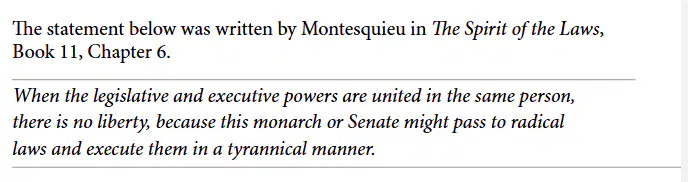
What solution did Montesquieu propose to avoid the problem identified in
this statement?
rule of law
popular sovereignty
separation of powers
equality of all citizens
Which actions identify an important impact of the rule of law?
Decisions by the government are based on the law.
Government leaders can change the law without notice.
People accused of crimes against the state are tried in secret.
Different social classes enjoy different legal rights and privileges.
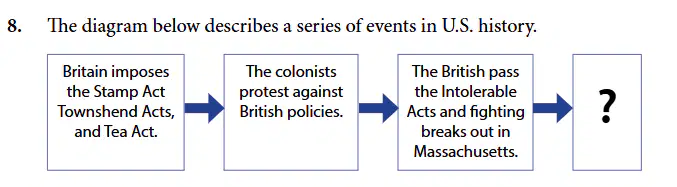
Which statement completes the timeline?
A desire for independence among the colonists grows.
The British Parliament repeals its unpopular legislation.
The colonists submit to the authority of the British Parliament.
The colonists are given representation in the British Parliament.
Which important idea was found in the English Bill of Rights (1689)?
The members of mankind are all equal.
Government institutions should be transparent.
The government should not impose excessive punishments
Government officials have a right to demand that citizens lend their
money.
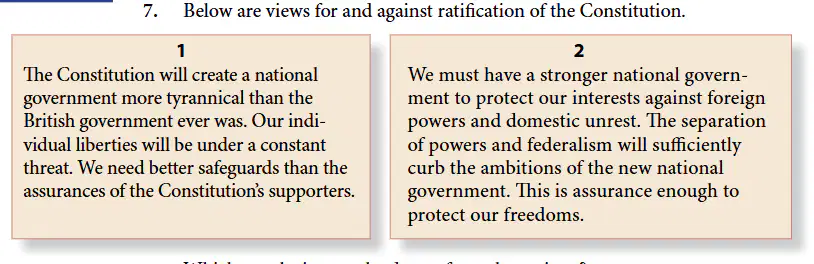
Which conclusion can be drawn from these views?
The proposed Constitution lacked a bill of rights.
The proposed Constitution guaranteed free speech.
The proposed Constitution had no national executive.
The proposed Constitution strengthened state governments.
What was one outcome of the debate between Federalists and Anti-
Federalists over the ratification of the Constitution?
the addition of the Bill of Rights
the state governments won the right to secede
the creation of a second house in Congress
the Federalists agreed to weaken the powers of the Presidency
Which weakness of the Articles of Confederation was addressed by the
Constitution?
the continuation of slavery
the lack of a national court system
he absence of a balanced budget
the need to strengthen the power of the states
How did the U.S. Constitution solve a problem created by a weakness of the
Articles of Confederation?
It stopped the national government from imposing taxes
It gave the national government the power to raise an army.
It required unanimous consent of the states to pass amendments.
It prevented acts of piracy against American ships off the coast of Africa.
Which of the following identifies a weakness of the system of government
under the Articles of Confederation?
The government lacked a national executive to provide central
leadership.
The government had no means for amending the Articles of
Confederation
The government often failed to act when the different branches were
unable to agree
People felt insecure because a distant national government had the power
to tax them.
Why did the members of the Constitutional Convention decide to create a
national government with three separate branches?
This system made it easier for government officials to specialize.
This was as a compromise since some delegates wanted four branches.
Having separate branches gave the government greater flexibility in
wartime.
This structure would prevent any one branch of government from
becoming too strong.
Which of the following identifies a weakness of the system of government
under the Articles of Confederation?
The government lacked a national executive to provide central
leadership
The government had no means for amending the Articles of
Confederation.
The government often failed to act when the different branches were
unable to agree.
People felt insecure because a distant national government had the power
to tax them.
How did Magna Carta influence the views of government held by the
founders of the American constitutional republic?
It led them to create a government based on a separation of powers
It encouraged them to declare their independence from Great Britain.
It gave them the idea that everyone is entitled to certain natural rights.
It told them that as English subjects they should not be taxed without
their consent.
Which important idea was found in the English Bill of Rights (1689)?
The members of mankind are all equal.
Government institutions should be transparent.
The government should not impose excessive punishments.
Government officials have a right to demand that citizens lend their
money.

