
 Worksheets
QUIZ (2) : TOPIC 3 - CHEMICAL BONDING
Total questions: 20
Worksheet time: 15mins
3 atoms bonded and 0 lone pairs
linear
trigonal planar
bent
tetrahedral
trigonal pyramidal

What 3-D VSEPR shape does this molecule exhibit?
linear
tetrahedral
trigonal pyramidal
trigonal planar

What is the bond angle of a tetrahedral structure?
90 Degrees
109.5 Degrees
120 Degrees
180 Degrees
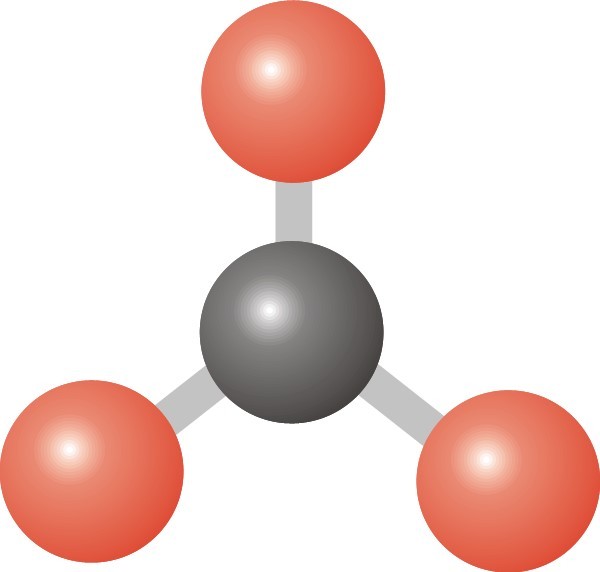

What is the shape? Hint: Draw the Lewis dot structure for NH3.
tetrahedral
trigonal pyramidal
trigonal planar
bent
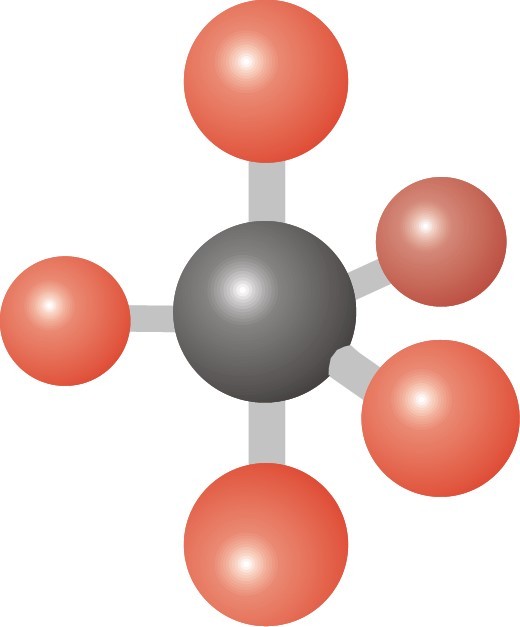
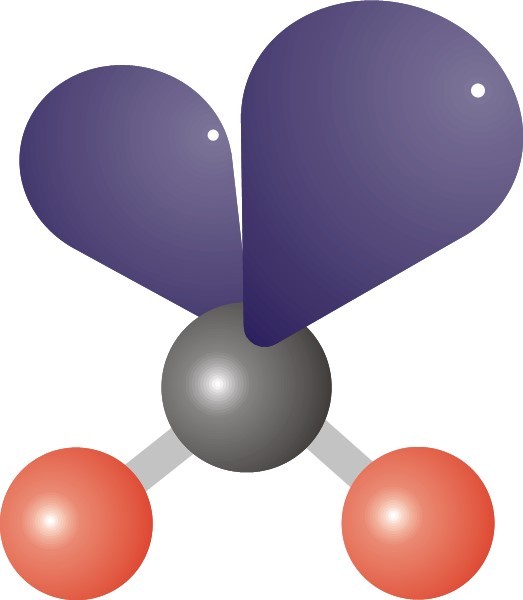
What molecule could this be?
CO2
NH3
H2S
CH4

Use your knowledge to predict what the following compound is classified as.
non-polar covalent
polar covalent
ionic
metallic
Use your knowledge to predict what type of bond would form between calcium and bromine.
non-polar covalent
polar covalent
ionic
metallic
Use your knowledge to predict what type of bond would form between phosphorus and fluorine.
non-polar covalent
polar covalent
ionic
metallic
Type of bond between Br & Br
Ionic
Polar Covalent
Nonpolar Covalent


CO2 has polar bonds but is a NON POLAR molecule. Why?
it has an asymmetrical shape
bond polarity or dipole moment between C and O atoms cancel
there is net dipole moment between C and O atoms in molecule
bond polarity does not exist between C+ and O- atoms
Is this molecule polar or nonpolar?
polar
nonpolar
As bond length increase the strength...
increases
decreases
no change
What determines whether a molecule is polar?
type of atoms and shape of molecule
mass of atoms and number of valence electrons
type and mass of atoms
ionization energy and number of covalent bonds

