
 Worksheets
Introduction to Operation, Product Design, Sustainability
Total questions: 50
Worksheet time: 25mins
Which of the following are the primary functions of all organizations?
operations, marketing, and human resources
marketing, human resources, and finance/accounting
sales, quality control, and operations
marketing, operations, and finance/accounting
R&D, finance/accounting, and purchasing
Which of the following would not be an operations function in a fast-food restaurant?
advertising and promotion
designing the layout of the facility
maintaining equipment
making hamburgers and fries
purchasing ingredients
Reasons to study Operations Management include
studying why people organize themselves for productive enterprise
knowing how goods and services are consumed
understanding what human resource managers do
learning about a costly part of the enterprise
A and D
An operations manager is not likely to be involved in
the design of goods and services to satisfy customers' wants and needs
the quality of goods and services to satisfy customers' wants and needs
the identification of customers' wants and needs
work scheduling to meet the due dates promised to customers
maintenance schedules
Which of the following is not one of the Ten Critical Decisions of Operations Management?
layout strategy
maintenance
process and capacity design
mass customization
supply chain management

Operations system is a system where the main function is to create goods and services. A basic operations system _____________________
Input, Transformation, Output and Feedback
Input, Output,Transformation and Feedback
Input, Output,Feedback and Transformation
Feedback, Input, Output and Transformation
There are 3 reason why study operation management is important except:
Operations management is one of the major functions in an organization.
Operation management enables us to know how goods and services are produced, as it is concerned with the activities related to the creation of goods and services.
Operation management influenced by the environment that respond to the organization.
Operation management allows us to understand what operations managers do. An operations is the person who is responsible in the operations department.
Basic components of an operation system as below except:
Input
Output
Complaint
Feedback
Services sometimes can be inventoried and produced in advance.
True
False
The main function of feedback in operation system is
To produce another good
Doing the right thing
Act as control mechanism
All above

Which statement best defines operations management in the context of production?
Designing advertisements to attract customers
Auditing finances to reduce tax liability
Activities that transform inputs into outputs
Supervising sales to increase market share

A factory faces rising costs and missed delivery dates. Which action aligns most directly with operations management objectives to address both issues?
Increase prices without changing processes
Improve process efficiency to meet schedules
Expand product variety without analysis
Hire more marketers for brand promotion
Which statement best captures why services have intangible outputs?
They are acts or performances delivered to customers
They are standardized items produced on assembly lines
They are physical goods stored in warehouses
They are equipment-based products measured by weight

A hospital struggles to stockpile check-ups for later dates. Which characteristic explains this limitation?
Outputs cannot be inventoried in service operations
Labor-intensive processes reduce employee turnover
Extensive customer contact lowers service quality
Short lead times increase market competition

A bank redesigns its branch workflow to reduce waiting. Which approach most aligns with service characteristics?
Automate fully to eliminate customer interaction
Schedule on-demand delivery to match short lead times
Replace staff with machines to avoid labor-intensive work
Increase storage to hold more completed transactions

A firm plans to build factory capacity. Which planning factor most affects how soon finished goods reach warehouses?
HR policies speeding employee onboarding
Long lead times in production scheduling
Short marketing cycles driving quick sales
Flexible pricing reducing bottlenecks
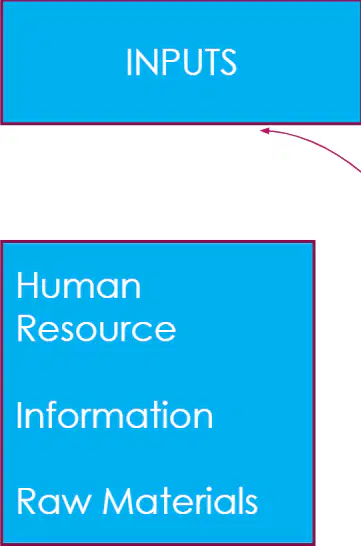
In the diagram, which item is categorized as an input to the operations system?
Control through feedback loop
Human resource and information
Goods and services produced
Fabrication and assembly steps
Which statement best defines the conversion process in a production system?
Comparing outcomes to standards
Distributing finished goods to markets
Listing resources used by the firm
Changing inputs into goods and services
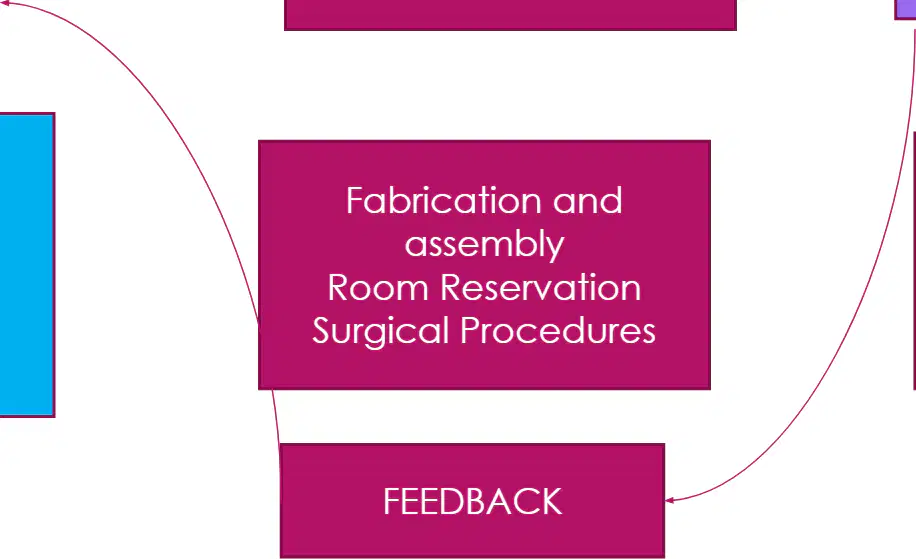
Which example belongs to the transformation process shown in the diagram?
Room reservation activities
Human resource acquisition
Goods and services listing
Random fluctuation events
What is a key reason why service quality can vary from one customer interaction to another?
Services involve direct interaction with customers
Services are always standardized and uniform
Services are produced in a controlled environment
Services can be stored for future use
In a restaurant, which characteristic of services is demonstrated when customers wait for their meals?
Services cannot be returned once delivered
Services are produced and consumed simultaneously
Services can be easily inventoried
Services are always tangible and measurable
Which statement best describes the role of feedback in the operations management process?
Feedback is irrelevant to production efficiency
Feedback helps in adjusting processes to improve service delivery
Feedback is only necessary for physical goods
Feedback is used to eliminate all customer interactions
In product development stages, product specification explain how the product will be made
True
False
Innovative phase is the phase where the product is still new but no modification is needed
True
False
During maturity stages, sales continue to grow at declining rate
True
False
Research and development in product design helps to improve standard living of nation :
True
False
Research and development help to improve market share and profitability
True
False
One of the objective of R&D is to develop new process that will help to increase capital and manufacturing cost.
True
False
Which of the following is the correct order of Life Cycle Stages of Product/Service Design?
Growth, Introductory, Saturation, Maturity, Decline
Introductory, Growth, Maturity Saturation, Decline
Growth, Maturity, Saturation, Decline, Introductory
Introductory, Maturity, Growth, Decline, Saturation
Main Focus objective of product or service design
Cost or Profit
Quality
Appearance
Customer Satisfaction
All product will experience every stages in product life cycle.
True
False
These are strategies that all operation managers should take when products is move to maturity stages except:
Redesign product
Find new supplier with cheaper cost
make an aggressive marketing strategy
Aware of design or flavor offered by competitors
Which of the following is the correct order of Life Cycle Stages of Product/Service Design?
Growth, Introductory, Saturation, Maturity, Decline
Introductory, Growth, Maturity Saturation, Decline
Growth, Maturity, Saturation, Decline, Introductory
Introductory, Maturity, Growth, Decline, Saturation
Which statement best captures why CSR has become a key agenda for companies?
It guarantees higher profits in every quarter
It reduces taxes without changing operations
It replaces all corporate governance requirements
It enhances customer trust and public confidence
Which stakeholder concern most directly pushes firms to address product impacts from design to disposal?
Office decor preferences
Employee dress code policies
Environmental and ethical issues
Shareholder dividends timing
A company launches a product redesign to minimize waste across its lifecycle. Which benefit aligns with strong CSR?
Lower visibility among regulators
Greater stakeholder benefits and brand image
Elimination of all competition globally
Guaranteed viral marketing success
Which outcomes are likely when a company neglects CSR?
Immediate legal immunity
Improved ethical culture
Decreased stakeholder trust
Tarnished brand reputation
What is the core idea of sustainability in business?
Meeting present needs without harming future needs
Maximizing short‑term profits at any cost
Eliminating environmental rules completely
Prioritizing only shareholder returns
Why do people tend to support companies that focus on environmental protection?
They expect productive harmony between humans and nature
They prefer firms to ignore stakeholder concerns
They believe governance is unnecessary
They value short‑term profit above all
In a systems view, how do changes within subsystems typically behave?
They remain isolated without spillover
They affect other interconnected subsystems
They influence only economic outcomes
They reset to equilibrium automatically
Which statement describes common resources in production contexts?
Inputs owned privately by one firm
Assets held only by government agencies
Exclusive property of international bodies
Resources belonging to the public or common
What problem often arises with common resources?
Abuse by many different parties
Instant regeneration without limits
High maintenance by private firms
Underuse due to strict ownership
Which framework emphasizes balancing the 3Ps in organizational performance?
Single Profit Metric
Triple Bottom Line
Shareholder Value Model
Greenwashing Index
Within the Triple Bottom Line, which set lists the 3Ps correctly?
Population, Pollution, Price
People, Planet, Profit
Purpose, Practice, Performance
Policy, Product, Process
Which goal focuses on ending poverty in all its forms everywhere?
Zero poverty in all places
Reduce global extreme poverty
End poverty in all forms
Eradicate poverty by 2050
In economic sustainability, which statement best describes why profit matters?
Profit is unrelated to survival
Profit only rewards shareholders
Businesses survive by earning profit
Profit reduces worker morale
A company aims to minimize end‑of‑life impacts for its products. Which design choice aligns with this goal?
Use single‑use components with adhesive seals
Incorporate recycling, reuse, and remanufacturing
Specify proprietary screws to deter disassembly
Prioritize aesthetic packaging over modularity
Which statement best describes reverse logistics in a supply chain?
Outsourcing transportation to third‑party carriers
Tracking inventory levels across regional warehouses
Returning products for resale, repair, reuse, or recycling
Forward shipping of new products to customers
A company wants to integrate the 3Rs into operations. Which pair best matches each R?
Reuse: single-use plastics; Recycle: mixed materials
Recycle: clear PET; Reduce: longer supply chains
Reduce: faster shipping; Recycle: landfill sorting
Reduce: lighter packaging; Reuse: refill systems
Which are valid outcomes of designing for reuse and recycle? Select all that apply.
Items become harder to disassemble
Packaging requires complex mixed resins
Materials can re-enter recycling streams
Products accept refurbished components

