wayground logo

Free Printable Worksheets

Font size

S
M
L
XL
Worksheets

Biological Basis of Behavior

Total questions: 84

Worksheet time: 1hrs 15mins

Name
Class
Date
1.
The "master gland" that controls or influences all of the other endocrine glands is the:
a)
adrenal gland.
b)
pituitary gland.
c)
thyroid gland.
d)
pineal gland.
2.
The part of the brain that controls life-sustaining functions, such as heartbeat, breathing, and swallowing, is the:
a)
cerebral cortex.
b)
cerebellum.
c)
medulla.
d)
hippocampus.
3.
The venom of a black widow spider is an example of a(n) __________, which mimics or enhances the effects of neurotransmitters.
a)
beta blocker
b)
antagonist
c)
endorphin
d)
agonist
4.
A functional MRI (fMRI) and a PET scan both:
a)
provide a way to measure the functioning and activity of the brain.
b)
produce black and white scans of the brain’s structures.
c)
create selective injuries that allow researchers to study brain function.
d)
provide detailed computerized interpretations of brain dysfunctions.
5.
Xzasia has been suffering from severe bouts of depression for the past several years. Her doctor suggests that some medications designed to impact a specific neurotransmitter might be helpful for her. Which neurotransmitter would be the most likely target of this medication?
a)
GABA
b)
Dopamine
c)
Serotonin
d)
Acetylcholine
6.
Young Keith was in a very bad accident, where specific parts of his brain were damaged. His neurologists noted that over the course of the next several months, other parts of his brain began to compensate for these deficits, and he was not as impaired as they had expected. Keith’s case demonstrates the concept of _______________.
a)
neuroadaptivity
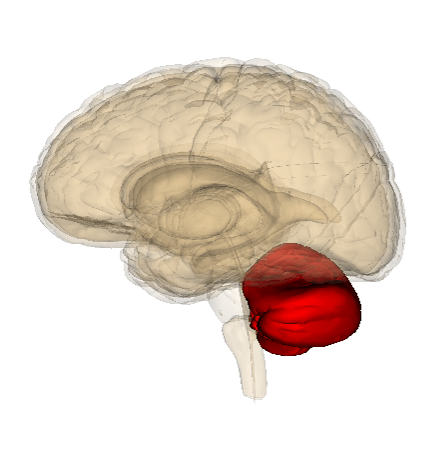
b)
neuroplasticity
c)
neurogenesis
d)
pruning
7.
When people are walking, raising their hands in class or smelling a flower, they are using the:
a)
central nervous system
b)
somatic nervous system
c)
autonomic nervous system
d)
sympathetic nervous system 
8.
Which sense is the only one that is NOT processed through the thalamus?
a)
taste
b)
hearing
c)
touch
d)
smell
9.
Melissa is walking around barefoot and suddenly steps on a sharp nail. She feels the pain and immediately pulls her foot off the ground away from the nail. Which neurons were involved in her response?
a)
interneurons and motor neurons only
b)
sensory neurons only
c)
sensory and motor neurons only
d)
sensory neurons, motor neurons, and interneurons
10.
The job of the sympathetic division of the autonomic nervous system is to:
a)
stabilize emotions such as happiness and sadness.
b)
get the body ready to deal with stress.
c)
control voluntary muscles.
d)
react to the activity of the parasympathetic division.
11.
Which area of the brain influences sleep and dreaming?
a)
pons
b)
reticular formation
c)
medulla
d)
cerebellum
12.
The ______ lobes are responsible for higher mental processes such as decision making.
a)
parietal
b)
frontal
c)
temporal
d)
occipital
13.
Neurons that carry messages from the central nervous system to the muscles of the body are the 
a)
afferent neurons
b)
efferent neurons
c)
interneurons
d)
sensory neurons
14.
When a neuron receives a stimulus that is very strong, the result is that:
a)
the neuron fires in an all-or-none fashion.
b)
the neuron fires at a greater strength.
c)
fewer neurons fire at the same time.
d)
the neuron cannot fire back.
15.
Humans with damage to the amygdala show decreased:
a)
fear response.
b)
sex drive.
c)
incidence of depression.
d)
allergies to food.
16.
The left hemisphere of the brain specializes in which of the following?
a)
visual-spatial perception
b)
language
c)
emotional thought and recognition
d)
pattern recognition
17.
When a person is hurt, ________ is/are released.
a)
hormones
b)
endorphins
c)
antagonists
d)
dopamine
18.
Cassie's mother suffered a stroke. Since then, she sometimes says strange things, such as, "I need to go to the store to buy some canaries," when she means to say that she needs groceries. Cassie's mother seems to be suffering from:
a)
nonspecific aphasia.
b)
language degenerative disease.
c)
Broca’s aphasia.
d)
Wernicke’s aphasia.
19.
The nineteenth-century theory that bumps on the skull reveal a person's abilities and traits is called 
a)
evolutionary psychology.
b)
behavior genetics.
c)
phrenology.
d)
eugenics. 
20.
Which of the following is the component of the limbic system that plays an essential role in the processing of new memories?
a)
medulla
b)
hippocampus
c)
thalamus
d)
hypothalamus
21.
Which lobes of the brain receive the input that enables you to feel someone scratching your back?
a)
parietal
b)
temporal
c)
occipital
d)
frontal
22.
The threadlike structures that contain genes are called
a)
genomes.
b)
chromosomes.
c)
neurons.
d)
hormones.
23.
Information is most quickly transmitted from one cerebral hemisphere to the other by the
a)
medulla.
b)
corpus callosum.
c)
angular gyrus.
d)
limbic system.
24.
The biochemical units of heredity that make up the chromosomes are called
a)
genes.
b)
genomes.
c)
epigenetics.
d)
heredity.
25.
Heritability refers to the extent to which
a)
trait differences among individuals are attributable to genetic variations.
b)
unrelated individuals share common genes.
c)
nurture controls a trait rather than nature.
d)
adult personality is determined by infant personality.
26.
What was the Sperry and Gazzaniga experiment based on ?
a)
Acetylcholine's affect on memory
b)
More experience = More Brain
c)
Frontal Lobe affects personality
d)
Split-Brain experiment
27.
What is the Temporal lobe in charge of ?
a)
Movement / motor skills
b)
Personality and emotion
c)
Visual perception
d)
Hearing
28.
What is the Hypothalamus ?
a)
Controls heart and lungs
b)
"Reward Center" ; Sleep, sex drive, and etc.
c)
Memory
d)
Fear and anger
29.
Severing a cat's reticular formation from higher brain regions causes the cat to
a)
become violently aggressive.
b)
cower in fear.
c)
experience convulsive seizures.
d)
lapse into a coma.
30.
The cortical regions that are not directly involved in sensory or motor functions are known as
a)
interneurons.
b)
Broca's area.
c)
frontal lobes.
d)
association areas.
31.
When looking at a flying bird, we are consciously aware of our cognitive processing (“It's a bird!”) but not of our subconscious processing of the bird's form, color, distance, and movement. This illustrates what psychologists call
a)
brain plasticity.
b)
selective attention.
c)
serial processing.
d)
dual processing.
32.
Critics of evolutionary psychology are most likely to suggest that it underestimates the
a)
extent to which certain gender differences in sexual behavior are common to all cultures.
b)
variety of traits that contribute to reproductively successful behaviors.
c)
impact of cultural expectations on human sexual behavior.
d)
impact of genetic predispositions on human sexual behavior.
33.
Reward centers trigger the release of what neurotransmitter?
a)
Acetycholine
b)
Serotonin
c)
Dopamine
d)
Norepinephrine
34.
Shows brain activity when radioactively tagged glucose rushes to active neurons.
a)
MRI
b)
EEG
c)
fMRI
d)
PET
35.
Creates more detailed computerized images using a magnetic field & pulses of radio waves.
a)
MRI
b)
fMRI
c)
CAT
36.
Creates a computerized image using x-rays passed through the brain to show structure.
a)
MRI
b)
CAT
c)
PET
d)
EEG
37.
Controls posture, equilibrium and movement
a)
cerebrum
b)
medulla
c)
cerebellum
38.
neurons which deliver messages to the brain
a)
Efferent neurons
b)
Afferent neurons
c)
motor neurons
39.
part of autonomic nervous, calms you down
a)
Parasympathetic 
b)
sympathetic 
40.

regulates blood sugar, secreting insulin

a)

pancreas

b)

gall bladder

41.
sending end of a neuron
a)
dendrites
b)
axon terminals
42.
receiving end of a neuron
a)
dendrites
b)
synapatics
43.
neurotransmitter that promotes (gas pedal) action potentials. Arousing or accelerating physiological
a)
excitatory
b)
inhibitory
44.
mimic molecule that binds to receptors, gains the benefit of that molecule
a)
antagonist
b)
agonist
45.
These carry signals from tissues and organs to the brain and spinal cord
a)
Sensory Neurons
b)
Motor Neurons
c)
Efferent Neurons
d)
Glial Cells
46.
This is the gap or space between two neurons
a)
Dendrites
b)
Cell Body
c)
Synapse
d)
Axon
47.
This is the electrical charge that travels down an axon when a neuron is firing
a)
Resting Potential
b)
Action Potential
c)
Threshold
d)
Refractory Period
48.
What does the cerebellum help maintain?
a)
body temperature
b)
emotions
c)
motor output
d)
balance
49.
The small ___ is involved with puberty and how fast we grow.
a)
Amygdala 
b)
Pituitary Gland
c)
Reticular formation 
d)
Sensory Strip
50.
The ___ helps decide what memories transfer from the short to long term memory.
a)
Hippocampus
b)
Corpus Callosum 
c)
Hypothalamus 
d)
Cerebellum 
51.
Although located far from the eyes the ______ helps with vision. 
a)
Frontal Lobe
b)
Occipital Lobe
c)
Parietal Lobe
d)
Reticular Formation 
52.
Name the two major parts of the central nervous system.
a)
The brain and the skull. 
b)
The brain and the body.
c)
The spinal cord and the brain.
d)
The spinal cord and the body. 
53.
The ____ nervous system controls unconscious activities.
a)
somatic
b)
sympathetic
c)
parasympathetic
d)
autonomic
54.
The _____ response is known as fight or flight.
a)
parasympathetic
b)
sympathetic
c)
somatic
d)
peripheral
55.
Part of the peripheral that controls conscious activities
a)
autonomic
b)
somatic
c)
sympathetic
d)
parasympathetic
56.
Gerald's grandmother suffers from Alzheimer's disease and exhibits symptoms of memory loss. Which neurotransmitter is likely impaired?
a)
GABA
b)
Serotonin
c)
Dopamine
d)
Acetycholine (ACh)
57.
Reward centers trigger the release of what neurotransmitter?
a)
Acetycholine
b)
Serotonin
c)
Dopamine
d)
Norepinephrine
58.
The ability of our brain to change is know as
a)
neurogenesis
b)
lateralization
c)
split brains
d)
plasticity
59.
Broca's Area is found in the __.
a)
Right frontal lobe
b)
temporal lobe
c)
occipital lobe
d)
left frontal lobe
60.
The limbic system includes the __.
a)
Cerebellum, Pons, Medulla
b)
Hippocampus, Amygdala, Hypothalamus
c)
Spinal cord, corpus callosum, amygdala
d)
reticular formation, hypothalamus, cerebral cortex
61.
What are the human body’s natural “morphine” producers?
a)
Serotonin
b)
Glutamate
c)
Endorphins
d)
Acetylcholine (ACh)
62.
The period of inactivity after a neuron has fired is called the
a)
refractory period
b)
threshold
c)
action potential
d)
all-or-nothing response
63.
Which of the following enables voluntary control of our skeletal muscles?
a)
Autonomic nervous system
b)
Somatic nervous system
c)
Sympathetic nervous system
d)
Parasympathetic nervous system
64.
The experience of auditory hallucinations by people with schizophrenia is most closely linked with the activation of areas in their:
a)
temporal lobes.
b)
motor cortex.
c)
frontal lobes
d)
hypothalamus
65.
Located in the hindbrain, this structure is responsible for coordinated movement and balance
a)
cerebellum
b)
medulla
c)
pons
d)
brain stem
66.
When this area of the brain is damaged, patients loose the ability to speak fluently.
a)
Broca's area
b)
Hypothalamus
c)
Amygdala
d)
Occipital lobe
67.
Which letter on the illustration represents the frontal lobe
a)
A
b)
B
c)
C
d)
D
68.
The red portion is the ________
a)
Cerebrum
b)
Cerebellum
c)
Brain Stem
d)
Diencephalon
69.

Tim is having difficulty processing anything hot when he touches something, which lobe is not functioning properly?

a)

Occipital Lobe

b)

Temporal Lobe

c)

Parietal Lobe

d)

Frontal Lobe

70.

The lower brain structure that controls arousal.

a)

cerebellum

b)

reticular formation

c)

medulla

d)

thalamus

71.

The function of the thalamus is

a)

a balance center

b)

a thermostat

c)

a relay station to other brain parts

d)

to regulate sleep

72.

A playful kitty would likely become a vicious beast if this part of the brain was to be stimulated.

a)

medulla

b)

thalamus

c)

hippocampus

d)

amygdala

73.

If a neurosurgeon were to stimulate your left motor cortex, what would likely happen?

a)

you would move your right leg

b)

you would feel tingling on the right side of your body

c)

you would not be able to speak

d)

you would lose your memory

74.

Logical decision making is processed here.

a)

occipital lobe

b)

visual cortex

c)

frontal lobe

d)

thalamus

75.

Very important in sustaining life.

a)

medulla

b)

cerebellum

c)

hippocampus

d)

frontal cortex

76.

Which is part of the limbic system?

a)

frontal cortex

b)

auditory cortex

c)

amygdala

d)

pons

77.

Most associated with sleep.

a)

thalamus

b)

Broca's area

c)

hippocampus

d)

pons

78.
A person has a stroke on her occipital lobe.  What might happen to her?
a)
reduced planning abilities
b)
deafness
c)
coma
d)
blindness
79.
A tumor on the temporal lobe would most affect the career of 
a)
an architect
b)
a musician
c)
a professor
d)
a researcher
80.
Which has to do with speech, taste,  and thought?
a)
frontal lobe
b)
occipital lobe
c)
parietal lobe
d)
temporal lobe
81.
Area of the temporal lobe involved in language comprehension.
a)
Broca's Area
b)
Wernicke's Area
c)
Central Sulcus
d)
Somatosensory Cortex
82.
Which letter on the illustration represents the parietal lobe
a)
A
b)
B
c)
C
d)
D
83.
Which letter on the illustration represents the occipital lobe
a)
A
b)
B
c)
C
d)
D
84.
Which letter on the illustration represents the temporal lobe
a)
A
b)
B
c)
C
d)
D