Wayground logo

Free Printable Worksheets

Font size

S
M
L
XL
Worksheets

Rivers, coasts and glaciation

Total questions: 100

Worksheet time: 1hrs 20mins

Name
Class
Date
1.

In a flowing river, the current is fastest

a)

Outside bend

b)

Inside bend

2.

What are flood plains made of?

a)

Soil

b)

Mud

c)

Alluvium

d)

Parmeable rock

3.

What is this?

a)

A beach

b)

Marshland

c)

Headland

d)

Sand Spit

4.

The load of the river is all the materials carried by the water

a)

True

b)

False

5.

Name where the river starts

a)

source

b)

trubutary

c)

mouth

d)

delta

6.
Where would you find a waterfall?
a)
Upper course
b)
Middle Course
c)
Lower Course
7.
I happen when the waves don't have enough energy to carry sediment
a)
Deposition
b)
Erosion
c)
Swash
d)
Backwash
8.
What is this landform?
a)
Arch
b)
Cave
c)
Headland
d)
Wave-cut Platform
9.

Headlands and bays are created because of...

a)

layers of different rock types

b)

it's always been like that

c)

tides

d)

destructive waves

10.
What is this landform?
a)
Arch
b)
Cave
c)
Headland
d)
Wave-cut Platform
11.

Which letter represents the shape of valleys created by glaciers?

a)

V

b)

U

c)

W

d)

L

12.
What are the two main types of glacial erosion?
a)
Abrasion and plucking
b)
Plucking and freeze-thaw
c)
Chemical and biological
d)
Abrasion and hydraulic action
13.

Glaciation: The rock fragments that are plucked and abraded by the ice are carried along with it. This material is called

a)

Soil

b)

Cirque

c)

Moraine

d)

Regolith

14.

Waves dropping sand on the beach is an example of what?

a)

Weathering

b)

Erosion

c)

Deposition

d)

Compaction

15.

What is plucking?

a)

When a glacier scours the valley floor.

b)

When the snout of the glacier pushes deposited sediment.

c)

When rocks become frozen into glacier and are plucked out when the glacier moves.

d)

When frozen water expands and forces cracks in rocks to get bigger and break apart.

16.

Which of these is created by deposition?

a)

cave

b)

Sea stack

c)

bay

d)

beach

17.

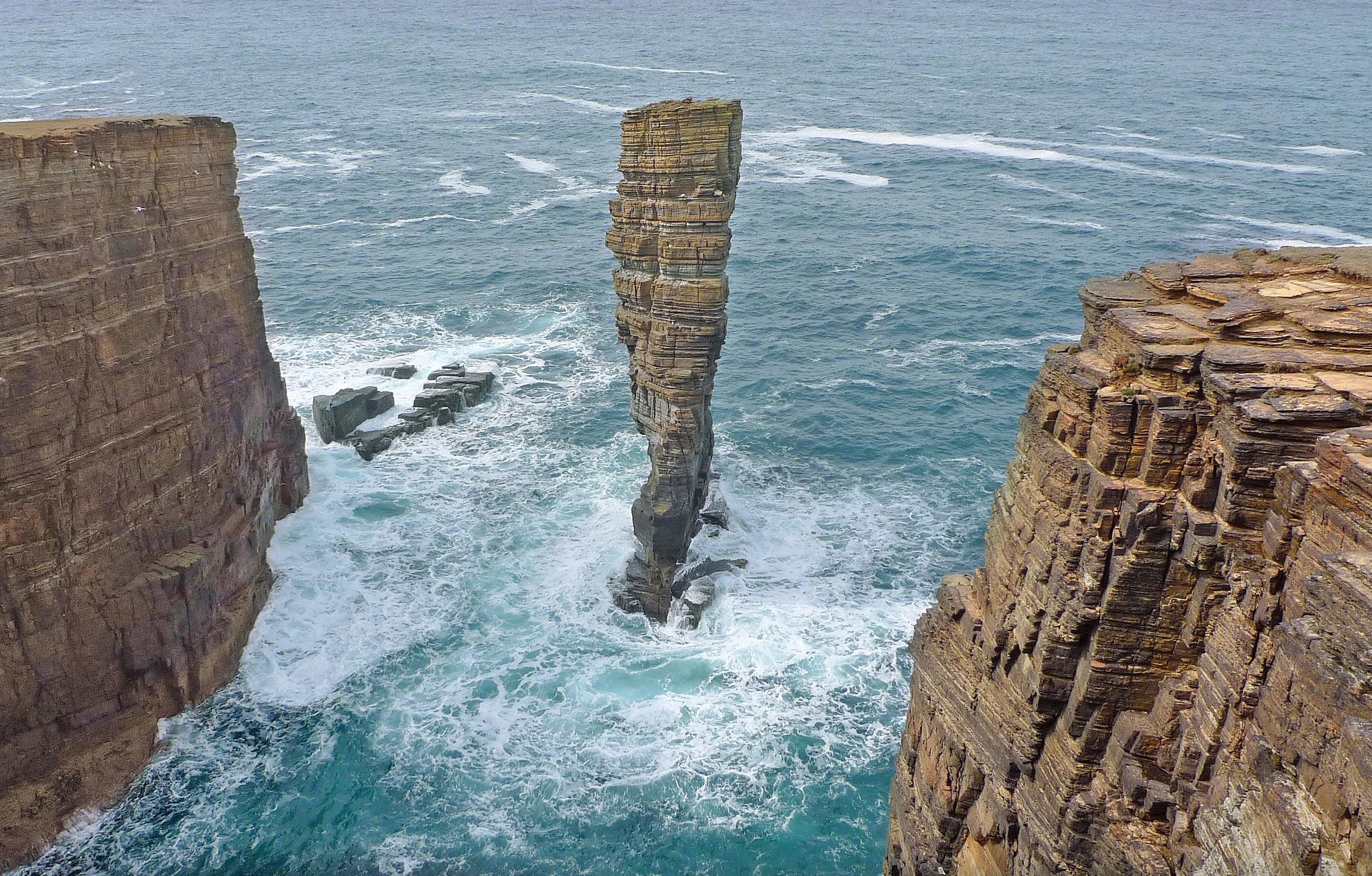
Identify the landform type.

a)

Sea Stack

b)

Sea Stump

c)

Arch

d)

Bay

18.

Bays are created by:

a)

Deposition

b)

Erosion

c)

Weathering

d)

Transportation

19.

The river is at its slowest

a)

Lower Course

b)

Middle Course

c)

Upper Course

20.

A long narrow lake that occupies the floor of a glaciated valley

a)

Oxbow Lake

b)

Ribbon lake

c)

Esker

d)

Organic lake

21.

How does rock type affect rates of coastal erosion?

a)

Harder rocks erode more quickly

b)

Harder rocks erode more slowly

c)

Older rocks erode more quickly

22.

Which landform is found in the upper course of the river

a)

Waterfall

b)

Meanders

c)

Deltas

23.

At the coast what is found before a stump is created?

a)

Seagulls

b)

Arch

c)

Wave-cut platform

d)

Stack

24.
What is this landform?
a)
Spit
b)
Sand dune
c)
Stack
d)
Stump
25.
Which is a landform of coastal erosion?
a)
Stack
b)
Spit
c)
Sand Dune
d)
Bar
26.
What is the first stage in a stack formation?
a)
Arch is formed
b)
Cave is formed
c)
Line of weakness in rock
d)
Stump is formed
27.
I happen when the waves don't have enough energy to carry sediment
a)
Deposition
b)
Erosion
c)
Swash
d)
Backwash
28.
I transport material along a beach. What am I.
a)
Longshore Drift
b)
Longshape Drift
c)
Longnose Drift
d)
Longway drift
29.
What ecosystem forms behind a spit?
a)
Sand Dune
b)
Salt Marsh
c)
Coral Reef
d)
Mangrove
30.
I transport material along a beach. What am I?
a)
Longshore Drift
b)
Longshape Drift
c)
Longnose Drift
d)
Longway drift
31.
Which erodes quicker?
a)
Hard rock
b)
Soft rock
32.
Erosion means 'the wearing away of rock'.
a)
True
b)
False
33.

The pushing of deposited sediment by the snout of the glacier as it advances downhill or the valley is known as....

a)

Plucking

b)

Abrasion

c)

Bulldozing

d)

Deposition

34.

What is a glacier?

a)

A glacier is any piece of ice that moves.

b)

A glacier is a mass of ice that thaws and re-freezes repeatedly.

c)

To be considered a glacier, a mass of ice must be at least 1 mile thick

d)

Glaciers are masses of ice made made up of snow that has accumulated and compacted over time .

35.

Abrasion is:

a)

parallel and straight scratches cut into bedrock by a glacier.

b)

a process of erosion which occurs when material being transported wears away at a surface over time.

c)

the transportation of large rocks and boulders

d)

a ridge at the edge of a glacier where rocks and sediment are deposited

36.

Why do glaciers move?

a)

due to their immense weight

b)

gravity

c)

their weight AND gravity

d)

They DON'T move!

37.

Which statement about glaciers is NOT true?

a)

Glaciers move so slowly that their movement cannot be noticed by humans.

b)

Glaciers change the surface of the land

c)

Glaciers transport sediment.

d)

Glaciers are found on every continent.

38.

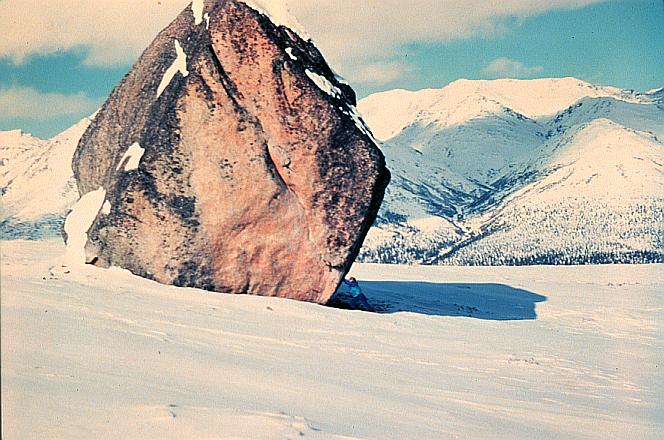
Large rocks or boulders that are transported by glaciers are called...

a)

striations

b)

erratics

c)

till

d)

abrasions

39.

What is the name for a small river that joint a bigger river?

a)

Tributary

b)

Confluence

c)

Estuary

d)

Meander

40.

Which of these coastal management strategies is design to stop longshore drift?

a)

Seawall

b)

Rip-rap/rock armour

c)

Gabions

d)

Groynes

41.

Large rocks or boulders that are transported by glaciers are called...

a)

striations

b)

erratics

c)

till

d)

abrasions

42.

Glaciers are found:

a)

in locations where snowfall exceeds snowmelt

b)

everywhere on earth

c)

only near the north and south poles

d)

in locations where snowmelt is greater than snowfall

43.

What is the soft rock which makes up most of the Holderness Coast?

a)

Limestone

b)

Chalk

c)

Boulder Clay

d)

Sandstone

44.

What is deposition?

a)

When waves lose energy and drop sediment along the coast.

b)

The wearing away of land by water or wind.

c)

The movement of sediment along the beach.

d)

The distance that the wind has traveled over water.

45.

How do groynes prevent erosion?

a)

They deflect the energy of the waves

b)

They provide platforms for fishing

c)

They trap sediment and build up the beach

d)

They increase longshore drift

46.

Boulder clay is a resistant rock

a)

True

b)

False

47.

Which is the correct order?

a)

Stack, stump, cave, arch

b)

cave, arch, stump, stack

c)

cave, stack, arch, stump

d)

cave, arch, stack, stump

48.

Which processes lead to the formation of a spit.

a)

Erosion and deposition

b)

Weathering and erosion

c)

Weathering and transportation

d)

Transportation and deposition

49.

What is longshore drift?

a)

When waves lose energy and drop sediment along the coast.

b)

The wearing away of land by water or wind.

c)

The movement of sediment along the beach.

d)

The distance that the wind has traveled over water.

50.

What is the geology of the Holderness Coastline?

a)

Granite and boulder clay

b)

Sandstone and chalk

c)

Boulder clay and chalk

d)

Limestone and chalk

51.

Where is the Holderness Coast located?

a)

South Wales

b)

Western Scotland

c)

East Yorkshire

d)

North Linconshire

52.
What happens to a rock when it weathers?
a)
It settles out of water that is carrying it.
b)
It creates a valley.
c)
It forms a delta.
d)
It breaks into small pieces.
53.
Acid rain causes
a)
physical weathering.
b)
chemical weathering.
c)
both chemical and physical weathering.
d)
neither chemical or physical weathering.
54.
How do plants weather rocks?
a)
during photosynthesis
b)
when roots grow into cracks of rocks and expand the rock
c)
when the plant moves water from the roots to the leaves
55.
Select the answer that shows the order of events a rock goes through.
a)
erosion, weathering, deposition
b)
weathering, erosion, deposition
c)
deposition, weathering erosion
d)
erosion, deposition, weathering
56.
A cliff formed near the ocean.  Which statement best describes how this cliff formed?
a)
Warm air melted the rock.
b)
Sun rays evaporated the rock.
c)
Ocean waves washed away rock.
d)
Plant roots pushed away the rock.
57.
Weathering causes rocks and minerals to break into smaller pieces.  Which event is the best example of weathering?
a)
a raindrop splashing in a lake
b)
a snowball rolling down a mountain
c)
a tree root growing into the crack of a rock
58.
Over long periods of time, deposition may change the Earth’s surface by _____.
a)
forming new land features
b)
breaking down large rocks into smaller ones
c)
washing away beaches
d)
severely draining topsoil
59.
Deposition changes the Earth’s surface because eroded materials _____.
a)
stop the river's flow
b)
make rich farmlands
c)
are dropped in new places
d)
move very slowly
60.
What has the greatest erosion effect on our beaches?
a)
waves
b)
gravity
c)
glaciers
d)
wind
61.

The valley walls of a river are the steepest at which river course?

a)

Upper

b)

Middle

c)

Lower

62.

1.What do you see in this picture?

a)

Waterfall

b)

V-shaped valley

63.

Which of the following happens to make a step on the river bed?

a)

The moving water erodes the hard and soft rock at the same speed/rate

b)

The moving water deposits sediment on the river bed, creating a step

c)

The moving water erodes the soft rock faster than the hard rock

d)

The moving water erodes the hard rock faster than the soft rock

64.

.....................is where the streams begin.

a)

Mouth

b)

Source

c)

Estuary

65.

Rivers begin as large streams.

a)

True

b)

False

66.
A waterfall is created because of ...
a)
the types of layers of rock
b)
the force of gravity
c)
deforestation
d)
deposition
67.
A meander is best described as ...
a)
A straight section of the river.
b)
A winding section of a lake.
c)
A section of the river that joins another river.
d)
A winding section of a river.
68.
Give reasons for the differences in cross sections of rivers in the upper and lower courses
a)
A. In the upper course rivers are narrow and swallow because the river is less powerful and discharge relatively low. In the lower course the river is wider and deeper as the river carries more load, discharges more and has more power to erode.
b)
B. In the upper course rivers are wide and deep because the river is less powerful and discharge relatively low. In the lower course the river is narrow and shallow as the river carries more load, discharges more and has less power to erode. 
c)
C. As a river moves from its upper to its lower course, it tends to carry more load, is wider, deeper, faster flowing and discharge increases
69.
What features are associated with waterfalls
a)
A. Niagara, Victoria, Angel, High Force
b)
B. Plunge pool, undercutting, hard and soft rock.
c)
C. Weathering, erosion, transportation and deposition
70.
What river features and landforms are associated with  a cross section or profile of a river valley in its upper course.
a)
A. river source, V-shape, interlocking spurs, narrow and shallow river channel
b)
B. delta, flood plain, river mouth, levees, wide and deep river channel
c)
C. sheep farming, wind turbines, HEP (hydro-electric power) stations and dams and reservoirs
71.

What is the name given to material deposited in a flood plain?

a)

Aluminium

b)

Boulders

c)

Alluvium

d)

Gorge

72.

In the river process, ___________ is when material is worn away from the river bed and banks.

a)

transport

b)

deposition

c)

erosion

73.

In the river process, __________ is when material is dropped into the river channel.

a)

Deposition

b)

Erosion

c)

Transport

74.

Waterfalls form when a river goes over layers of hard and (a)   rock

75.

When the soft rock is eroded at the base of the waterfall what feature is formed?

a)

Undercut

b)

Gorge

c)

Plunge pool

76.

Which landscape feature was most likely formed by glacial activity?

a)

an eroded plateau

b)

a flat floodplain

c)

a U-shaped valley

d)

a V-shaped valley

77.

The bedrock at a certain location is deeply scratched, and in some places is covered by a layer of unsorted sediment. Which erosional agent was probably responsible for these features?

a)

ocean waves

b)

wind

c)

running water

d)

glaciers

78.

The diagram represents a stream valley. Which diagram below best shows how this valley might be modified after a glacier has moved through it?

a)
b)
c)
d)
79.
A glacier is __________
a)
series of frozen lakes that line up parallel to one another 
b)
series of frozen seas that rest in the interior of continents 
c)
o  large body of ice that does not move across the earth's surface 
d)
large body of ice and snow that shows evidence of movement 
80.
_____ is the removal of large chunks of rock debris.
a)
Plucking
b)
Abrasion
c)
Weathering
d)
Erosion
81.
A _____ glacier carves a V-shaped valley into a U-shaped valley.
a)
Valley
b)
Continental
c)
Mountain
d)
Plain
82.
_____ are are lines deposited at bottom or along sides of glaciers.
a)
Eskers
b)
Till
c)
Erratics
d)
Moraines
83.
_____ are enormous boulders transported and deposited by glaciers, often far from their source region.
a)
Till
b)
Erratics
c)
Moraines
d)
Fjords
84.
Glaciers form when _____.
a)
less snow falls than melts 
b)
more snow falls than melts 
c)
less rain falls than freezes 
d)
more rain falls than freezes 
85.
What happens when layers of snow keep piling up?
a)
The bottom layers are compressed into ice
b)
The top layers melt into water
c)
The top layers are compressed into ice
d)
The bottom layers melt into water
86.
How do glaciers erode land?
a)
By picking up soil and rocks and depositing them in new location
b)
By picking up water from lakes and streams and carrying it to the ocean
c)
By causing rain and snow in an area
d)
By lowering the atmospheric pressure, causing intense windstorms
87.
Deposited sediment from glaciers forms different land features, including hills called
a)
mountains
b)
piles
c)
moraines
d)
grooves
88.

Glaciers can be found in hot regions.

a)

True

b)

False

89.

_______________ is the wearing down of the rocks

a)

Weathering

b)

Abrasion

c)

Erosion

90.
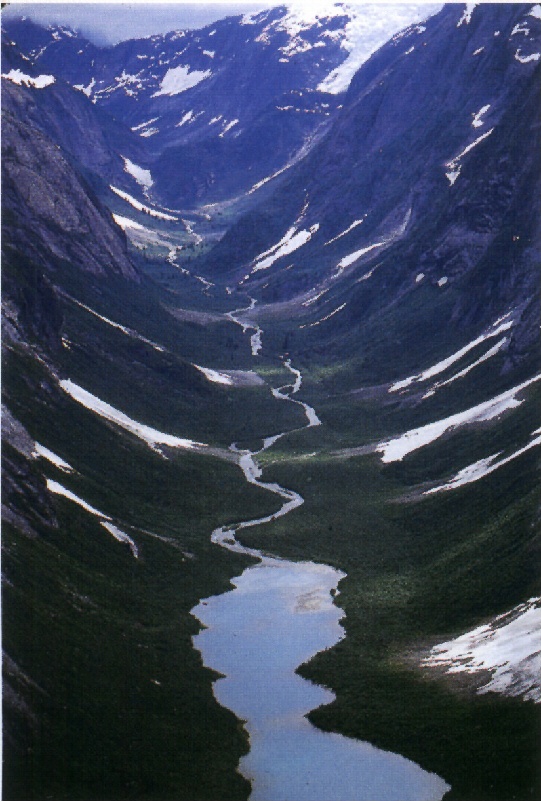
What process created this V-shaped valley?
a)
Erosion due to a river
b)
Erosion due to a glacier
c)
Weathering due to a river
d)
Weathering due to wind
91.

Glaciers are:

a)

Layers of ice

b)

layers of sand

c)

layers of water

d)

layers of cake

92.

When water enters the cracks in a large rock

and freezes, the water expands. Over time,

water freezing and thawing –

a)

erodes the large rock through a river

b)

weathers the rock into sediments

c)

deposits lava in a new place

d)

changes the rock into a glacier

93.

Which table correctly identifies the agents of

change for the corresponding landforms?

a)
b)
c)
d)
94.

Which image best shows the movement of

sediments from one place to another?

a)
b)
c)
d)
95.
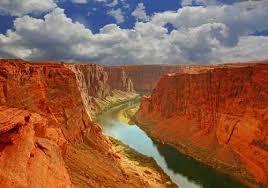
What land form is this?
a)
plain
b)
valley
c)
mountain
d)
canyon
96.
What process created this V-shaped valley?
a)
Erosion due to a river
b)
Erosion due to a glacier
c)
Weathering due to a river
d)
Weathering due to wind
97.
Rain washing away soil from a hillside
a)
Weathering
b)
Erosion
c)
Deposition
98.
Water getting into cracks, freezing, and breaking the rocks or pavement apart
a)
Weathering
b)
Erosion
c)
Deposition
99.

Glaciers take over a 1000 years to form.

a)

True

b)

False

100.

Glaciers found on top of mountains are called...

a)

Land Glaciers

b)

Mountain Glaciers