
NEW
Font size
 Worksheets
11/14/24 ENERGY & RADIOACTIVITY PRACTICE TEST
Total questions: 40
Worksheet time: 20mins
All types of changes require _____.
gravity
gravy
energy
heat

Which of the following statements is the law of the conservation of energy?
Energy can be created but not destroyed. And energy can be transformed or converted from one form of energy to another.
Energy can neither be created or destroyed. Energy is only transformed or converted from one form of energy to another.
Energy cannot be created but is destroyed when it is used. Energy is transformed or converted from one form of energy to another until it decreases to nothing.
Energy can be created and destroyed. Energy is created when objects move and it is destroyed when they stop moving.

Energy from the kinetic energy of particles.
nuclear
chemical
mechanical
electrical
thermal
The SI unit for energy is the _____.
watt, W
energon, E
joule, J
newton, N
What type of heat transfer occurs when you touch something that feels hot?
convection
conduction
radiation
What type of heat transfer occurs when warm air circulates in a cool room to warm the room?
convection
conduction
radiation
What type of heat transfer occurs when you feel the heat of a hot pot on a stove before you touch it?
convection
conduction
radiation
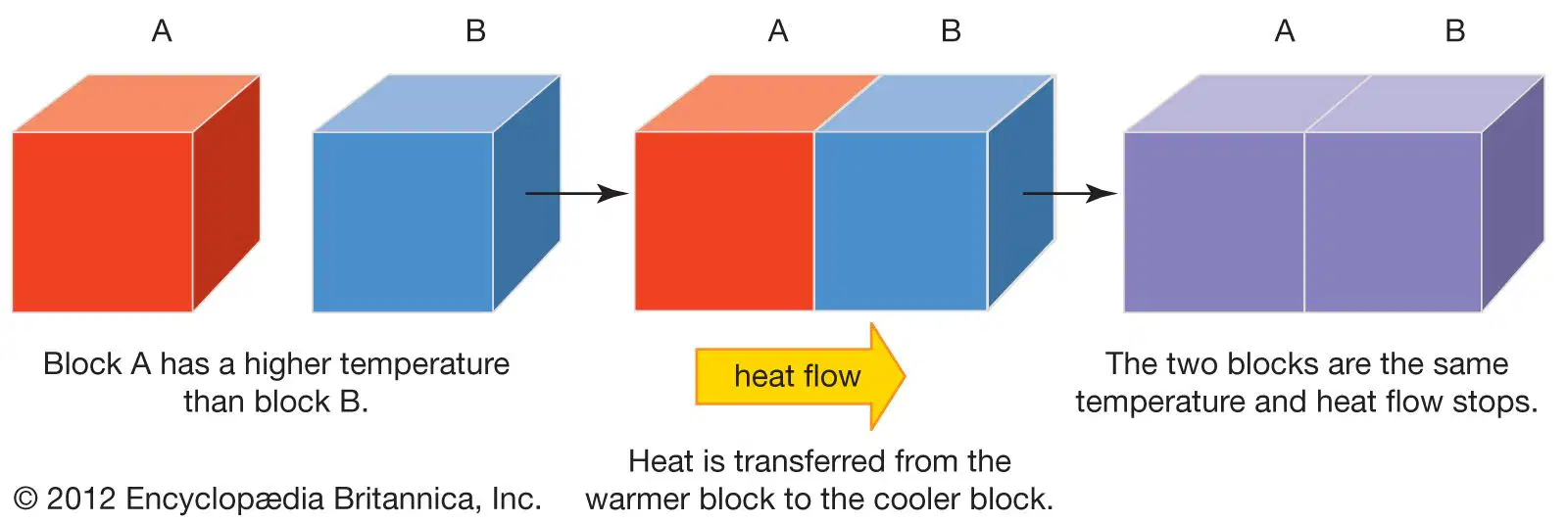
Heat energy always transfers from a substance that has a _____ temperature to a substance that has a ____ temperature.
high / low
low / high
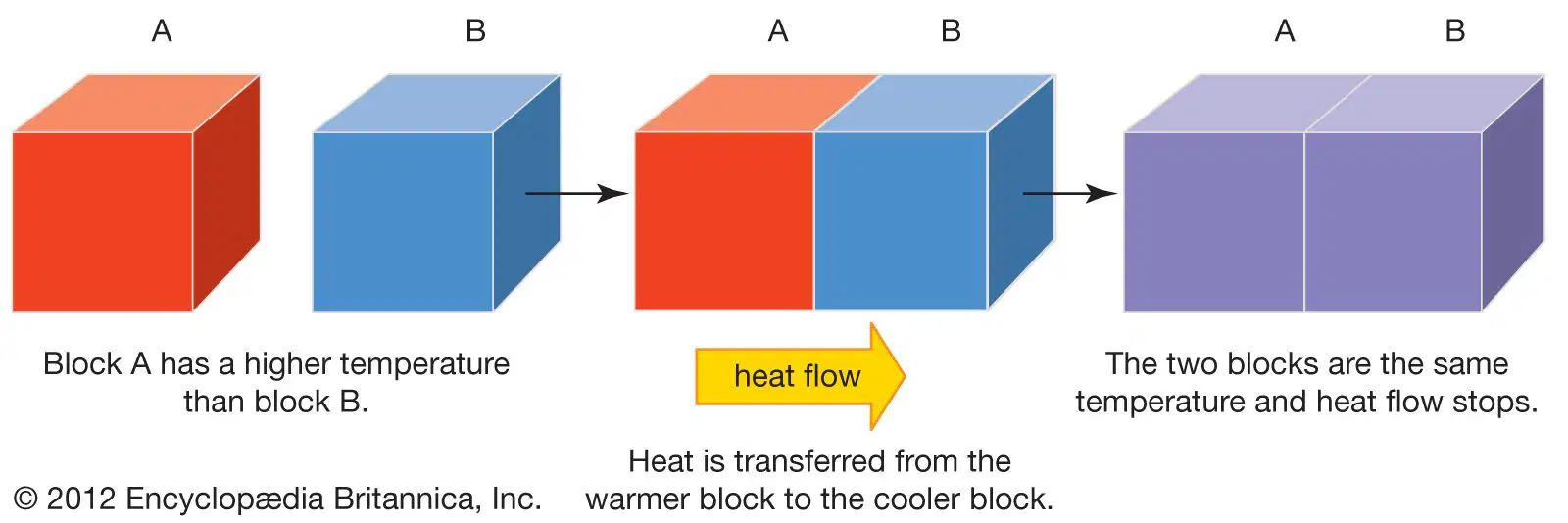
Heat transfer stops between two substances when the substances have ______.
different temperatures
the same temperature

The energy of motion is ___ energy.
potential
kinetic
elastic
chemical
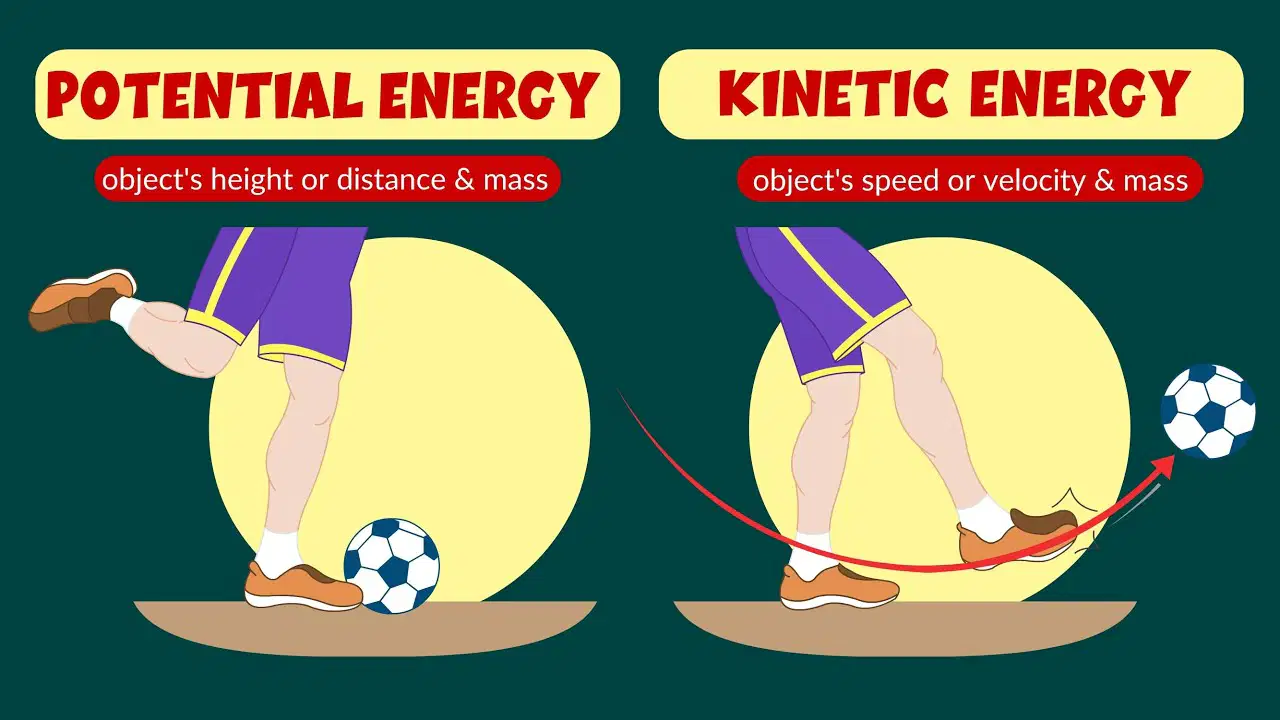
The energy of position is ___ energy.
potential
kinetic
elastic
chemical

Which of the following correctly sequences the energy transformations that take place in a light bulb?
CE => LE + TE
EE => CE => LE
EE => LE + TE
KE => EE => TE

Which of the following correctly sequences the energy transformations that take place in the engine of this car?
CE => TE => ME
ME => TE => ME
CE => KE => TE
KE => ME => TE

Which of the following correctly sequences the energy transformations that take place in this electric car?
EE => TE => ME
EE => TE
EE => TE => ME
CE => EE => ME

Which of the following correctly sequences the energy transformations that take place in this electric power plant?
TE => CE => EE
CE => TE => ME => EE
ME => TE => CE => EE
ME => EE

The temperature of a substance is the average ___ energy of the particles that make up the substance.
potential
chemical
nuclear
kinetic
The more energy transformations that take place in a device, machine, or process, the ___ efficient it is.
less
more

Incandescent light bulbs are less efficient than fluorescent and LED light bulbs because they produce more ___ energy.
light
thermal
nuclear
kinetic

Batteries convert ___ energy to ___ energy.
thermal / chemical
electrical / thermal
chemical / electrical
chemical / thermal
A ball with a mass of 0.5 kg is thrown with a velocity of 2.0 m/s. What is its kinetic energy?
Use KE = 1/2mv2 and don't forget to square v first!
0.5 J
1 .0 J
2 .0 J
1.5 J
A toy car has a speed of 1.5 m/s and a mass of 3 kg. What is its kinetic energy?
KE = 1/2mv2
4.5 J
2.7 J
2.3 J
3.4 J
A textbook is sitting on the edge of a desk that is 1.3 m above the floor. The textbook has a mass of 1.2 kg, so its gravitational potential energy is ___.
Use GPE = mgh and use g = 10.
5.7 J
8.9 J
12.4 J
15.6 J

A basketball has a mass of 0.60 kg. it is perched on the rim just before it goes in. The rim is 3.0 meters high. How much gravitational potential energy does the basketball have?
GPE = mgh
18 J
1.8 J
5 J
0.5 J

Energy is the ability to do ___, which is the ability to move an object.
do
work
hair
you

When two objects and or sustances come in contact with each other friction can be produced.
Friction can produce ___ energy, which may or may not be a waste energy.
chemical
thermal
elastic
nuclear

The Goliath roller coaster at Six Flags has more ___ than ___ at the top of this hill.
KE / PE
PE / KE
The Goliath roller coaster at Six Flags has more ___ than ___ at the bottom of this hill.
KE / PE
PE / KE
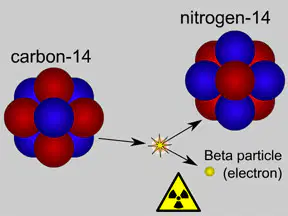
When the nuclei of an element spontaneously change into the nuclei of another element, this process is called ____.
convection
radioactivity
decomposition
solubility
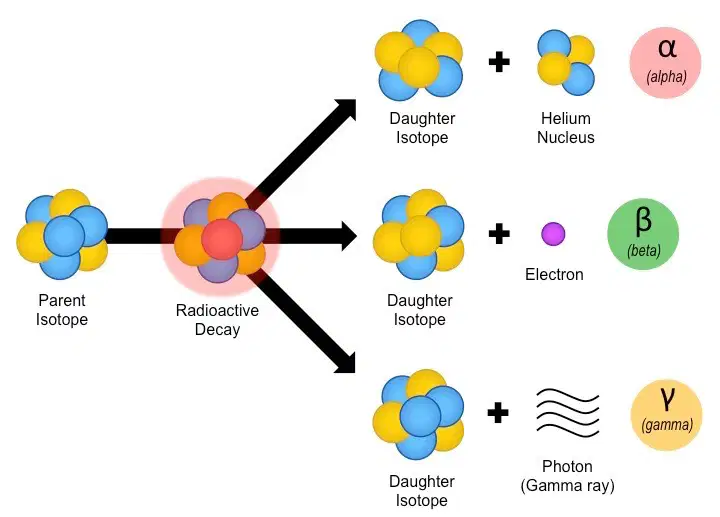
Radioactive nuclei produce two types of particles and a specific type of radiation.
They are ___ particles, ___ particles, and ___ rays.
proton , neutron, and electron
alpha , beta, gamma
eenee, meenee, moe
hot, warm, cold
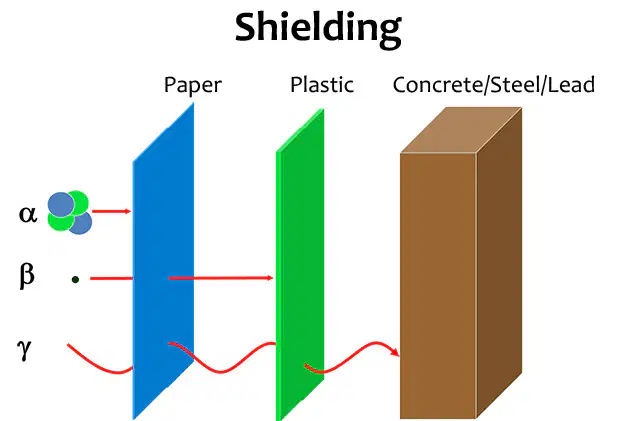
The LEAST penetrating type of radioactivity is ___ and the MOST penetrating type of radioactivity is ___.
alpha , beta
beta , gamma
alpha , gamma
gamma , alpha

During beta decay, a(n) ___ turns into a(n) ___ when it emits a beta particle.
proton , neutron
electron , proton
neutron , electron
neutron , proton
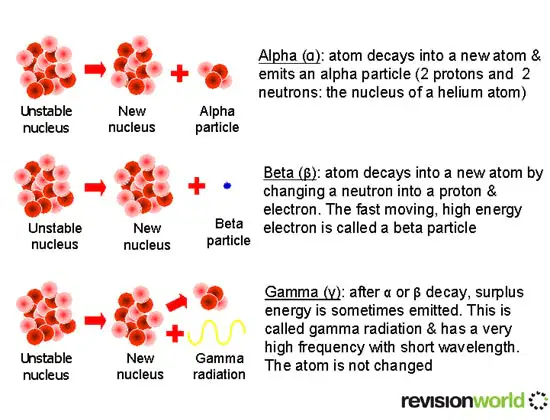
A beta particle is a ___ and an alpha particle is a ___.
fast moving electron, helium nucleus
slow moving proton , magnesium nucleus
fast moving neutron , oxygen nucleus
slow moving electron , sulfur nucleus

If a sodium nucleus undergoes beta decay, it changes into a ___ nucleus.
neon
magnesium
aluminum
silicon
If a carbon nucleus undergoes alpha decay, it changes into a ___ nucleus.
oxygen
nitrogen
boron
beryllium
Which coefficient set will balance:
MnO2(s) + Mg(s) => Mn(s) + MgO(s) ?
2,2,1,1
1,2,2,1
1,3,3,2
1,2,1,2
Which coefficient set will balance:
Cl2(g) + CsI(aq) => CsCl(aq) + I2(s) ?
2,2,1,1
1,2,2,1
1,3,3,2
1,1,2,2
Which coefficient set will balance:
K2O(s) + H2O(l) => KOH(aq) ?
2,2,1
1,2,2
1,1,2
1,2,1

The black spheres are ___.
protons
neutrons
electrons
croutons
The white spheres are ___.
protons
neutrons
electrons
croutons
The green spheres are ___.
protons
neutrons
electrons
croutons

