
 Worksheets
Nervous System
Total questions: 40
Worksheet time: 22mins
What is the function of the nerve cells?
They are responsable of your defense mechanism.
They transmit signals or messages to other neurons, organs or glands.
They transmit substances to your endocrine system to produce hormones.

What is the name of the part of the neuron that is pointed out in the image?
Cell Body (Soma)
Axon
Myelin Sheats
Dendrites

What is the name of the part of the neuron that is pointed out in the image?
Myelin sheaths
Cell Body (Soma)
Axon
Dendrites

What is the name of the part of the neuron that is pointed out in the image?
Myelin Sheats
Axon
Dendrites
Cell Body (Soma)

What is the name of the part of the neuron that is pointed out in the image?
Myelin Sheats
Cell Body (Soma)
Dendrites
Axon
The protective fatty tissue that speeds up the transmission of messages is:
Myelin Sheaths
Axon
Dendrites
Soma
The extension that transmit electrical impulses from the som to other parts is:
Myelin Sheaths
Soma
Dendrites
Axon
The extensions that obtain the messages from other cells are:
Myelin Sheats
Axon
Dendrites
Soma
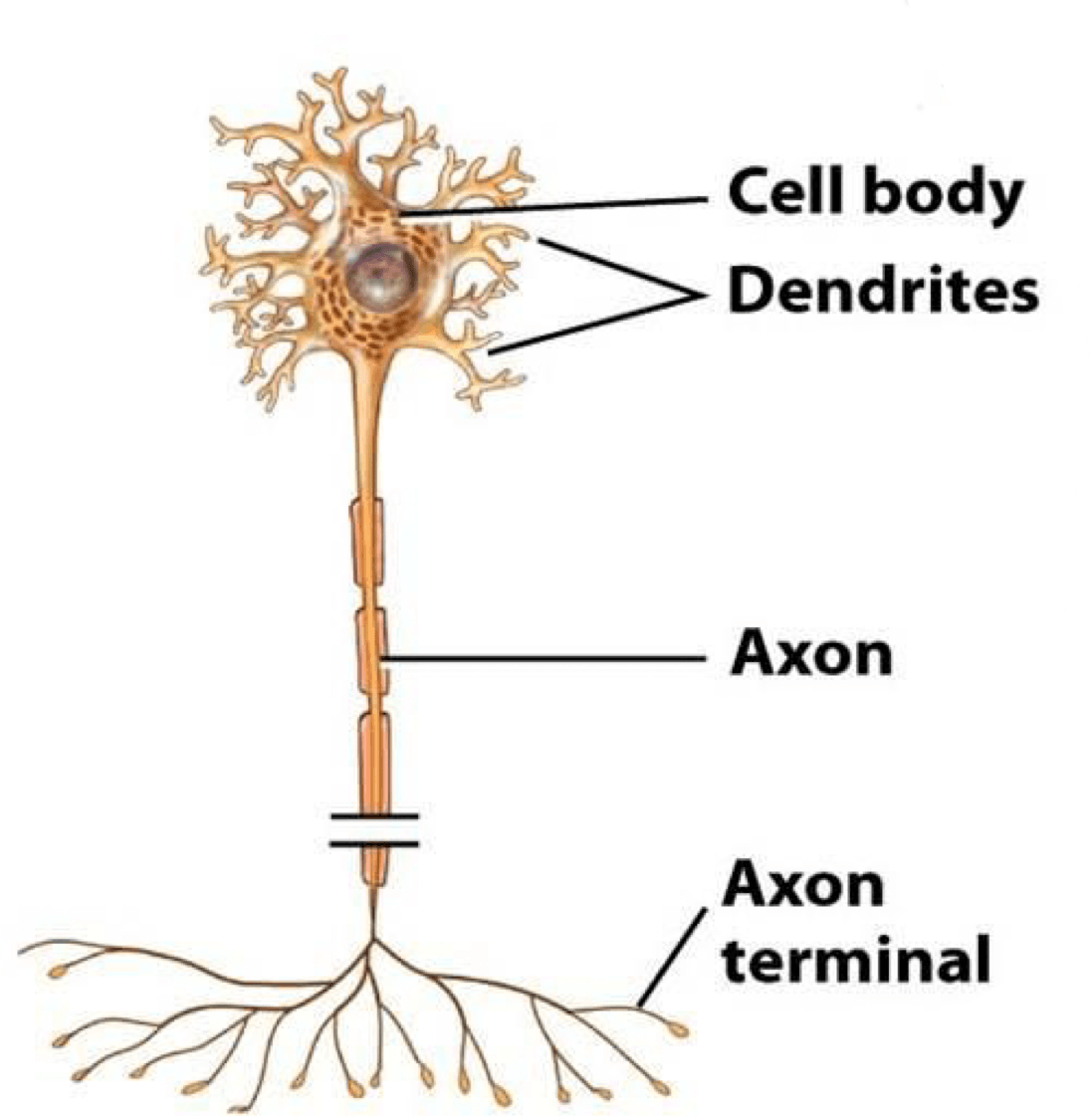
What type of neuron is represented on the image?
Motor Neuron
Interneuron
Sensory Neuron
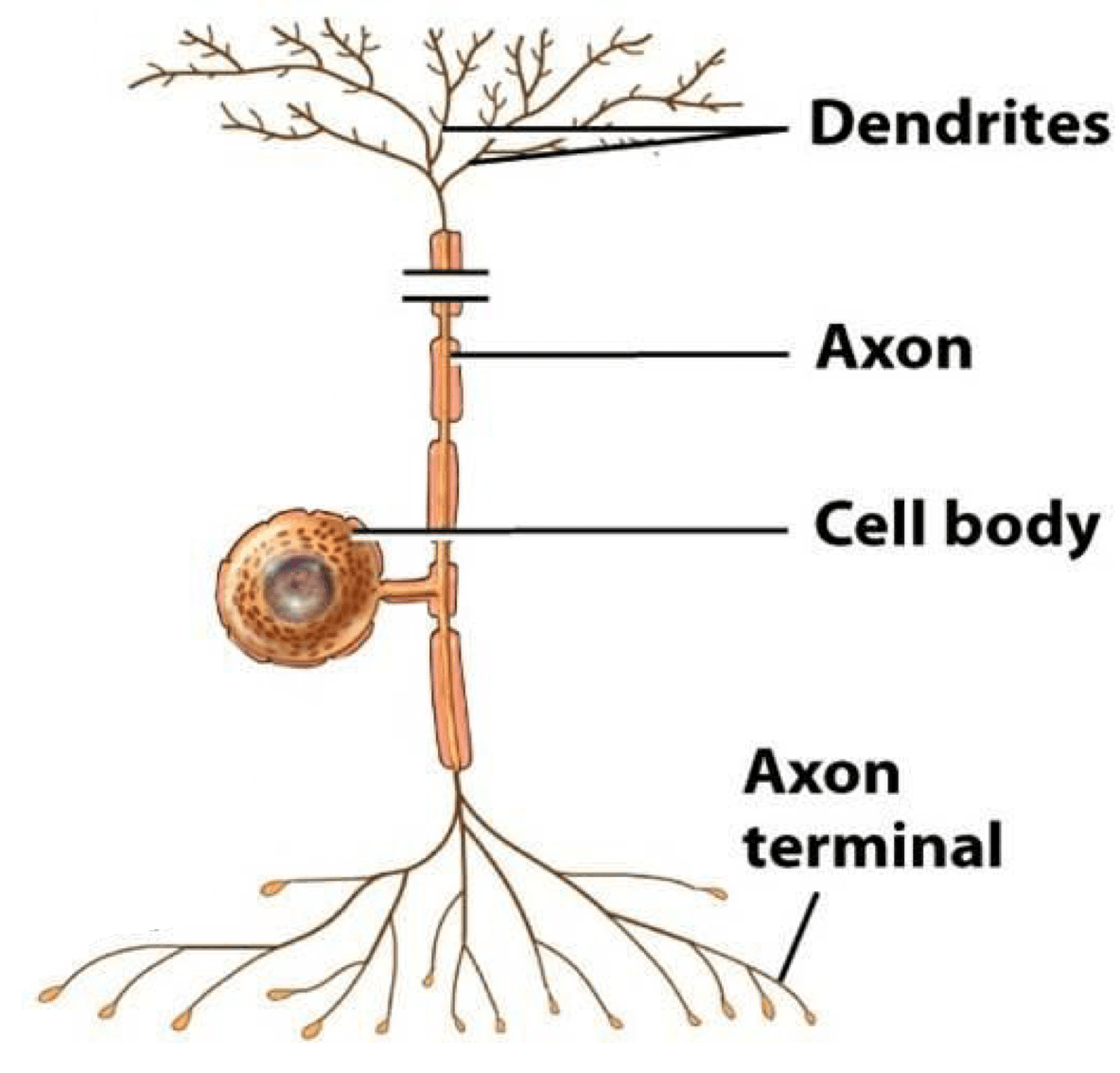
What type of neuron is represented on the image?
Motor Neuron
Interneuron
Sensory Neuron

What type of neuron is represented on the image?
Motor Neuron
Interneuron
Sensory Neuron
Type of neuron that perceive information about your environment.
Motor Neuron
Interneuron
Sensory Neuron
Type of neuron located only in the brain and spinal cord that pass impulses from one neuron to another.
Motor Neuron
Interneuron
Sensory Neuron
Type of neuron that sends nerve impulses to muscles and gland, by the command of other neurons.
Motor Neurons
Interneurons
Sensory Neurons
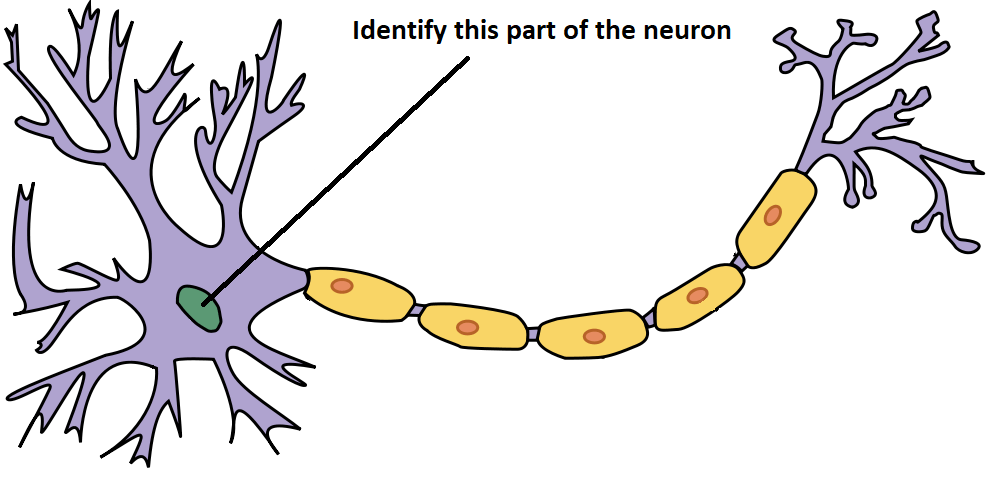
Nucleus
Cell Body
Axon
Node of Ranvier
What direction foes the electrical signal travel through the neuron?
From dendrites, down the Axon, and out Axon terminalsThis is a correct answer
From Axon terminals, down the Axon, & out of the dendrites
Any direction up or down the cell
From the Axon, to the Dendrites, and out the Axon terminals
Are you more left-brained or right-brained?
Left
Right
Both
What does the neuron's nucleus do?
Controls the actions of the neuron
Produces food for the neuron
Carries information from the cell body to other neuronsThis is a wrong answer
Controls speed of electrical signal through the axon
What does the neuron's Axon do?
Controls the actions of the neuron
Produces food for the neuron
Carries information from the cell body to other neuronsThis is a wrong answer
Controls speed of electrical signal through the axon
What do Dendrites do?
Intakes information from other neurons
Produces fatty tissue for the Myelin Sheath
Sends information to the next cell
Controls the speed of electrical signal through the axon
What do Axon Terminals do?
Intakes information from other neurons
Produces fatty tissue for the Myelin Sheath
Sends information to the next cell
Controls the speed of electrical signal through the axon

As organisms get more complex, cells become specialized to perform specific functions in the body. What is the function for the cell shown?
contract and shorten movement
provide coverage and protection
carry impulses around the body
connects parts together
Which cell relays messages from one tissue to another?
Red Blood Cell-RBC
White Blood Cell-WBC
Neuron
Tissue
Neurons are primarily composed of this cell?
heart
skin
brain
skull
The function of sneezing is to expel mucus containing foreign particles from the nasal cavity. A person sneezes when foreign particles pass through the nasal hair which triggers the release of chemical that activates body system causing sneezing. What body part is activated?
circulatory system
digestive system
nervous system
excretory system
Which system is responsible for the overall control of all the internal processes that occur in the body?
muscular system
nervous system
digestive system
skeletal system
The urinary bladder is a muscular organ of the excretory system that collects urine excreted by the kidney. How does the nervous system help the urinary system in excretion?
it signals the urinary bladder to absorb more water from the urine.
It signals the urinary system to collect waste from the different parts of the body.
It signals the urinary bladder to hold and release urine at appropriate times.
It signals the urinary bladder to allow more urine to flow from the ureters.
The brain has 3 major sections that send and receive signals to control all the activities that keep a person functioning efficiently. Which major section controls breathing and heart beat?
cerebellum
cerebrum
brain stem
cortex
Which 2 body systems interact and initiate movement?
muscular and nervous system
skeletal and muscular system
respiratory and nervous system
circulatory and nervous system
The main function of the nervous system
send messages to and from the brain and spinal cord to and from the body
break down food to be used by the body
remove wastes from the body
all of these
Which of the following is a function of the nervous system?
gathers information
processes information
transmits information
all of the above
The major set of large set of nerves running down the spinal column or vertebrae.
axon
spinal cord
dendrite
cell body
The part of the body that integrates the information it receives from all over the body in order to make decisions is called the __________________
peripheral nervous system
sympathetic nervous system
central nervous system
parasympathetic nervous system
Consists of your brain and spinal cord
medulla
cerebrum
central nervous system
peripheral nervous system
All parts of the nervous system except for the brain and spinal cord
nerves
neuron
central nervous system
peripheral nervous system
Protective bones which surround and protect the spinal cord.
vertebrae
brain
central nervous system
peripheral nervous system
The main organ of the nervous system.
spinal cord
nerves
neuron
brain
Specialized structures which carry information between your body and the central nervous system
nerves
neuron
brain
vertebrae
Actions which are NOT under your control
voluntary
involuntary
vertebrae
brain
Actions which are under your control
involuntary
voluntary
brain
vertebrae

