wayground logo

Free Printable Worksheets

NEW

Font size

S
M
L
XL
Worksheets

Nervous System

Total questions: 61

Worksheet time: 46mins

Name
Class
Date
1.
The ______ is considered the control center of the body.
a)
heart
b)
brain
c)
spinal cord
d)
mouth
2.
This is known as a network of nerves that originate in the brain or spinal cord that include 43 pairs of nerves.
a)
central nervous system
b)
peripheral nervous system
3.
If I step on a nail...what type of neuron take that signal TO the CENTRAL NERVOUS SYSTEM?
a)

sensory/ efferent

b)
motor
c)

sensory /afferent

d)
receptors
4.
If I step on a nail...what type of neurons take the response to my muscles?
a)
motor
b)
interneurons
c)
sensory
d)
not neurons, muscle tissue sends the response
5.
Which Lobe?
a)
Frontal
b)
Parietal
c)
Temporal
d)
Occipital
6.
What is this?
a)
Cerebrum
b)
Cerebellum
c)
Brain Stem
d)
Diencephalon
7.
Makes decisions, plans, reasons, and carries out behaviors
a)
Frontal Lobe
b)
Parietal Lobe
c)
Occipital Lobe
d)
Temporal Lobe
8.
If a head injury results in someone no longer being able to hear, which part of the brain may have been damaged?
a)
temporal lobe
b)
occipital lobe
c)
parietal lobe
d)
frontal lobe
9.
This lobe receives and processes visual information and then sends it to other parts of the brain for further processing and storage.
a)
Occipital Lobe
b)
Parietal Lobe
c)
Temporal Lobe
d)
Frontal Lobe
10.
This lobe controls responses to complex problems through reasoning, judgment, decision making and planning.
a)
Occipital Lobe
b)
Parietal Lobe
c)
Temporal Lobe
d)
Frontal Lobe
11.
these nerves carry impulses away from the CNS.
a)
dendrites
b)
afferent nerves
c)
bones
d)
efferent nerves
12.
these nerves carry information to the CNS
a)
efferent nerves
b)
bones
c)
dendrites
d)
afferent nerves
13.

Part of brain that helps you keep your balance.

a)

cerebrum

b)

cerebellum

c)

medulla

d)

brain stem

14.
Which of the four lobes is typically responsible for receiving and processing auditory information?
a)
frontal
b)
parietal
c)
occipital
d)
temporal
15.

What is the function of the occipital lobe?

a)

Vision

b)

Hearing

c)

Sleep

d)

Touch sensation

16.
 Division of the Autonomic Nervous System (which is a subdivision of the Peripheral Nervous System) that is & REST AND DIGEST
a)
sympathetic
b)
parasympathetic
17.
Processes visual information
a)
Frontal Lobe
b)
Temporal Lobe
c)
Occipital Lobe
d)
Parietal Lobe
18.
Controls hearing, speaking coherently, and comprehension
a)
Frontal Lobe
b)
Temporal Lobe
c)
Occipital Lobe
d)
Parietal Lobe
19.
The ____ nervous system controls unconscious activities.
a)
somatic
b)
sympathetic
c)
parasympathetic
d)
autonomic
20.
The _____ response is known as fight or flight.
a)
parasympathetic
b)
sympathetic
c)
somatic
d)
peripheral
21.
Parts of the Brain Stem
a)
Pons & Cerebrum
b)
Cerebrum and Cerebellum
c)
Thalamus and Hypothalamus
d)
Pons & Medulla Oblongata
22.
Known as the "Little Brain" and is in charge of balance and coordinating movements
a)
Thalamus
b)
Reticular Formation
c)
Hypothalamus
d)
Cerebellum
23.
The cranial nerve is responsible for the Gag Reflex is?
a)
Abducens 
b)
Facial 
c)
Hypoglossal 
d)
Vagus
24.

6.) Which of the following is caused by repeated blows to the head and body, resulting in damaged neurons and TAU protein deposits and waste build up in brain tissue?

a)

a.) Alzheimer's Disease

b)

b.) ALS (Amyotrophic Lateral Sclerosis)

c)

c.) Post Concussion Syndrome

d)

d.) Chronic Traumatic Encephalopathy

25.

19.) Which of the following occurs when an athlete sustains two concussions within a short period of time, but the second concussive event occurs prior to the healing of the first concussion. This triggers devastating metabolic brain changes that ultimately lead to brain hemorrhage. and likely death.

a)

a.) Amyotrophic Lateral Sclerosis (ALS)

b)

b.) Post Concussion Syndrome (PCS)

c)

c.) Second Impact Syndrome

d)

d.) Chronic Traumatic Encephalopathy (CTE)

26.
Moves eyes laterally away from the nose
a)
abducens
b)
facial
c)
trigeminal
d)
accessory
27.

Olfactory Nerve

a)

smell

b)

vision

c)

digestive

d)

lateral eye movement

28.

The liquid part of blood made of mostly water; nutrients, minerals and oxygen are dissolved

a)

Marrow

b)

Plasma

c)

Proteins

d)

Urea

29.

What are the main components of blood?

a)

Plasma, hormones, enzymes

b)

Plasma, white blood cells, red blood cells, platelets

c)

Plasma, nutrients, gases

d)

Plasma, antibodies, white blood cells

30.

What is the function of platelets in the blood?

a)

Transporting nutrients

b)

Carrying oxygen

c)

Blood clotting

d)

Fighting infections

31.

What are platelets also known as?

a)

Erythrocytes

b)

Hemoglobin

c)

Thrombocytes

d)

Megakaryocytes

32.

Pulmonary arteries carry..........

a)

Oxygenated blood from the heart to all parts of the body

b)

Deoxygenated blood to the lungs

c)

Oxygen rich blood to the heart

d)

Carbon dioxide rich blood

33.

The blood vessel that has valves at intervals...

a)

capillary

b)

artery

c)

vein

d)

none of the above

34.

This is a protein on a red blood cell that helps transport oxygen.

a)

Iron

b)

Hemoglobin

c)

Antibody

d)

Antigen

35.

Which chamber receives blood from the two largest veins in the body?

a)

Right atrium

b)

Right ventricle

c)

Left atrium

d)

Left ventricle

36.

Cardiac Output Formula

a)

Breathing Rate x Heart Rate

b)

Heart Rate X Stroke Volume

c)

Liter/Minute X Heart Rate

37.
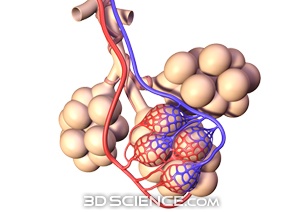
The air sacs that are covered with capillaries where gas exchange takes place
a)
bronchi
b)
lungs
c)
oxygen
d)
alveoli
38.

Flap of tissue that covers the opening to the windpipe during swallowing

a)

Pharynx

b)

Trachea

c)

Epiglottis

39.
What is another name for the windpipe?
a)
Lungs
b)
Larynx
c)
Trachea
d)
Esophagus
40.

Lungs are made up of air-filled sacs, the alveoli. They do not collapse even after forceful expiration, because of:

a)

Inspiratory Reserve Volume

b)

Tidal Volume

c)

Expiratory Reserve Volume

d)

Residual Volume

41.
What is the volume of one breath called?
a)
minute ventilation
b)
inspiratory capacity
c)
tidal volume
d)
vital capacity
42.

What part of your brain is responsible for coordinating muscle movements between the voluntary and involuntary muscles?

a)

Cerebellum

b)

Cerebrum

c)

Brain Stem

d)

Nerves

43.
  Which part of the nerve cell receives nerve impulses from other cells?
a)
dendrite
b)
axon
c)
cell body
d)
axon terminal
44.
Which letter on the illustration represents the parietal lobe
a)
A
b)
B
c)
C
d)
D
45.
The nerve cell that transmits impulses from the brain or spinal cord to a muscle or gland.
a)
Motor Neuron
b)
Relay Neuron
c)
Sensory Neuron
d)
Schwann cell
46.

The brain is covered in a membrane called:

a)

choroid plexus.

b)

meninges.

c)

ventricles.

d)

cerebral aqueduct.

47.

When the spinal cord is severed and brain damage occurs, what substance could leak into tissues?

a)

Choroid plexus

b)

Cerebral aqueduct

c)

Cerebrospinal fluid

d)

Corpus callosum

48.
Part of the nervous system made of the brain and spinal cord.
a)
central nervous system
b)
peripheral nervous system
49.

Which type of neurons carry information from the central nervous system to the muscles and glands?

a)

Autonomic neurons

b)

Sensory neurons

c)

Interneurons

d)

Motor neurons

50.

Which type of neurons transmit signals from the skin, muscles, and other sensory organs to the brain?

a)

effector neurons

b)

sensory neurons

c)

interneurons

d)

motor neurons

51.

Afferent neurons are primarily responsible for which of the following?

a)

Moving voluntary muscle.

b)

Activating the fight or flight response.

c)

Bringing sensory information from the sensory organs to the central nervous system.

d)

Maintaining the rest or digest response.

e)

Keeping the heart beating.

52.

Another name for motor neurons is

a)

efferent neurons.

b)

afferent neurons.

c)

somatic neurons.

d)

sympathetic neurons.

e)

parasympathetic neurons .

53.
The visual cortex is located in the
a)
occipital lobe
b)
temporal lobe
c)
frontal lobe
d)
parietal lobe
54.

This part of the the brain is an area last to develop. It is responsible for analyzing information making good decisions.

a)

Parietal

b)

Temporal

c)

Occipital

d)

Frontal

55.

Processing sound

a)

Frontal

b)

Temporal

c)

Parietal

d)

Occipital

56.
This neurological injury can occur during violent impacts to the head. 
a)

concussion

b)
Alzheimer's Disease
c)
Dementia
d)
Cerebral Palsy
57.
Shrugs the shoulders
a)
Accessory
b)
Vestibulocochlear
c)
Abducens
d)
Trigeminal
58.
Balance
a)
Optic
b)
Trigeminal
c)
Vestibulocochlear
d)
Vagus
59.

Which cranial nerve provides Sense of smell

a)
I
b)
II
c)
III
d)
VII
60.

What is a coup injury?

a)

Brain injured on opposite side of impact

b)

Brain injured on same side of impact

61.

What is a contrecoup injury?

a)

Brain is injured on opposite side of impact

b)

Brain is injured on same side of impact