
 Worksheets
Space quiz
Total questions: 30
Worksheet time: 18mins
Which of the following correctly places these in order from LARGEST to SMALLEST?
galaxy -- local group/cluster -- planet -- solar system -- universe
universe -- local group/cluster -- galaxy -- solar system -- planet
planet -- solar system -- galaxy -- local group/cluster -- universe
universe -- galaxy -- solar system -- local group/cluster -- planet
A galaxy which is either spherical (ball like) or a flattened disk is a ___ galaxy.
elliptical
humanoid
irregular
spiral
A galaxy which has a nucleus of bright stars and two or more arms in circular formation is called a ___ galaxy.
elliptical
humanoid
irregular
spiral
A Group of stars, and or star systems, star clusters, dust and gas held together by gravity is known as:
Universe
Galaxy
Solar System
Planet
An explosion that occurs at the end of a stars life cycle is known as:
Superior Star
White Dwarf
Supernova
Neutron star
A galaxy that does not have a regular shape?
Spiral
Elliptical
Irregular
Quasar
What Galaxy is Earth located?
Andromeda
Milky Way
Sagittarius
Snickers
Which type of galaxy is not a major galaxy?
Elliptical
Spiral
Irregular
Quasar
What unit is used to measure distances in space?
Light year
Kilometer
Miles
Solar unit
How many main sequence stars is in our solar system?
2
8
1
None
Most scientists believe the Big Bang Theory explains which of the following questions?
How our planets and moons formed
How our universe began
How the sun turns hydrogen into helium
How fast light travels through space
Which statement is true?
The galaxies are moving toward us.
The galaxies are moving away from us.
The universe remains static or unchanged in motion.
None of the above
Light emitted from a star or galaxy can be separated into a band of colors, called a ________.
Red Shift
Wave Length
Spectrum
Microwave
Cosmic Microwave Background Radiation is a form of _________.
Matter
Energy
Visible Light
Water
Which elements are most
abundant in the visible
universe?
Hydrogen and Carbon
Carbon and Helium
Hydrogen and Oxygen
Hydrogen and Helium
As galaxies move away from our galaxy
a shift on the electromagnetic spectrum
(EMS) is noticed. This phenomena is
called _____________.
redshift
blueshift
unshift
blackshift
How does Cosmic Microwave Background Radiation support the Big Band Theory?
Microwaves are found everywhere in the universe.
Microwaves occurred at the time of the Big Bang
Microwaves are useful in our everyday lives
Only A & B
How does the abundance of hydrogen and helium support the Big Bang Theory.
Hydrogen and helium are elements on the Periodic Table
Hydrogen and helium are in the same ratio throughout the universe.
Hydrogen and helium have many current uses today
Red light has a ______ pitch, or frequency, than the blue end.
Low
High
the same
nice
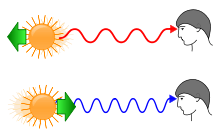
In ____shift, the galaxies appear _____ in colour b/c they are moving towards us.
blue; red
red; red
red; blue
blue; blue

