
 Worksheets
Nutrition Review
Total questions: 25
Worksheet time: 16mins
What is the definition of calories?
the number of nutrients found in a food
convert what you eat into energy
things that make you gain weight
a unit of energy
Substances in food that your body needs.
Nutrition
Nutrients
Proteins
Vitamins
The study of nutrients and how the body uses them.
Nutrients
Minerals
Proteins
Nutrition
What are the nutrients that provide energy (calories) to the body?
Proteins, fats and carbohydrates
Vitamins, minerals, proteins
Proteins, fats, carbohydrates, vitamins, minerals
Vitamins and water
Nutrients that your body uses to build, repair, and maintain cells and tissues.
Protein
Saturated Fat
Minerals
Vitamins
Fats that are solid at room temperature
Protein
Minerals
Vitamins
Saturated fats
Fats that remain liquid at room temperature.
Unsaturated fats
Minerals
Nutrients
Hunger
If calories are energy, why are some calories better for us than others?
some calories are more enjoyable, so eating these foods is better for you
some foods have more nutrients instead of empty calories
some foods have negative calories
Suppose an apple and a donut contain the same amount of sugar. Which one should you eat to make a healthier choice and why?
the donut - they contain the same amount of sugar, so it doesn't matter
the apple - because it contains more nutrients and has no added sugar
What are the two types of carbohydrates?
simple and complex
complete and incomplete
water soluble and fat soluble
mechanical and chemical
Which nutrient is responsible for insulating your body, cushioning your organs and is a reserve energy source for your body?
proteins
carbohydrates
minerals
fats
Which nutrient is necessary to help your body grow, develop and stay healthy. It is important for having strong bones and helping to transport oxygen in your blood.
minerals
fat
water
vitamins
What nutrient is the main source of energy for your body?
proteins
fats
carbohydrates
minerals

If she consumes 2 portions of this food, how many calories would it be?
500
230
460
475

How many trans fats are there in this food?
2g
13g
120g
0g
If you eat something that contains 10 grams of fat, how many calories do you get from the fat?
80 calories
90 calories
40 calories
30 calories
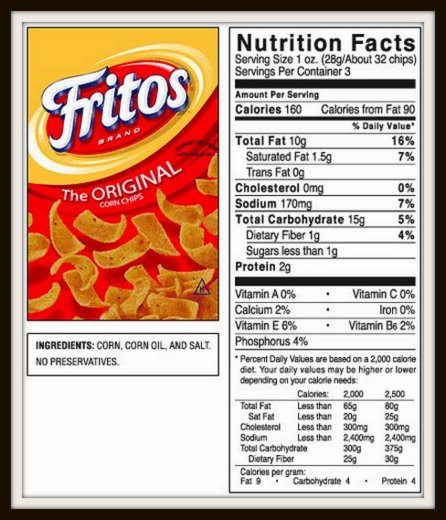
What is the main ingredient?
corn
corn oil
salt
fried
Reading food labels can help you compare products, make healthier decisions, and provide valuable information to people with food allergies.
True
False
The nutrients to include more in a diet include dietary fiber, Vitamin D, calcium, iron, and phosphorus.
True
False
The nutrients that should be included least in a diet include saturated fats, sodium, and added sugars.
True
False
Which food is likely to have the lowest calorie content per serving?
Chocolate cake
Fried chicken
Cheddar cheese
Boiled broccoli
Which nutrient helps regulate body temperature and is essential for all bodily functions?
Protein
Water
Carbohydrates
Vitamins
Which of the following is an example of a food high in unsaturated fats?
Butter
Olive oil
Cheese
Cream
What is the main function of dietary fiber in the body?
Build muscle
Store vitamins
Aid digestion
Provide energy

