
 Worksheets
Fall Final Review Quizizz
Total questions: 55
Worksheet time: 36mins
What provided the major economic support for the Renaissance?
Cities in Italy
church officials
government grants
kings competing for prestige
What did the European slave traders trade for enslaved African people?
Guns
Rum
Beads
Food

What is one factor that would explain the demographic change in the chart ?
Natives being killed by Asians coming over to dominate the new world
Old world diseases being introduced to the new world
Europeans conquering North America and having bad relations with the Natives
Maroons rebelling against old world Europeans
What was the Devshirme system?
Christian boys were recruited by force to serve the Ottoman government often as jannesaries.
A trade system popularized along the Silk road utilizing Gold Bullion.
A system associated with the japanese Daimyo
none of the above
Martin Luther's 95 Thesis addressed abuses within the Catholic Church including:
selling indulgences
immorality of the clergy
selling church positions
all choices are correct
All of the following were early Islamic gunpowder empires EXCEPT
Safavid Persia
Ottoman Turkey
Mughal India
Tokugawa Japapn
The Ottomans controlled trade because:
They owned major port and land trade routes
They were technologically advanced
They conquered anyone who opposed them
Suleiman The Magnificent was loved by many people
What were the effects (Results) of the Black Death?
New economic opportunities and the rise of Islam
New economic opportunities and a strengthened Church
The Church was weakened and new economic opportunities were created
The Church was weakened and the lords of England reasserted their authority over the people
How did religion and the church change in Europe from 1500 to 1700?
Normal people began to truly accept the teachings of the Catholic Church for the first time.
The Catholic Church became way more chill and definitely didn't launch the Inquisition afterwards.
The Catholic Church gained wealth and authority as a result of the Protestant Reformation. Luther and King Henry VIII created more Catholic churches which accepted the Pope’s authority.
The church lost wealth and authority as a result of the Protestant Reformation. Luther and King Henry VIII began their own Protestant churches which rejected the Pope’s authority.
Islam shares some beliefs with which two religions?
Christianity & Buddhism
Judaism & Hinduism
Judaism & Christianity
None of the above
The two basic groups of Muslims are...
Shi'ites
Jews
Mormons
Sunnis
How did humans live before the Agricultural Revolution?
In large complex societies
In small groups that hunted and gathered together.
In warring tribes who fought over territory
None of the Above
This is the name for the process in which humans slowly settled down to create small farms instead of hunting and gathering?
The Agricultural Revolution
The Neolithic Revolution
The Hajj
Both A and B

Select the technology that was developed in the Song Dynasty.
Increased stability of the compass
Gunpowder being used in warfare
Developed drought-resistant rice
Continuation of the woodblock printing
This knowledge allowed traders along the Indian Ocean to travel efficiently
Knowledge of the sea currents
Knowledge of the monsoon winds
Knowledge of the capacity of dhow ships
Knowledge of the stars
What were the major items traded along the Trans Sahara Trade route
gold, slaves and porcelain
silk, porcelain, paper and gunpowder
gold, slaves and spices
gold, salt, slaves and ivory
What were the major items traded along the Silk Road?
gold, slaves and porcelain
silk, porcelain, paper and gunpowder
gold, slaves and spices
gold, salt, slaves and ivory
What changes did Trade bring to West Africa?
Islam was introduced to Mali
Buddhism was introduced to Mali
Women gained more rights
Great Zimbabwe became a center of learning

Which disease struck Europe by spreading along trade routes from Asia?
Black/Bubonic Plague
Typhus
Smallpox
the Spanish Flu
What did the Mongols do to improve economics?
opened many jobs to the peasants in China
they lowered taxes
they used only paper money, creating an easy standard
Provided protection to traders on the silk road
The Devastating Effects of the Black Plague resulted help spark what later events in Europe
The Scientific Revolution
Reformation
Renaissance
All the Above
Which of the following schools of thought came to prominence during the Renaissance?
Humanism
Mysticism
Pragmatism
Stoicism

Which of the following caused feudalism in Europe to decline?
Black Plague
Muslim invaders
Revival of Learning
Rebellions for more freedom

What political system form due to the collapse of the Roman empire in Europe?
Feudalism
Communism
Republic
Confucianism

What did the revival of Confucian ideas in Song Dynasty do to women?
They had more restrictions
Their status rose to great heights
They were allowed to work in government
Their status was never changed

What institution held tremendous power and gave people hope in Europe during the Middle Ages?
Catholic Church
The Patriarchy
Serfs
Crusaders

What technology helped maintain control and travel in the Inca empire?
Roads
Mita
Quipa
Ships
What do Vietnam, Japan, and Korea have in common?
They all have languages that stem from the same linguistic family.
China left a lasting cultural and religious imprint on them.
All were once colonies of the Mongols.
All were conquered by the Sung dynasty.
Which statement best summarizes the influence of the bureaucracy during the Song Dynasty (960-1279 CE)?
It promoted foreign trade, but made tax collection difficult
It made managing the empire more efficient, but it was very expensive
It ended corruption, but it weakened the scholar gentry class
It strengthened Buddhism, but it undermined Confucianism
Akbar the Great improved his empire in all these areas EXCEPT?
tax system
religious tolerance
economic improvements
world wide exploration
What religious divide existed (and still does) in India?
Hindus v. Christians
Muslims v. Hindus
Christians v Muslims
Hindus v. Buddhists
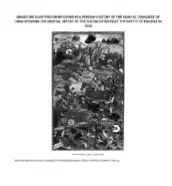
Which of the following best explains the process illustrated in the image?
States increasingly relied on slave soldiers to establish large empires.
The invention of the stirrup allowed expanding states to use cavalry more effectively.
The development of new types of armor reduced casualties and allowed states to expand faster than before.
States used gunpowder weapons to establish large empires.
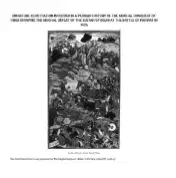
Which of the following explains the most common effect that the process illustrated in the image had on relationships between states in Afro-Eurasia in the period 1450–1750?
It led to deepening rivalries and conflicts as states’ military capabilities grew.
It led to the emergence of new religious disputes over theological interpretations.
It led to the establishment of pan-Eurasian nomadic empires, such as the Mongol Empire.
It led to the adoption of feudal systems of government, as monarchs could not prevent the rising power of military aristocracies.
Which of the following was an important continuity from the Ming Dynasty to the Qing dynasty in the seventeenth century?
The ongoing assimilation of Manchu cultural traditions by the imperial elite
Maintenance of the Silk Roads to promote cultural exchanges with the Middle East
The use of the examination system and other Confucian bureaucratic practices
Financial support for maritime expeditions similar to those led by Zheng He
“The state of monarchy is the supremest thing upon earth; for kings are not only God’s lieutenants upon earth, and sit upon God’s throne, but even by God himself are called gods. In the Scriptures kings are called gods, and so their power after a certain relation compared to the divine power.” King James I, speech to Parliament, England, 1610. The passage above is best understood in the context of which of the following?
European monarchs’ continued use of religion to legitimize political authority
The influence of Islamic political thought on Europe after the Crusades
The establishment of theocracies throughout Eurasia
The differential treatment of Protestants and Catholics in England

The photograph above of a sixteenth-century Mughal mosque in India built by Akbar is an example of which of the following?
Emergence of capitalist economies
Expansion of coercive labor systems
Creation of a global trade network
Cultural syncretism
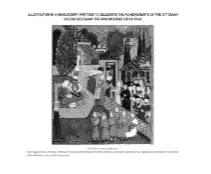
The recruitment depicted in the image is best understood in the context of which of the following developments in the period 1450–1750?
Attempts by imperial states to expand their economic power
Attempts by imperial states to prevent religious conflict
Attempts by imperial states to centralize their authority
Attempts by imperial states to control population growth
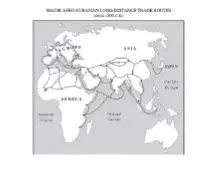
Which of the following about Afro-Eurasian trade is supported by the map above?
The states of the Middle East did not participate in the Indian Ocean trading system.
The Ottoman Empire was located at the intersections of major trading routes.
The Delhi Sultanate relied primarily on sea routes to participate in the silk trade across Asia.
The Islamic states of West Africa maintained close commercial ties with eastern Europe.
During the seventeenth century, one of the reasons Africans participated in the Atlantic slave trade was
the demand for weapons among African elites
bribery of African leaders by Caribbean plantation owners
the desire of African leaders to dominate the Atlantic trade network
the ambition of African leaders to gain a foothold in the Americas
“Migration of man and his maladies is the chief cause of epidemics. And when migration takes place, those creatures who have been in isolation longest suffer most, for their genetic material has been least tempered by the variety of world diseases. Among the major subdivisions of the species Homo Sapiens, the American Indian probably had the dangerous privilege of the longest isolation from the rest of mankind.”
Alfred Crosby, world historian, 1967
Which of the following best describes Alfred Crosby’s argument in the passage above?
Various Amerindian groups did not have contact with each other before 1492.
Amerindians’ long isolation from the rest of the world had placed them at a biological disadvantage.
The genetic makeup of the native population of the Americas remained unchanged until 1492.
By 1492 Amerindians generally had migrated for shorter distances than had other groups.

The trend shown on the graph below is best explained by
increased production of cash crops like sugar
growth of silver mining in New Spain
industrialized textile mills’ demand for raw cotton
African slave-trading kingdoms’ demand for European trade goods
“Seeing how vile and despicable the idol was, we went outside to ask why they cared about so crude and ungainly a thing. But they, astounded at our daring, defended the honor of their god and said that he was Pachacamac, the Maker of the World, who healed their infirmities. According to what we were able to learn, the devil appeared to their priests in that hut and spoke with them, and they entered there with petitions and offerings from the entire kingdom of Atahualpa, just as Moors and Turks go to the house in Mecca. Seeing the evil of what was there and the blindness of all those people, we gathered together their leaders and enlightened them. And in the presence of all, the hut was opened and torn down and with much solemnity a tall cross was raised over the seat which for so long the devil had claimed as his own .”
Miguel de Estete, Spanish mercenary soldier, account of an expedition to
Which of the following long-term changes in the period circa 1550–1700 best demonstrates that the actions described by de Estete in the passage failed to fully achieve their goals?
The development of a global economy based on Spanish exports of Andean silver
American foods becoming staple crops in Eurasia
The emergence of syncretic religious practices in the Americas
The growing Spanish dependence on coerced labor in the Americas
Which of the following provides the most accurate description of the Columbian Exchange?
European food to the Western Hemisphere; Western Hemisphere diseases to Europe; African population to Europe
African livestock to the Western Hemisphere; European technology to Africa; Western Hemisphere food to Europe
Western Hemisphere technology to Africa; African food to Europe; European population to the New World
European technology to Africa; Western Hemisphere population to Africa; African food to the Western Hemisphere
African population to the Western Hemisphere; Western Hemisphere food to Europe and Africa; African and European diseases to the Western Hemisphere

The map suggests that the European presence in Asia was connected to
empire
trade
religion
slavery
How did the Tokugawa shoguns treat Europeans in Japan in the seventeenth century?
They welcomed Europeans for their technological expertise and scientific knowledge.
They protected Christian missionaries and sponsored Christian churches.
They expelled all Europeans except the Dutch, who were allowed to trade at a single site.
They established regular diplomatic relations with European states.
What are the colonies supposed to provide the mother country under a mercantile system?
coerced labor and manufactured goods
A market, precious metals and raw materials
coerced labor and gold
raw materials only

According to the map, which of the following is true?
Overland routes were a critical part of the trade.
China was a major source of silver.
The silver trade flowed in a predominantly eastern pattern.
Silver was traded on a truly global scale.

