
 Worksheets
Natural Hazards and Vulnerability
Total questions: 30
Worksheet time: 23mins
A ______ is a section of the lithosphere that slowly moves over the mantle, carrying large slabs of continental and oceanic crust.
wedge
plate
chunk
fault
At a _____________ plate boundary two plates move away from each other.
Destructive
Constructive
Conservative
Collision
At a _____________ plate boundary two plates move toward each other.
Destructive
Conservative
Constructive
Deconstructive
At a _____________ plate boundary two plates slide past each other.
Destructive
Constructive
Deconstructive
Conservative

What is the correct order (starting from the surface) of Earth’s layers?
crust, outer core, inner core, mantle
mantle, outer core, inner core, crust
crust, mantle, outer core, inner core
outer core, inner core, crust, mantle
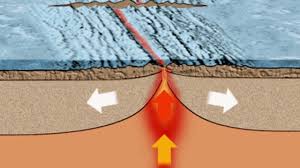
What type of plate boundary is shown in the diagram?
Conservative
Constructive
Destructive
Collision

The process by which the ocean floor sinks beneath a deep-ocean trench and back into the mantle is known as _______
convection.
continental drift.
subduction.
conduction.

Most geologists think that the movement of Earth’s plates is caused by _______
convection.
continental drift.
subduction.
conduction.
The geological theory of _______ states that pieces of Earth’s lithosphere are in constant, slow motion.
subduction
plate tectonics
deep-ocean trenches
sea-floor spreading
Scientists think that convection currents flow in Earth’s
continents.
mantle.
lithosphere.
inner core.
The San Andreas Fault in California is known as an active earthquake area. What type of boundary is it?
Constructive
Destructive
Conservative
Collision


Identify the Major Plate labeled I
African Plate
Antarctic Plate
Pacific Plate
Eurasian Plate
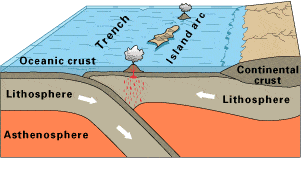
Observe this diagram of a plate boundary. Which statement BEST describes what is happening. It is that
the oceanic crust is being created.
the denser oceanic crust is subducting under the less dense oceanic crust
Two continental plates are colliding.
the tectonic plates are moving away from each other.
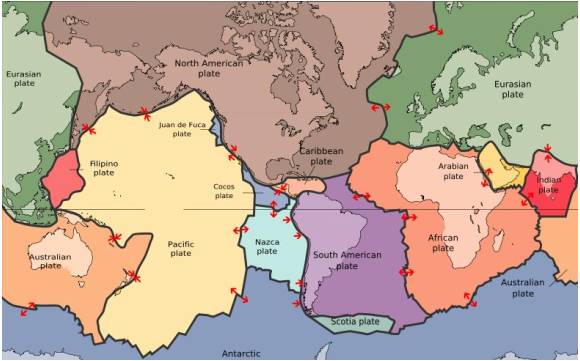
The map in the picture shows tectonic plate boundaries. This map would be useful in predicting the location of future
droughts
hurricanes
earthquakes
tornadoes
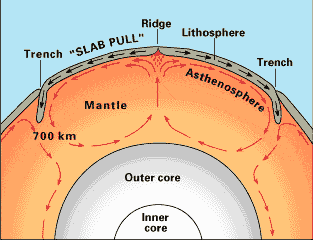
What is the source of energy that drives plate movement?
the subducton of the sea floor
the different densities of the oceanic and crustal plates
convection currents in the mantle
the friction force between the plates that move past each other
Which of the following is a tectonic hazard?
Hurricanes
Earthquakes
Drought
Tornado
Which of the following best describes a natural hazard?
a natural event such as a hurricane or volcanic eruption which has the potential to cause social and economic impacts.
a natural event such as a hurricane or volcanic eruption which causes no harm.
a natural event such as a hurricane or volcanic eruption which causes social and economic impacts to a vulnerable population.
Which of the following best describes a natural disaster?
a natural event such as a hurricane or volcanic eruption which has the potential to cause social and economic impacts.
a natural event such as a hurricane or volcanic eruption which causes no harm.
a major hazard event that causes widespread disruption to a community or region, with significant impacts on people, the economy and/or the environment..
Why did the scientific community not believe Alfred's Wegener's theory of continental drift?
He did not have evidence to support his theory.
He could not explain what force was responsible for driving the plates apart.
He could not describe how the plates had drifted over time.
What is risk?
the conditions that increases the chances that a community will be impacted by a natural hazard.
the probability of a hazard event causing harming consequences (loss of life, injuries, damages)
major hazard event that causes widespread disruption to a community or region, with significant impacts on people, the economy and/or the environment.
the ability of individuals and societies to cope with the sudden impacts of disasters and restore to normal as quickly as possible.
At which plate boundary would volcanic eruptions not occur?
Destructive
Conservative
Constructive
At which plate boundary would large fold mountains, like the Himalayas, be formed?
Constructive
Conservative
Collision
What is vulnerability?
the conditions that increases the chances that a community will be impacted by a natural hazard.
the probability of a hazard event causing harming consequences (loss of life, injuries, damages)
major hazard event that causes widespread disruption to a community or region, with significant impacts on people, the economy and/or the environment.
the ability of individuals and societies to cope with the sudden impacts of disasters and restore to normal as quickly as possible.

