
NEW
Font size
 Worksheets
Linear Relationships Level 1 Review
Total questions: 43
Worksheet time: 45mins

A
B
C
D

y is not a function of x, since the y-value 3 corresponds to two different x-values.
y is a function of x, since the y-values do correspond to exactly one x-value.
y is not a function of x, since the x-values do not correspond to exactly one y-value.
y is a function of x, since the x-values do correspond to exactly one y-value.

A
B
C
D

The relationship represents y as a function of x, because each x-value is associated with exactly one y-value.
The relationship does not represent y as a function of x, because at least one x-value is associated with more than one y-value.
The relationship represents y as a function of x, because two different y-values are associated with the same x-value.
The relationship does not represent y as a function of x, because one y-value is associated with two x-values.

Raw Profits
Retail price for a cell phone
Soles commissions
Wages

Does this this represent a proportional relationship between x and y?
Yes
No

Does this this represent a proportional relationship between x and y?
Yes
No

Does this this represent a proportional relationship between x and y?
Yes
No

Table A represents a proportional relationship and Table B represents a non-proportional relationship.
Table B represents a proportional relationship and Table A represents a non-proportional relationship.
Table A and Table B represent proportional relationships.
Table A and Table B represent non-proportional relationships
Which situation represents a proportional relationship?
The cost of purchasing a basket of peaches for $2.30 per pound plus $5.00 for the basket
The cost of purchasing markers for $7.00 per box with a delivery charge of $3.00.
The cost of purchasing Jibbitz for $12 per bag with a coupon for $1.00 off the total cost.
The cost of purchasing apples for $1.75 per pound plus a shipping fee of $0.16 per pound

Painter A
Painter B

#9 The two lines graphed on the coordinate plane each represent an equation.
Write the ordered pair that represents a solution to both equations.
(1, 3)
(6, -2)
(0, -6)
(-2, 6)

#10 The two lines graphed on the coordinate plane each represent an equation.
Write the ordered pair that represents a solution to both equations.
(-4, 1)
(1, -4)
(4, -3)
(-8, 3)


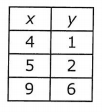


Which set of ordered pairs represents y as a function of x?
A
B
C
D

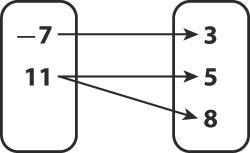
Which statement describes the mapping?
The mapping represent y as a function of x, because each y-value corresponds to exactly one x-value.
The mapping does not represent y as a function of x, because two of the x-values correspond to the same y-value.
The mapping represent y as a function of x, because each x-value corresponds to exactly one y-value.
The mapping does not represent y as a function of x, because there are more x-values than different corresponding y-values.

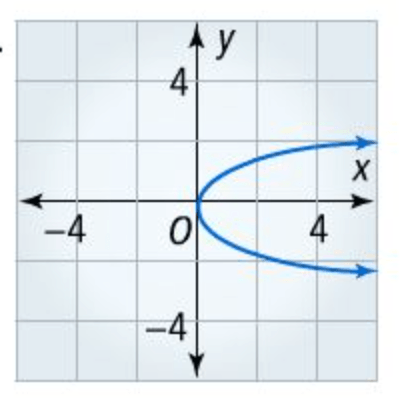
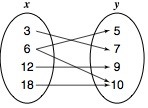

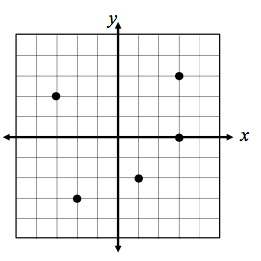


A
B
C
D

A
B
C
D
Which set of ordered pairs represents y and a function of x?
{(0, 0), (-1, 2), (-1, -2), (-2, 4), (-2, -4)}
{(0, 0), (1, 1), (2, 4), (3, 9), (3, 16)}
{(0, 0), (0, 1), (0, -2), (0, -1), (0, -2)}
{(0, 0), (-1, -0.5), (-2, -1), (-3, -1.5), (-4, -2)}

A
B
C
D
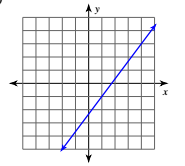

Proportional
Non-proportional

Proportional
Non-proportional

Proportional
Non-Proportional

Proportional
Non-proportional

Proportional
Non-proportional

Proportional
Non-proportional
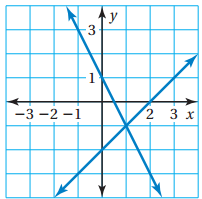


The graph shows the linear relationship between the charge for a package delivery service and the number of miles that the package must be delivered for Van’s delivery service and Pickup’s delivery service.
Which is a true statement based on the relationships in the graph?
The charge to deliver a package 4 miles is $10 less for Pickup’s service than for Van’s service.
The charge to deliver a package 4 miles is $10 more for Pickup’s service than for Van’s service.
The charge to deliver a package 4 miles is $40 for both Van’s service and for Pickup’s service.
The charge to deliver a package 4 miles cannot be determined for Van’s or Pickup’s services from the graph.

After how many days will Stan and Olivia have the same amount of pages left to read?
12 days
9 days
15 days
27 days
When Stan and Olivia have the same amount of pages left to read, how many pages will there be?
12 pages
9 pages
15 pages
27 pages

