wayground logo

Free Printable Worksheets

NEW

Font size

S
M
L
XL
Worksheets

Periodic Trend Unit Exam

Total questions: 50

Worksheet time: 2hrs 45mins

Name
Class
Date
1.
The atom with the largest atomic radius in Group 18 is - 
a)
Ar
b)
He
c)
Kr
d)
Rn
2.
The atom with the largest atomic radius in Period 4 (row 4) is - 
a)
K
b)
Kr
c)
Fe
d)
Fe
3.
The element with the smallest ionization energy in Period 6 is - 
a)
Rn
b)
Cs
c)
Os
d)
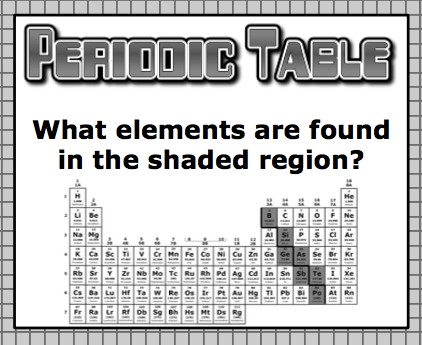
Tm
4.
The energy required to remove electrons is the definition of: 
a)
Electronegativity
b)
Atomic Number
c)
Atomic Radius
d)
Ionization
5.
Families all have similar 
a)
Names
b)
atomic numbers
c)
atomic masses
d)
properties
6.
Electronegativity is...
a)
the ability of an atom to attract/ accept electrons
b)
the ability of an atom to lose electrons
c)
the energy required to remove an electron from a specific atom
d)
how easy it is to make friends. 
7.

Which of the following will have a lower ionization energy than Scandium (Sc)?

a)

Helium (He)

b)

Titanium (Ti)

c)

Calcium (Ca)

d)

Magnesium (Mg)

8.
In the modern periodic table elements are arranged by:
a)
atomic mass
b)
atomic number
c)
valence electrons
d)
number of isotopes
9.

When atom gains an electron, the size will

a)

increase

b)

decrease

c)

have no change

d)

smaller

10.
According to the octet rule most elements need _______ valence electrons.
a)
2
b)
8
c)
6
d)
18
11.

This is a correct dot diagram for oxygen (O)?

a)

true

b)

false

12.

This could be the dot diagram of

a)

Si

b)

Br

c)

B

d)

S

13.

This is a correct dot diagram for neon (Ne)

a)

true

b)

false

14.

What charge would fluorine form?

a)

1-

b)

1+

c)

7+

d)

7-

e)

8

15.
What atom matches this electron configuration?
1s22s22p63s23p64s23d10
a)
Zinc
b)
Copper
c)
Nickel
d)
Germanium
16.
How many electrons can the first energy level hold?
a)
1
b)
2
c)
8
d)
0
17.
What's a valence electron?
a)
electrons in the second energy level
b)
electrons in the outermost energy level
c)
the atomic number
d)
electrons in the first level
18.
As you move down a group, atomic radius increases because - 
a)
you add more and more neutrons
b)
you add more and more protons
c)
you add more and more shells (energy levels)
d)
you add more atomic mass
19.
As you move across the periodic table from left to right, the atomic radius decreases.  This is because - 
a)
the number of protons increases, so attraction to electrons increases
b)
the number of energy levels increases
c)
the number of electrons increases
d)
the atomic mass increases
20.
The atom with the largest atomic radius in Period 4 (row 4) is - 
a)
K
b)
Kr
c)
Fe
d)
Fe
21.
Francium (Fr) has the lowest ionization energy in Group 1 because - 
a)
it has the smallest number of valence electrons
b)
it has the greatest atomic mass
c)
it has the greatest number of protons, so it attracts its electrons the strongest
d)
its 1 valence electron is very far from the nucleus, so little energy is needed to remove it
22.
The energy required to remove electrons is the definition of: 
a)
Electronegativity
b)
Atomic Number
c)
Atomic Radius
d)
Ionization
23.
What is the name of family I
a)
Alkaline Earth Metals
b)
Boron Family
c)
Alkali Metals
d)
Halogen Family
24.
Electronegativity is...
a)
the ability of an atom to attract/ accept electrons
b)
the ability of an atom to lose electrons
c)
the energy required to remove an electron from a specific atom
d)
how easy it is to make friends. 
25.
Electronegativity __________ from left to right within a period and __________ from top to bottom within a group.
a)
decreases, increases 
b)
increases, increases
c)
increases, decreases 
d)
stays the same, increases
26.
Identify the element that is non-reactive (inert) with 4 energy levels.
a)
Krypton
b)
Argon
c)
Potassium
d)
Calcium
27.
Name groups 3 - 12 on the periodic table.
a)
noble gases
b)
halogens
c)
metalloids
d)
transition metals
28.
How many electrons can the d sublevel hold?
a)
8
b)
10
c)
2
d)
4
29.
What is the shorthand electron configuration for Sulfur atom?
a)
[Ar] 3p4
b)
[He] 3s23p4
c)
[Ne] 3s23p4
d)
[Na] 3s23p3
30.
What element has the valence shell configuration
3s2 3p2
a)
Al
b)
B
c)
Si
d)
Ga
31.
How many valence electrons are represented here?
a)
7
b)
5
c)
2
d)
8
32.

Which one is the electron configuration for an oxygen atom?

a)

1s22s22p63s23p64s2

b)

1s22s22p4

c)

1s22s22p6

d)

1s22s22p63s23p6

33.
What atom matches this electron configuration?
1s2s2p3s2
a)
Neon
b)
Magnesium
c)
Aluminum
d)
Potassium
34.
If an atom has 12 protons, how many valence electrons will that atom have? 
a)
2
b)
10
c)
8
d)
6
35.
Identify this atom: 
a)
Lithium
b)
Chlorine
c)
Phosphorus 
d)
Fluorine
36.
How many energy levels does Hafnium have?
a)
4
b)
72
c)
6
d)
cannot determine
37.
a)
energy levels
b)
valence electrons
c)
protons
d)
neutrons
38.
a)
Periods
b)
Groups
39.
a)
Periods
b)
Groups
40.
a)
energy levels
b)
valence electrons
c)
protons
d)
neutrons
41.
a)
Same group
b)
Same period
42.
a)
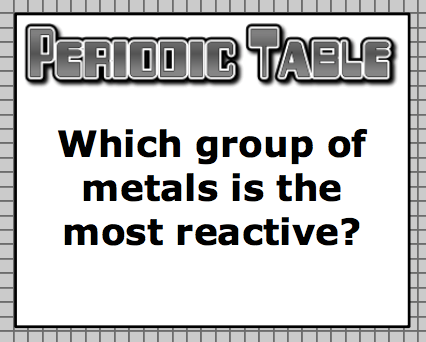
Group 1
b)
Group 17
c)
Group 2
d)
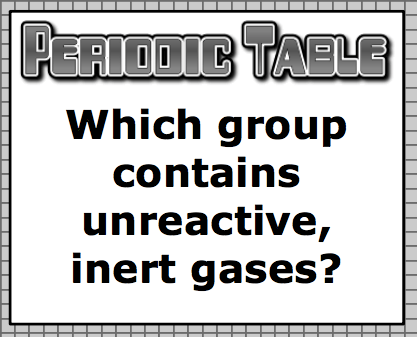
Group 18
43.
a)
Group 1
b)
Group 17
c)
Group 18
d)
Group 2
44.
a)
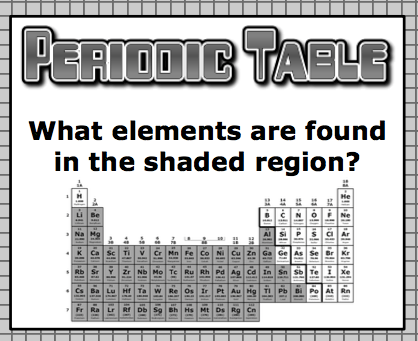
Metals
b)
Nonmetals
c)
Metalloids
45.
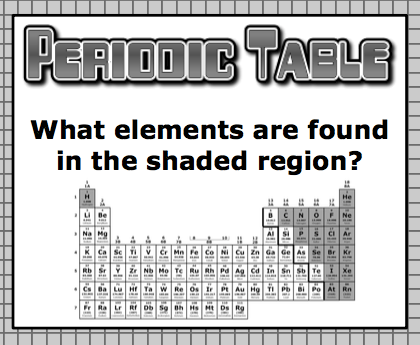
a)
Metals
b)
Nonmetals
c)
Metalloids
46.
a)
Metals
b)
Nonmetals
c)
Metalloids
47.

the positively charged subatomic particle contained in the nucleus of an atom

a)

proton

b)

neutron

c)

electron

d)

matter

48.

a subatomic particle, contained in the nucleus of an atom, having the same mass as a proton but no electrical charge

a)

proton

b)

neutron

c)

electron

d)

matter

49.

a negatively charged subatomic particle that orbits the nucleus of an atom

a)

proton

b)

neutron

c)

electron

d)

matter

50.

a unique number for each element that equals the number of protons in an atom of that element

a)

element name

b)

element symbol

c)

atomic number

d)

atomic mass