
 Worksheets
SEEd 5.2.2 Properties of Matter
Total questions: 31
Worksheet time: 56mins
The amount of space an object takes up.
Volume
Density
Mixture
Mass
How tightly packed matter is in an object.
Volume
Density
Mass
Mixture
When two or more substances are put together.
Volume
Density
Mixture
Mass
When one substance dissolves into another.
Volume
Mixture
Density
Solution
Sometimes when mixing two substances something new will be created because of a ____________________.
Volume
Chemical Reaction
Physical Reaction
Mass
The measurement of how much matter is in an object.
Weight
Density
Mass
Volume
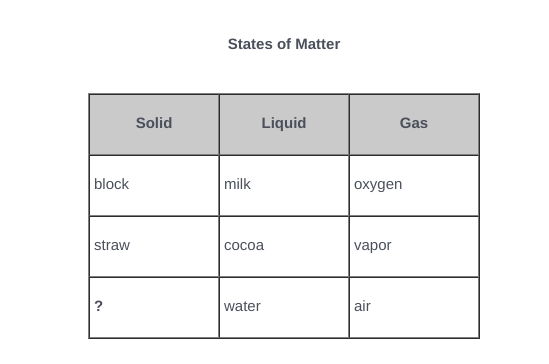
Which substance best completes the table above?
Rainwater
Clouds
Steam
Brick
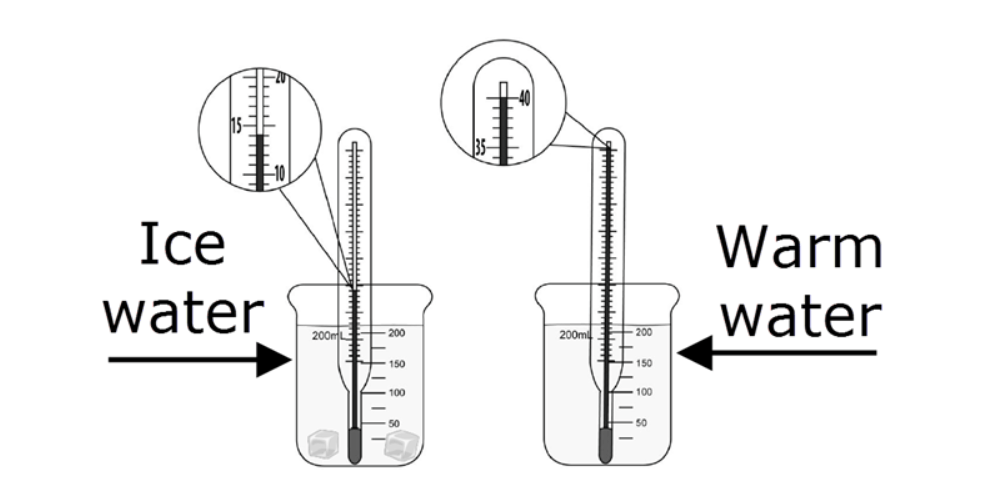
Which statement best describes the two temperatures represented in the images?
The temperature of the ice water is higher than the temperature of the warm water.
The temperature of the ice water is lower than the temperature of the warm water.
The temperature of the ice water and warm water is the same.
The temperature of the ice water and warm water cannot be measured.
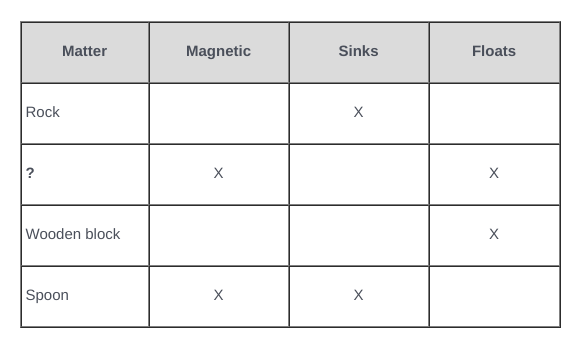
What example of matter would complete the chart?
Metal toy boat
Plastic car
Steel block
Wooden pencil
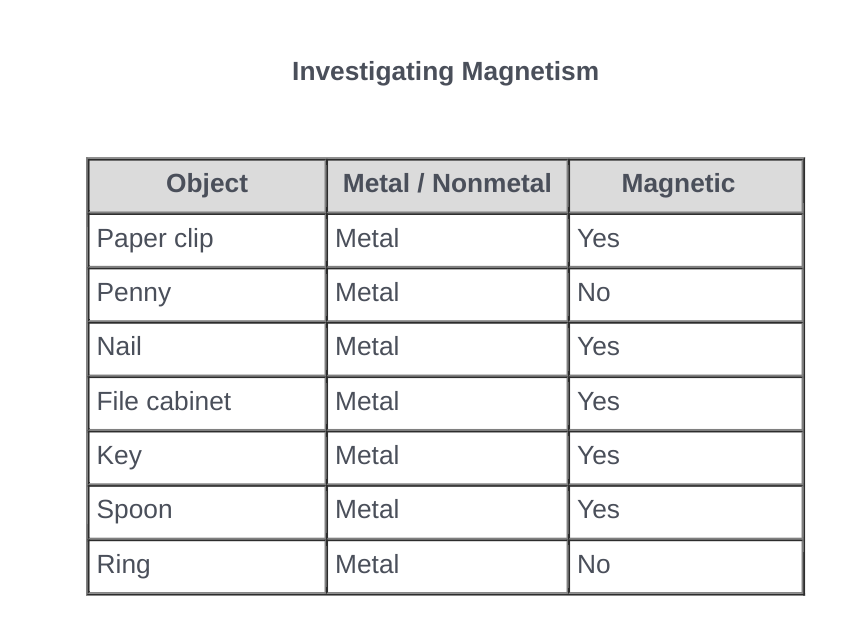
Which statement is best supported by the Investigating Magnetism chart above?
All metals are magnetic.
Only certain metals are magnetic.
Stronger magnets can attract all metals.
The heavier the object, the more magnetic it is.
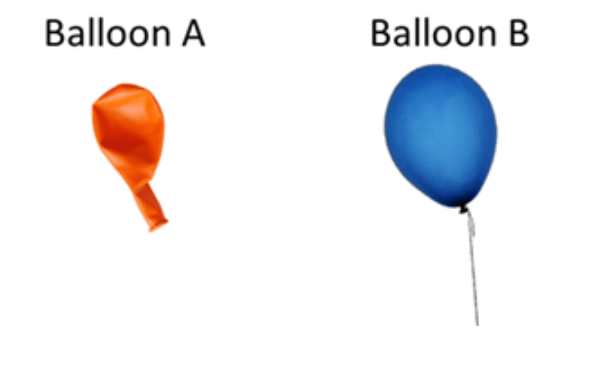
Observe the balloons above. What are three physical properties that are different between the two balloons?
Size, temperature and ability to float
Size, volume and state of matter
Volume, magnetism and size
Size, volume and ability to float
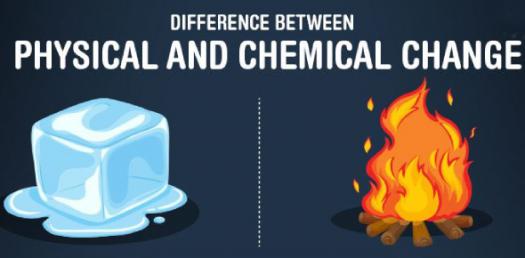
What is a sign of a physical change?
Bubbles forming
Color changing
Stretching
Producing heat

What is a sign of a chemical change?
Stretching
Tearing
Compressing
Bubbles
Which of the following changes is a physical change of matter?
water evaporating
paper burning
a nail rusting
a silver spoon tarnishing
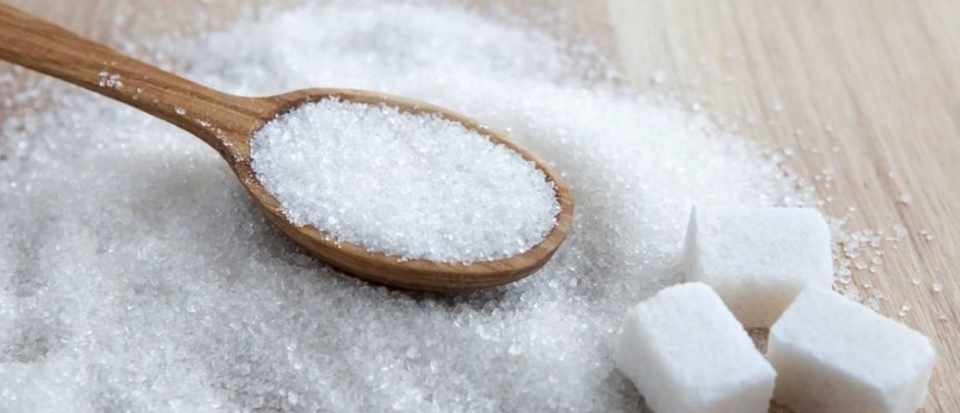
What happens when sugar dissolves in water?
Physical change because a new substance is formed
Chemical change because a new substance is formed
Physical change because the sugar is just getting smaller
Chemical change because the sugar is just getting smaller
Signs of a physical change:
Compress
Shatter
Tear
Precipitate
The three common states of matter are
Solid, Liquid, Plasma
Solid, Plasma, Gas
Plasma, Gas, Liquid
Solid, Liquid, Gas
Liquid has
A definite shape but not volume
definite shape and definite volume
definite volume but not a definite shape
neither a definite shape nor a definite volume


Solubility is __________
How dense something is compared with a reference material. Sink or Float
Anything that has mass and takes up space.
How much space something takes up.
Measurement of the ability of a solid to dissolve in a liquid.

What about the particle nature of matter explains why food coloring dropped in water will change the color of the water, EVEN WITHOUT being stirred?
Food coloring and water are liquids and particles of liquids always spread to take the space of their container.
Food coloring is permanent.
Liquid particles do not move or change shape.
Water is a liquid. It is always evaporating on a scale that can be observed over several days.

Use your understanding of the particle nature of matter. What is likely causing this balloon to inflate when baking soda is mixed with vinegar to produce a bubbly, foaming new substance?
The balloon has properties like malleability, pink, non-magnetic, a little reflective, and smooth.
The air in the bottle fills the balloon too.
A gas was produced when the substances were mixed. Gases spread to fill the space of their containers causing the balloon to fill with gas and inflate.
Solids and liquids mixed together do not produce new substances and therefore the inflating balloon cannot be explained.

(Use the properties chart.) Three unknown white-ish powders are in shallow dishes. You design tests to determine which powder is flour. Based on the PROPERTIES of flour, which of the following tests would NOT help you? (Use the properties chart.)
Mix each of the three powders with water to see if they are soluble.
Smell the powders by wafting your hand toward your nose.
Mix vinegar with the three powders.
Drop iodine on each of the three powders.

Select the similarities between the properties of salt and sugar. (Select ALL that apply.)
The crystal shape of salt and sugar is the exact same.
Sugar and salt are both soluble.
Both substances are translucent up close and white in color from a distance.
Salt and sugar are both solids.
Sugar can be changed into a liquid by adding energy (heat), such as heating it in a pan on the stove to make caramel.

