wayground logo

Free Printable Worksheets

Font size

S
M
L
XL
Worksheets

Year 12 early start Quizziz 2021

Total questions: 110

Worksheet time: 1hrs 6mins

Name
Class
Date
1.

What are the three categories that define all shapes?

a)

Hemisphere, Natural, Abstract

b)

Natural, Geosphere, Abstract

c)

Geometric, Natural, Obtuse

d)

Geometric, Organic, Abstract

2.

What design element BEST describes the visual surface on an orange?

a)

Balance

b)

Rhythm

c)

Space

d)

Texture

3.

John wants to lead the viewers' eyes toward a house in the background, on the left of his canvas--by making the top of the fence run from the right foreground of the painting past the front door. Which design elements would BEST would accomplish this task?

a)

Line / Movement

b)

Scale / Proportion

c)

Color / Value

d)

Texture / Rhythm

4.

David is making a new dungeon crawler game and wants to differentiate between the Boss Monster and the minor monsters. To do this, he makes the boss significantly larger than other enemies in the game. Which design Principles is he using?

a)

Contrast & Rhythm

b)

Balance & Movement

c)

Alignment

d)

Scale & Proportion

5.

Which term BEST describes an area occupied by the subjects or objects in a design?

a)

Positive space

b)

Negative space

c)

Proximity

d)

Emphasis

6.

Which design element is a primary tool for symbolic representation that often evokes a variety of emotions based on the artist's selection?

a)

Color

b)

Texture

c)

Shape

d)

Scale

7.

In Photoshop which tool is best for creating Scale & Proportion between visual elements?

a)

"CTRL + T" (Transform)

b)

"V" Key (Move)

c)

CTRL + SHIFT + I (Invert)

d)

CTRL + J (Copying Layer)

8.

When we create and use Layer Masks in Photoshop, we're editing our images by modifying/controlling which design element?

a)

Line

b)

Space

c)

Color

d)

Texture

9.

This design element is created when a line creates some path that ends where it began.

a)

Shape

b)

Form

c)

Space

d)

Line

10.

The design element FORM can be implied or defined by which of the following?

a)

Transitions from Light to Shadow

b)

Showing Multiple Sides of an Object

c)

Showing One Side of an Object

d)

Using Patterns to Define Shape

e)

By Giving Shapes Depth

11.

Patterns that repeat shapes that appear to be sharp, dull, soft, or rigid best describe this design element.

a)

Emphasis

b)

Shape

c)

Texture

d)

Line

12.

The design elements that BEST define shapes, directions, and edges in a design are which of the following?

a)

Lines

b)

Form

c)

Texture

d)

Space

13.

Which is the most basic element of design?

a)

color

b)

shape

c)

line

d)

pattern

14.

Horizontal lines convey feelings of

a)

nature and softness

b)

strength and dignity

c)

excitement and movement

d)

relaxation and restfulness

15.

Vertical lines convey feelings of

a)

nature and softness

b)

strength and dignity

c)

excitement and movement

d)

relaxation and restfulness

16.

Diagonal lines convey feelings of

a)

nature and softness

b)

strength and dignity

c)

excitement and movement

d)

relaxation and restfulness

17.

Curved lines convey feelings of

a)

nature and softness

b)

strength and dignity

c)

excitement and movement

d)

relaxation and restfulness

18.

Which image best represents horizontal lines?

a)
b)
c)
d)
19.

Which is the best example of curved lines in a house?

a)

a spiral staircase

b)

a large-screen television

c)

a kitchen cabinet

d)

rafters in the attic

20.

Which of these is a representation of a shape?

a)
b)
c)
d)
21.

Which statement about form is not true?

a)

a gradual change in form can smoothly direct the eyes

b)

form follows function

c)

related forms are more agreeable than unrelated forms

d)

forms are the outline of objects

22.

Which of these terms is the 3 dimensional area a designer is working with?

a)

line

b)

space

c)

shape

d)

texture

23.

The white space in this image would be

a)

positive

b)

negative

c)

neutral

24.

Which image shows a naturalistic pattern?

a)
b)
c)
25.

Which image shows an abstract pattern?

a)
b)
c)
26.

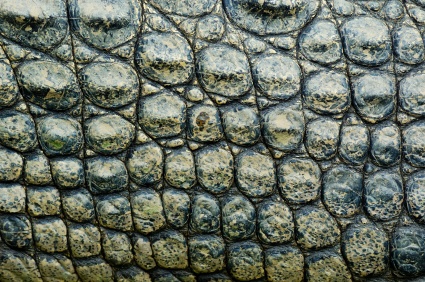
Which image is not a good representation of texture?

a)
b)
c)
d)
27.

The way a texture feels when touched can be referred to as

a)

auditory

b)

tactile

c)

visual

d)

olfactory

28.

The black part of this image represents

a)

positive space

b)

neutral space

c)

negative space

d)

it depends on your perception

29.

What is a self contained 2-dimensional defined area and can be geometric or organic?

a)

Shape

b)

Color

c)

Size

d)

Value

30.
What is the surface quality of a shape - rough, smooth, soft hard glossy etc.
a)
Texture
b)
Value
c)
Color
d)
Size
31.

A mark with length and direction, created by connecting two points.

a)

Rhythm

b)

Line

c)

Movement

d)

Space

32.

An element of design referring to the way the elements are arranged to create a feeling of stability in a work. (equal visual weight)

a)

Balance

b)

Space

c)

Form

d)

Emphasis

33.
What do we call the empty or open area between, around, above, below, and within objects?
a)
Balance
b)
Movement
c)
Rhythm
d)
Space
34.
The image is a good example of which element?
a)
pattern
b)
texture
c)
shape
d)
emphasis
35.

The ____________ surface characteristics of a work of art that are either felt or perceived visually.

a)

Line

b)

Form

c)

Texture

d)

Color

36.

The volume and shape of a three-dimensional work, or an image that gives the illusion of being three dimensional.

a)

Line

b)

Form

c)

Texture

d)

Color

37.

This can be described as having equal "weight" on equal sides of a centrally placed axis.

a)

Balance

b)

Symmetrical Balance

c)

Asymmetrical Balance

d)

Proportion

38.

This is an example of

a)

balance

b)

line

c)

shape

d)

form

e)

texture

39.

This is an example of

a)

balance

b)

line

c)

shape

d)

form

e)

texture

40.

This is an example of

a)

balance

b)

line

c)

shape

d)

form

e)

texture

41.

This is an example of

a)

balance

b)

line

c)

shape

d)

form

e)

texture

42.

This is an example of

a)

balance

b)

line

c)

shape

d)

form

e)

texture

43.

Elements of Design are the __________ a designer uses when designing a space.

a)

Tools

b)

Rules

44.

Shape is:

a)

2D

b)

3D

45.

The physical shape and structure of solid objects.

a)

Shape

b)

Form

c)

Line

d)

Space

46.
A ________ leads the eye from one point to another.
a)
color
b)
line
c)
proportion
d)
texture
47.

A design element that refers to the lightness and darkness of a an area

a)

Color

b)

Value

c)

Texture

d)

Space

48.

A mark created by a path of a moving point.

a)

Line

b)

Value

c)

Texture

d)

Form

49.

The empty or open area between, around, above, below and within objects. Such as the hole inside a doughnut.

a)

form

b)

texture

c)

color

d)

space

50.

Any three dimensional object that can be measured by height, width and depth.

a)

color

b)

space

c)

form

d)

shape

51.

What is a self contained 2-dimensional defined area and can be geometric or organic?

a)

Shape

b)

Color

c)

Size

d)

Value

52.
Pattern uses the art elements in planned or random repetitions to enhance surfaces of paintings or sculptures.  Which of the examples given below is NOT a pattern?
a)
quilt
b)
grapefruit (sliced open)
c)
jewelry
d)
plain white canvas
53.
Rhythm is the __________ of visual movement--colors, shapes, or lines.  Fill in the missing word.
a)
repetition
b)
stopping
c)
replacing
54.
Visual movement is used by artists to direct viewers through their work, often to a certain point in the picture. This is called a...
a)
empty space
b)
back drop
c)
focal point
55.
The principle of balance refers to the distribution of visual weight in a work of art.  This famous image, popular in Chinese culture, is called...
a)
Yin & Yang
b)
Pisces symbol
c)
the Rooster
56.
The principle of emphasis is used by artists to create dominance & focus in their work.  Your eye is drawn to which color?
a)
red 
b)
green
57.
This block of text is
a)
justified
b)
unjustified
c)
script
d)
decorative
58.
This block of text is
a)
justified
b)
ragged left
c)
ragged right
d)
decorative
59.
Typeface family with a formal, handwritten appearance.
a)
Serif
b)
Sans Serif
c)
Script
d)
Decorative
60.
Typeface style that is "without" little bars.
a)
Serif
b)
Sans Serif
c)
Script
d)
Decorative
61.
Typeface family that is suggested only to be used as headings or subheadings and never in large bodies of text.
a)
Serif
b)
Sans Serif
c)
Script
d)
Decorative
62.
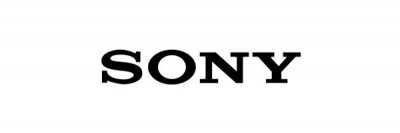
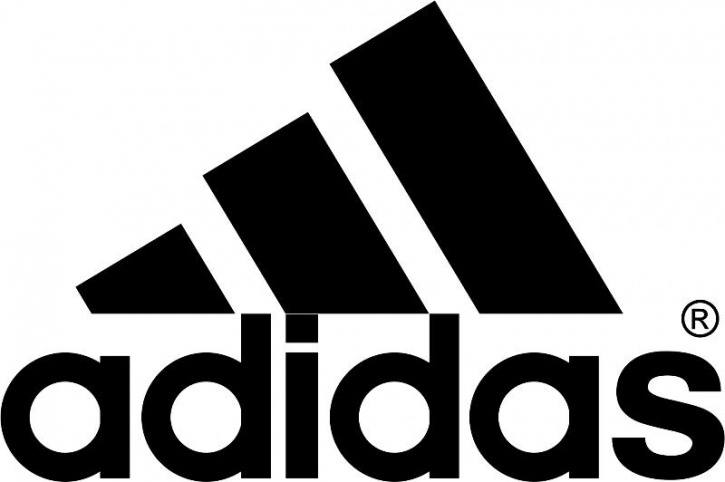
What type face style does this logo use?
a)
Serif
b)
Sans Serif
c)
Script
d)
Decorative
63.
What type face style does this logo use?
a)
Serif
b)
Sans Serif
c)
Script
d)
Decorative
64.
The imaginary line on which letters seems to be sitting.
a)
Baseline
b)
Meanline
c)
Cap height
d)
Bottom line
65.
The standard height of a lowercase x.
a)
Baseline
b)
x-height
c)
Cap height
d)
Bottom line
66.
The standard height of most capital letters.
a)
Baseline
b)
Meanline
c)
Cap height
d)
Bottom line
67.
What size is equal to 1" (inch)?
a)
1 pt.
b)
12 pt. 
c)
72 pt.
d)
100 pt.
68.
What how many inches would 36 pt. size text be?
a)
1/2"
b)
1"
c)
36"
d)
1.6"
69.
How many Picas are in an inch?
a)
16
b)
6
c)
25
d)
72
70.
This block of text is
a)
justified
b)
ragged left
c)
ragged right
d)
decorative
71.
The part of letters such as “h” and “k” that goes above the x-height of lower case letters?
a)
Ascender
b)
Descender
c)
Cap-height
d)
x-height
72.
What is the part of a letter (as in g p y) that goes below the baseline?
a)
Ascender
b)
Descender
c)
Cap-height
d)
x-height
73.
Typeface style that is most readable on printed media.
a)
Serif
b)
Sans Serif
c)
Script
d)
Decorative
74.
This block of text is
a)
justified
b)
unjustified
c)
script
d)
decorative
75.
Typeface style with little bars.
a)
Serif
b)
Sans Serif
c)
Script
d)
Decorative
76.
Is the font in this image serif or sans-serif?
a)
serif
b)
sans-serif
77.
The arrow is pointing to what part of the type?
a)
Ascender
b)
Baseline
c)
Cap Height
d)
X-Height
78.
The arrow is pointing to what part of the type?
a)
Cap Height
b)
Descender
c)
X-Height
d)
Baseline
79.
The arrow is pointing to what part of the type?
a)
Counter
b)
Baseline
c)
X-Height
d)
Ascender
80.
The arrow is pointing to what part of the type?
a)
Ascender
b)
Descender
c)
X-Height
d)
Counter
81.
The arrow is pointing to what part of the type?
a)
X-Height
b)
Ascender
c)
Baseline
d)
Counter
82.
The arrow is pointing to what part of the type?
a)
Cap Height
b)
Baseline
c)
Ascender
d)
Descender
83.
Type height is measured in:
a)
inches
b)
points
c)
picas
d)
kilojoules
84.
72 points is roughly equal to one
a)
inch
b)
centimeter
c)
pica
d)
year
85.
Adjusting the spacing between letters is known as
a)
leading
b)
kerning
c)
nit-picking
d)
typesetting
86.
"Leading" refers to the:
a)
space between letters
b)
space between lines of text
c)
text alignment
d)
space between words
87.
The terms "typeface" and "font" mean the same thing.
a)
True
b)
False
88.
Select the correct order of visual hierarchy:
a)
Level 1: body text
Level 2: subheadings
Level 3: headings
b)
Level 1: headings
Level 2: subheadings
Level 3: body text
c)
Level 1: subheadings
Level 2: headings
Level 3: body text
89.
TRUE or FALSE: If everything stands out, nothing stands out.
a)
true
b)
false
90.

The font itself can send a certain message to the viewer.

a)

True

b)

False

91.

There are some fonts that are considered outdated and unprofessional.

a)

True

b)

False

92.

When creating a document like a flyer or business card you should

a)

use a lot of fonts

b)

use only one plain font

c)

stick to two fonts

93.

You should never change up the spacing, sizing, or boldness of a font in a document like a business cared or flyer. All fonts should be consistent.

a)

True

b)

False

94.

What does a opening tag look like?

a)

< >

b)

</ >

c)

<< >>

d)

<

95.

What does a closing tag look like?

a)

< >

b)

<\ >

c)

</ >

d)

<< >>

96.

What should a HTML web page start with?

a)

<b>

b)

<li>

c)

<html>

d)

<start>

97.

What should a HTML web page end with?

a)

</html>

b)

<head>

c)

</end>

d)

</body>

98.

Which tag would you use to insert a image?

a)

<marquee>

b)

< a href>

c)

<br>

d)

<img src>

99.

Which tag would you use to create a hyperlink?

a)

<a href>

b)

<img src>

c)

<br>

d)

<link>

100.

Which tag does not need a closing tag?

a)

<a href>

b)

<head>

c)

<body>

d)

<img src>

101.
What does HTML stand for?
a)
Hypertext Making Language
b)
Hyper Transfer Markup Language
c)
Hypertext Markup Language
d)
Hyper Transfer Making Language
102.
HTML Language uses
a)
Tabs
b)
Tags
c)
Punctuation
d)
Quotations
103.
A <tag>
a)
Is used to divide sections
b)
Is not needed in HTML
c)
Tells the browser how to format our content
d)
Is part of the title line in HTML
104.
<h> is
a)
Header Tag
b)
Headline Tag
c)
Half of a tag
d)
Closing header tag
105.
</h> is
a)
Header Tag
b)
Headline Tag
c)
Half of a tag
d)
Closing header tag
106.
An attribute is a; 
a)
Applies changes to everything
b)
Different options for each tab
c)
Allows for no changes to the site
d)
Gives structure and text
107.
Style tags are used to;
a)
Apply style to one line
b)
Not used in HTML
c)
Used at the top of the page to apply a style to the entire document
d)
Used sparingly
108.
Body tags are used;
a)
Used for only the header
b)
Used only for the paragraph
c)
element that wraps everything that is visible on the page.
d)
Not used in HTML
109.
<body>
a)
Body tag
b)
Paragraph tag
c)
Closing body tag
d)
Header tag
110.
<html>
a)
Gives you structure and text
b)
Not needed when creating HTML sites
c)
Goes after the <h1>
d)
Goes after the <body>