Wayground logo

Free Printable Worksheets

Font size

S
M
L
XL
Worksheets

Isotopes and Average Atomic Mass

Total questions: 35

Worksheet time: 40mins

Name
Class
Date
1.
24.1% of all the isotopes of a an element have a mass of 75.23 amu, 48.7% have a mass of 74.61 amu, and 27.2% have a mass of 75.20 amu.
What is the average mass of this element?
a)
74.92 amu
b)
24.97 amu
c)
75.01 amu
d)
74.51 amu
2.
Calcium has three different isotopes. One has a mass of 35.00 amu; another has a mass of 41.00 amu; and another has a mass of 40.00 amu. Which isotope is the most abundant of the three?
a)
40.00 amu
b)
41.00 amu
c)
35.00 amu
d)
impossible to tell
3.
4.35% of all X atoms have a mass of 39.946 amu. 83.79% have a mass of 41.941 amu, 9.50% have a mass of 42.941 amu, and 2.36% have a mass of 43.939 amu. What is the average atomic mass of atom X?
a)
41.97 amu
b)
42.19 amu
c)
10.43 amu
d)
40.04 amu
4.
An isotope has three forms.  30% have a mass of 4 amu, 20% have a mass of 5 amu and 50% have a mass of 3 amu.  Average atomic mass will be closest to
a)
2 amu
b)
3 amu
c)
4 amu
d)
5 amu
5.
An element has two naturally occurring isotopes. One is 10.013 amu and is 19.9% abundant. The other is 11.01 amu and is 80.1% abundant. What is the average atomic mass? What element is it?
a)
9.012, Beryllium
b)
12.011, Carbon
c)
6.941, Lithium
d)
10.812, Boron
6.

The atomic mass of an element is the ___.

a)

average of the mass number and the atomic number for the element

b)

weighted average of the masses of the isotopes of the element

c)

total mass of the isotopes of the element

d)

total number of subatomic particles in the nucleus

7.

Calculate the average atomic mass of the element iron (Fe) using the following data:

[Isotope / % abundance]

[Iron 54 / 6% ] [Iron 56 / 92% ] [ Iron 57 / 2% ]

a)

53.7 amu

b)

54.9 amu

c)

5592.0 amu

d)

55.9 amu

8.

What are the steps for finding the Average Atomic Mass?

a)

1) write given mass, 2) write given %, 3) % to decimal, 4) Mass x abundance decimal 5) Add

b)

1) % to decimal, 2) write given %, 3)write given mass, 4) Mass x abundance decimal 5) Add

c)

1) write given mass, 2) write given %, 3) % to decimal, 4) Mass divided by abundance decimal 5) Add

d)

1) write given mass, 2) write given %, 3) % to decimal, 4) Mass x abundance decimal 5) Subtract
9.
4.35% of all X atoms have a mass of 39.946 amu. 83.79% have a mass of 41.941 amu, 9.50% have a mass of 42.941 amu, and 2.36% have a mass of 43.939 amu. What is the average atomic mass of atom X?
a)
41.97 amu
b)
42.19 amu
c)
10.43 amu
d)
40.04 amu
10.
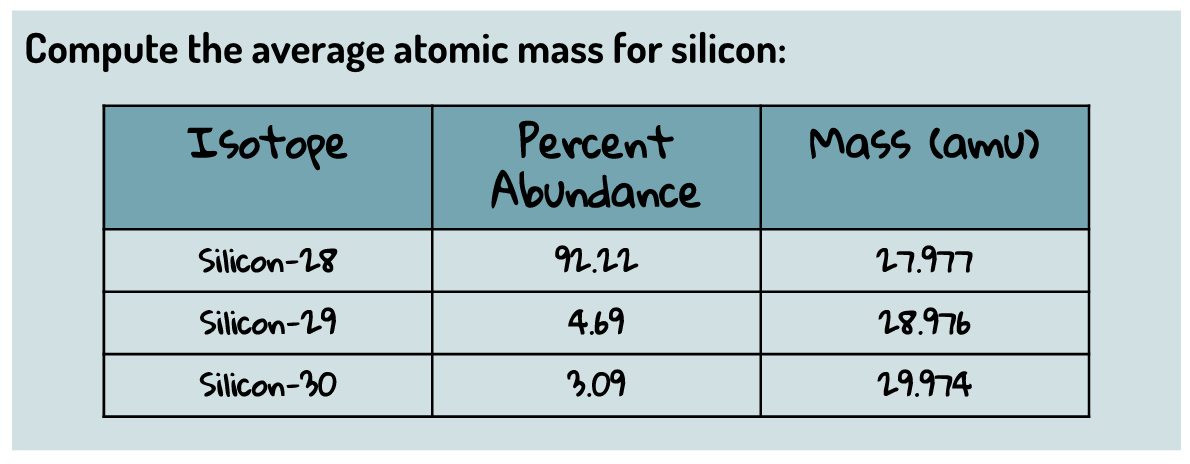
Compute the average atomic mass for silicon:
a)
27.977
b)
28.09
c)
28.976
d)
The average mass cannot be determined from provided information.
11.
An isotope has three forms.  30% have a mass of 4 amu, 20% have a mass of 5 amu and 50% have a mass of 3 amu.  Average atomic mass will be closest to
a)
2 amu
b)
3 amu
c)
4 amu
d)
5 amu
12.
Calculate the average atomic mass of silver.
a)
106.38649amu
b)
111.91896amu
c)
107.8677amu
d)
121
13.

Magnesium exists as the three isotopes shown. What is the average atomic mass of magnesium?

a)

20.74 amu

b)

22.56 amu

c)

18.39 amu

d)

24.31

14.

Naturally occurring chlorine that is put in pools is 75.53 percent 35Cl (mass = 34.969 amu) and 24.47 percent 37Cl (mass = 36.966 amu). Calculate the average atomic mass.

a)

35.46 amu

b)

35.00 amu

c)

37.00 amu

d)

17.00 amu

15.

Chlorine has two naturally occurring isotopes, Cl-35 and Cl-37, The atomic mass of chlorine is 35.45. Which of these two isotopes of chlorine is more abundant?

a)

Cl-35

b)

Cl-37

c)

Cannot be determined from the information provided.

16.

What do the mass numbers on the periodic table represent?

a)

The mass of the most abundant isotope

b)

The mass of the least abundant isotope

c)

The average mass of the two most abundant isotopes

d)

The average mass of all the isotopes

17.
What quantities vary between isotopes of an element?
a)
protons, electrons, and atomic mass
b)
protons, electrons, and atomic number
c)
neutrons and electrons
d)
neutrons and atomic mass
18.
How is carbon-12 different from carbon-14?
a)
They have a different number of protons
b)
they have a different number of electrons
c)
they have a different number of neutrons
d)
they are different elements
19.
What can you conclude about carbon-14 from its name?
a)
It has 14 electrons
b)
it has 14 neutrons
c)
it has 14 protons
d)
it has an atomic mass of 14 u
20.

What is the average atomic mass for thallium, Tl, if there are two isotopes with the following masses and abundances? Tl-203 has a mass of 203 amu with an abundance of 29.5 % Tl-205 has a mass of 205 amu with an abundance of 70.5 %

a)

203.12 amu

b)

204.31 amu

c)

204.41 amu

d)

204.0 amu

21.

A sample of cesium is 75% Cs-133, 20% Cs-132, and 5% Cs-134. What is the average atomic mass?

a)

132.97 amu

b)

133.00 amu

c)

133.16 amu

d)

132.85 amu

22.

Element Q is an unknown element. 20Q has abundance of 90.51%, 21Q has abundance of 0.21%, and 22Q has abundance of 9.22%.

Find the average atomic mass of Q and identify the unknown element.

a)

F with mass = 19,894 amu

b)

Ne with mass = 20.17 amu

c)

Sodium with mass = 22.90 amu

d)

Mg with mass = 24.12 amu

23.

Helium-4 has a percent abundance of 20% and Helium-5 has a percent abundance of 80%. What is the average atomic mass?

a)

4.4 amu

b)

4.8 amu

c)

5.2 amu

d)

6 amu

24.

Hydrogen-1 has a % abundance of 20%, Hydrogen-2 has a % abundance of 30%, and Hydrogen-3 has a % abundance of 50%. What is the average atomic mass?

a)

2.1 amu

b)

2.3 amu

c)

2.5 amu

d)

3 amu

25.

Four isotopes of lead include lead-204, lead-206, lead-207, and lead-208. The average atomic mass of lead is 207.2. Which isotope of lead is likely to be the most abundant?

a)

204

b)

206

c)

207

d)

208

26.

The isotopes of an element are listed below

4.35% have a mass of 49.9461 amu,

83.79% have a mass of 51.9405 amu,

9.50% have a mass of 52.9407 amu,

2.36% have a mass of 53.9389 a.m.u.

Determine the atomic mass of the element.

a)

51.99 amu

b)

52.19 amu

c)

53.45 amu

d)

17.33 amu

27.
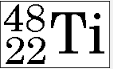
How many protons does this isotope of titanium have?
a)
48
b)
22
c)
26
d)
70
28.
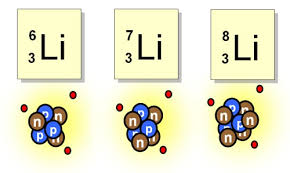
which atom has  4 neutrons?
a)
Li-6
b)
Li-7
c)
Li-8
d)
they have the same # of neutrons
29.
How many neutrons does the isotope below have?     89 36Kr
a)
53
b)
36
c)
89
d)
125
30.
An atom is electrically neutral when
a)
protons and neutrons are the same
b)
protons and electrons are the same
c)
neutrons and electrons are the same
d)
neutrons balance the protons and electrons
31.
The atomic masses and the relative abundances of 2 naturally occurring isotopes of an unknown element X are as following: isotope X-7 has a relative abundance of 95% and isotope X-10 has a relative abundance of 5%. Which of the following is correct
a)
(7 x 95) + (10 x 5)
b)
(7 x 0.95) + (10 x 0.05)
c)
(7 x 0.95) + (10 x 0.5)
d)
(0.7 x 95) + (0.10 x 5)
32.

Element Z has 2 natural isotopes. One isotope has a mass of 15.0 amu and a relative abundance of 30%. The other isotope has a mass of 16.0 amu and a relative abundance of 70%. Estimate the average atomic mass for this one element.

a)

15.0 amu

b)

16.0 amu

c)

15.7 amu

d)

16.9 amu

33.

Which isotope of potassium do you think is the most abundant: K-39, K-40, or K-41? The average atomic mass of potassium is 39.10 amu.

a)

K-39

b)

K-40

c)

K-41

d)

They are all equally abundant.

34.

12 protons and 13 neutrons

a)

Mg-12

b)

Mg-13

c)

Mg-25

d)

Mg-24.305

35.
Different isotopes have...
a)
different masses
b)
different atomic numbers
c)
different electrons
d)
different protons