
 Worksheets
AS_04_C_US intervention
Total questions: 45
Worksheet time: 26mins
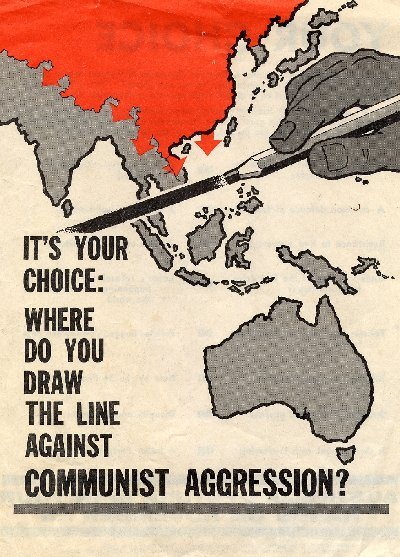
The U.S. got involved in Korea and Vietnam because of what foreign policy?
containment
Good Neighbor policy
isolationism
Roosevelt Corollary

After WWII, North Korea was occupied by the ____________ and had a ____________ government.
U.S.S.R./Communist
U.S.S.R./Democratic
U.S.A./Communist
U.S.A./Democratic

After WWII, South Korea was occupied by ____________ and had a ____________ government.
U.S.S.R./Communist
U.S.S.R./Democratic
U.S.A./Communist
U.S.A./Democratic


What peacekeeping organization voted to aid South Korea?
League of Nations
NATO
United Nations
Warsaw Pact

Who was North Korean leader who led the invasion of South Korea in 1950?
Kim Il Sung
Kim Jong-il
Kim Jong-un

What were the results of the Korean War?
The two sections of Korea reunited
North Korea & South Korea remained divided
The Soviet Union took control of both sections of Korea
China set up a communist government


Who was the Communist leader of North Vietnam?
Ho Chi Minh
Mao Zedong
Kim Il Sung
Douglas MacArthur

One major reason for why the Vietnam War was so unpopular was the draft. What is a military draft?
required military service
a type of airplane
government rule by a few people

What type of government does Vietnam have today?
Communism
Democracy
Dictatorship

What is "a government where citizens vote on laws and leaders"?
Democracy
Capitalism
Socialism
Communism

What was the name of the North Vietnamese army?
Việt Cộng
Lộc Ninh
Trần Văn Trà
Nguyễn Huệ

Which conflict happened first?
the Korean War
the Vietnam War

Which conflict lasted longer?
the Korean War
the Vietnam War
True or false: The Soviet Union wanted to see other countries adopt Communism.
True
False
What did the U.S. want to spread?
Democracy and free enterprise (Capitalism)
Communism
True or false: The U.S. policy of containment focused on preventing communism from spreading.
True
False
During the Cold War, what policy did the U.S. follow to stop the spread of communism?
Open Door Policy
Big Stick Policy
Containment Policy
Dollar Diplomacy
What theory caused the U.S. to enter the Vietnam War in order to stop the expansion of communism across Southeast Asia?
Marshall Plan
Domino Theory
Open Door Policy
Dollar Diplomacy


The Ho Chi Minh Trail was
a secret path which was used by the Viet Cong in Saigon.
a supply line for the Vietcong which ran through neutral countries.
the route that the Americans took when they left South Vietnam.
a supply line used by South Vietnam.
After the Vietnam War
South Vietnam stayed independent but communist.
both countries were reunited.
the Americans had to pay for most of the damage.
all of the above.
Where was the United States Navy allegedly attacked in 1964?
Gulf of Thailand
Gulf of Tonkin
Pearl Harbor
South China Sea
The United States experience in the Vietnam War supports the idea that the outcome of a war
is determined mainly be technological superiority.
is dependent on using the greatest number of soldiers.
is assured to countries dedicated to democratic ideals.
can be strongly affected by public opinion.
US troop reduction in Vietnam; transfer of combat operations from American to South Vietnamese troops
Domino Theory
Kent State University
Tet Offensive
Vietnamization
What U.S. General was given the job of rebuilding Japan after WWII?
Louis Mountbatten
Douglas MacArthur
Dwight Eisenhower
George C. Marshall
What type of government was created for Japan in the years following the war?
Autocratic State
Communist State
Traditional Monarchy
Constitutional Monarchy
What was the role of the Japanese emperor in the new government?
His role mainly ceremonial
He was a powerful political figure
The office of emperor was eliminated
He served in the parliament as the presiding officer
Which requirement is written into the Japanese constitution?
to restrict voting to men only
to end the position of emperor
to never declare war on another country
to maintain a strong military for their protection
What did the governments of the United States and Japan agree to do at the end of WWII?
work together to rebuild Japan
work together to defeat the Nazis
work together to defeat the Russians
stop the spread of Communism into Asia
Who was General Douglas MacArthur
US Military Officer in charge of rebuilding Japan after WWII
US Military Officer responsible for the surrender of the Nazis
British military officer in charge of repairing relations between US and Japan
Russian military officer responsible for planning Japanese reparations to China
What lead to the surrender of Japan and the end of WWII in the Pacific?
US dropped atomic bombs on 2 Japanese cities.
Russia defeated the Japanese in North Korea.
Japan dropped atomic bombs on Pearl Harbor Naval base.
United States agreed to help rebuild Japan
What did the governments of the United States and Japan agree to do at the end of WWII?
work together to rebuild Japan
work together to defeat the Nazis
work together to defeat the Russians
stop the spread of Communism into Asia
How could Japan be describe immediately after WWII?
devastated with widespread destruction
powerful with newly gained territory
economically powerful with a weak military
strong military strength with a weak economy
Which US President approved of the atomic bombs being dropped on two Japanese cities?
President Eisenhower
President Truman
President Roosevelt
President MacArthur
What two cities did the US drop the atomic bombs on?
Tokyo and Okinawa
Hiroshima and Nagasaki
Seoul and Taiwan
Valdosta and Hahira

