wayground logo

Free Printable Worksheets

Font size

S
M
L
XL
Worksheets

Structure of Matter Review

Total questions: 62

Worksheet time: 39mins

Name
Class
Date
1.

What is the basic building block of all matter?

a)

matter

b)

atom

c)

molecule

d)

element

2.

Anything that takes has a mass and takes up space (has a volume).

a)

atoms

b)

matter

c)

energy

3.

What do we call a substance that is made up of ONLY one kind of atom?

a)

molecule

b)

compound

c)

element

4.

What do we call a substance made up of 2 or more DIFFERENT types of atoms bonded together?

a)

formula

b)

subscript

c)

element

d)

compound

5.

What do you call a substance that has two or more substances NOT chemically combined?

a)

atoms

b)

molecules

c)

pure substance

d)

mixture

6.

How many hydrogen atoms are there in a water molecule? H20

a)

0

b)

1

c)

2

d)

3

7.

How many different types of atoms/elements are in CaCO3?

a)

2

b)

3

c)

4

d)

5

8.

What does the periodic table show?

a)

elements

b)

compounds

c)

atoms

d)

molecules

9.
Which of the following is a sign that a chemical reaction has occurred?
a)
change in shape
b)
melting
c)
formation of a gas
d)
dissolving
10.
Is melting butter for popcorn a chemical or physical change?
a)
chemical
b)
physical
11.
Which of the following is NOT an example of a physical change?
a)
crumpled paper
b)
pencil sharpening
c)
shrunken clothing
d)
rust
12.
A change where one or more new substances are created.
a)
Physical Change 
b)
Chemical Change 
13.
Fizzing, foaming, and burning are all examples of
a)
Chemical change
b)
Physical change
14.
When you break a cracker into pieces it is a...
a)
Chemical change
b)
Physical change
15.
Which of these is a result of a chemical change?
a)
A mixture
b)
A solution
c)
A new substance
d)
Melting or freezing
16.
Ice melting
a)
Chemical Change
b)
Physical Change
17.

A green powder is heated & a gas is given off while it turns to a black solid. This describes

a)

Physical Change

b)

Chemical Change

c)

Change in State

d)

Change in Temperature

18.

A Chemical Change is also known as what?

a)

Physical Change

b)

Physical Property

c)

Chemical Reaction

d)

Chemical Property

19.

The formation of a solid when two liquids combine is called?

a)

Solidification

b)

Freezing

c)

Precipitate

d)

Solubility

20.

Which type of change is most often easily reversed?

a)

Chemical

b)

Physical

c)

Both a physical and chemical change.

d)

Neither a physical or chemical change.

21.

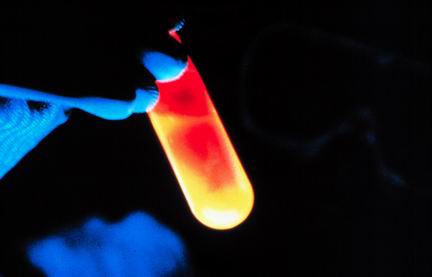
Identify what type of change happening in the picture below...

a)

Chemical Change

b)

Physical Change

c)

Endothermic Reaction

d)

Exothermic Reaction

22.

Identify what type of change happening in the picture below...

a)

Chemical Change

b)

Physical Change

c)

Endothermic Reaction

d)

Exothermic Reaction

23.

Identify what type of change happening in the picture below...

a)

Chemical Reaction

b)

Physical Change

c)

Change in State

d)

Change in appearance only

24.
substance that dissolves
a)
solvent
b)
solution
c)
solute
d)
unsaturated
25.
substance that dissolves the solute
a)
solution
b)
solvent
c)
saturation
26.
substance consisting of atoms or ions of two or more different elements joined by a chemical bond
a)
element
b)
mixture
c)
compound
27.
mixture of two or more substances; dissolved particles are spread evenly throughout the mixture
a)
solvent
b)
solute
c)
mixture
d)
solution
28.

Which of the following is not a compound?

a)

HCl

b)

Cl2

c)

NaCl

d)

CO2

29.
Which of the following represents an element?
a)
H2O
b)
H2
c)
NaCl
d)
CaCO3
30.
A molecule is
a)
two or more atoms bonded together
b)
one type of atom
c)
smaller than an atom 
d)
an element
31.
What is gold?
a)
element
b)
compound
c)
mixture
32.

What is a small particle that is known as the basic building block of matter?

a)

molecule

b)

compound

c)

element

d)

atom

33.

Two oxygen atoms bond together, which vocabulary word best describes this type of matter?

a)

molecule

b)

compound

c)

element

d)

atom

34.

Molecules and compounds are created when multiple atoms bond together, but how are they different?

a)

Compounds have to have atoms from different elements bonded together

b)

Molecules have to have atoms from different elements bonded together

c)

They are the same and there is no difference

d)

Molecules are building blocks of compounds

35.

What purpose do molecular models, drawings, and diagrams serve? (check all that apply)

a)

They allow us visual representations for things we can't normally see.

b)

They make concepts easier to understand.

c)

They make concepts more difficult to understand.

d)

They serve no purpose.

36.

Which of these is only a molecule and not a compound?

a)

a

b)

b

c)

c

d)

d

37.
Which of the following examples shows that a chemical reaction has occurred? 
a)
A rock breaks into smaller pieces when it is struck with a hammer.
b)
Rust forms on a hammer that has been left outside to long. 
c)
A cup of water turns pink when a few drops of red food coloring are added. 
d)
A solid is formed when heat is removed from a sample of water. 
38.
Evidence of a chemical reactions is anything that shows - 
a)
a new substance has formed
b)
a solid dissolved in a liquid
c)
interaction between 2 gases
d)
a change in the state of matter
39.
Which of the following is NOT evidence that that a chemical reaction has occurred?
a)
produces light/heat
b)
production of a gas
c)
formation of a precipitate
d)
melting
40.
Coal contains carbon and other elements. Carbon dioxide forms when coal burns in the presence of oxygen. Which of these is the best evidence that a chemical reaction occurs when coal burns?
a)
The shape of the coal changes
b)
Oxygen is present
c)
A new substance is produced
d)
Coal is made up of more than one element
41.
Which is an example of a physical change?
a)
Burning wood
b)
Freezing water
c)
Rust on a car
d)
Cooking food
42.
Chemistry is
a)
a characteristic of a substance that can be observed without changing the substance into another substance.
b)
the study of matter and how matter changes.
c)
anything that has mass and takes up space.
d)
a rapid reaction between oxygen and a substance called a fuel.
43.
What happens when chemical bonds break and new bonds form?
a)
a physical change
b)
a chemical reaction
c)
matter is destroyed
d)
surface area increases
44.
The substances listed on the left side of a chemical equation are the
a)
Products
b)
Coefficients
c)
Precipitates
d)
Reactants
45.

The elements / compounds on the LEFT side of the yield arrow are known as

a)

Products

b)

Metals

c)

Reactants

d)

Chemicals

46.

The elements / compounds on the RIGHT side of the yield arrow are known as

a)

Reactants

b)

Gases

c)

Chemicals

d)

Products

47.

When matter goes from solid to a liquid, that's called...

a)

Freezing

b)

Melting

c)

Evaporation

d)

Condensation

48.

When matter goes from gas to a liquid, that's called...

a)

Freezing

b)

Melting

c)

Evaporation

d)

Condensation

49.

When matter goes from liquid to a gas, that's called...

a)

Freezing

b)

Melting

c)

Evaporation

d)

Condensation

50.

What state of matter is this?

a)

Solid

b)

Liquid

c)

Gas

51.

What state of matter is this?

a)

Solid

b)

Liquid

c)

Gas

52.

What state of matter is this?

a)

Solid

b)

Liquid

c)

Gas

53.
Na
a)
Element
b)
Molecule
c)
Compound
54.
NaCl
a)
Element
b)
Molecule
c)
Compound
55.
O3
a)
Element
b)
Molecule
c)
Compound
56.
NaSO4
a)
Element
b)
Molecule
c)
Compound
57.
Pb
a)
Element
b)
Molecule
c)
Compound
58.
Evidence of a chemical reactions is anything that shows - 
a)
a new substance has formed
b)
a solid dissolved in a liquid
c)
interaction between 2 gases
d)
a change in the state of matter
59.
The smell made from spraying perfume on yourself. 
a)
Chemical Change
b)
Physical Change
60.
Which of the following IS a physical change?
a)
Getting a haircut
b)
Rusty metal
c)
sour milk
d)
A compound
61.
What indicates a chemical reaction occurred?
a)
Heat or Light is released
heat or light is produced
b)
gas (bubbles) produced
c)
color change
d)
all of the above
62.
How do chemical reactions turn substances into new substances?
a)
with burning acid
b)
the molecules mix together and create new substances
c)
the atoms break apart and combine back together in new ways
d)
the ionic compounds mix in water to form solutions