
NEW
Font size
 Worksheets
Bony Thorax (Ribs and Sternum) Scenarios
Total questions: 35
Worksheet time: 35mins
The suprasternal, manubrial, or jugular notch all correspond to the level of:
T2-3
T1
T4-5
C7
In the erect adult bony thorax, the posterior portion of a typical rib is _____ higher or more superior to the anterior portion.
1-2 inches
3-5 inches
6-8 inches
10-12 inches
Which of the following is considered to be a false rib?
Seventh
First
Ninth
Second
Which of the following statements is true about floating ribs?
They do not possess a head
They do not possess their own costocartilage
They do not posses a costovertebral joint
They are ribs 10-12
Which aspect of the rib articulates with the thoracic transverse process?
Neck
Head
Tubercles
Ribs 1-7 are considered to be
True ribs
False ribs
Floating ribs
Anterior ribs
A breathing technique may be used to blur the lung markings on which of the following projections?
RAO Sternum
Lateral Sternum
PA Oblique Ribs
AP Oblique Ribs
What is the recommended SID for the RAO sternum position?
40 inches
44 inches
30 inches
72 inches
A patient has an injury to their left anterior upper ribs. Which would best demonstrate that area?
PA and RAO
AP and LAO
AP and RPO
PA and LPO
Which of the following is the correct breathing instruction for AP Oblique Upper Ribs?
Full inspiration
Full expiration
No breathing instructions required
Shallow breathing
Which of the following positions will best demonstrate the axillary portion of the left ribs?
LAO
RPO
LPO
PA
Which of the following would be incorrect when obtaining a lateral sternum x-ray.
Have the patient suspend deep inspiration
Rotate the shoulders back and have the patient lock hands behind back
Have the patient take slow, shallow breaths
Adjust the patient in a true lateral position
Which would best demonstrate an injury to the left posterior lower ribs?
AP and RAO
PA and LPO
AP and LPO
PA and RPO
On an RAO sternum image the receptor exposure was optimal, but lung markings obscured the anatomy of interest. The following exposure factors were used: 1s, 35 mA, 75 kVp. How could the breathing technique be improved?
Increase the time, decrease the mA.
Decrease the kVp, increase the mA
Increase the kVp, decrease the time.
Do not alter the technique, this is a positioning error.
A radiograph of an RAO sternum reveals that it is free of superimposition with the spine. What must be done to eliminate this problem?
No change necessary.
Increase rotation.
Decrease rotation.
Perform an LPO instead.
A lateral sternum image shows that the ribs are superimposed over the anatomy of interest. How can this be corrected?
Ensure the patient is in a true lateral position.
Angle the CR 10 degrees caudad.
Increase the kVp.
Increase the SID.
Which two projections must be taken for an injury to the left posterior lower ribs?
AP and LPO
AP and RAO
PA and LPO
PA and RAO
A PA image of the SC joints demonstrates that the left SC joint is farther from the sternum than the right. What specific positioning error is present?
slight right rotation
tilt of the upper thorax
slight left rotation
excessive angulation of the CR
An image of an LAO projection of the ribs demonstrates the right axillary ribs are foreshortened and the left are elongated. Which of the following is the most likely reason?
CR angulation was incorrect
the technologist should have performed a PA projection not an RAO
an RAO was performed rather than the LAO
the patient requires more rotation to the left
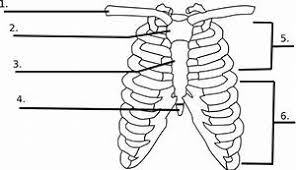
What is number 2?
Sternum
Manubrium
Body
Xiphoid process
What is number 4?
Sternum
Manubrium
Body
Xiphoid process
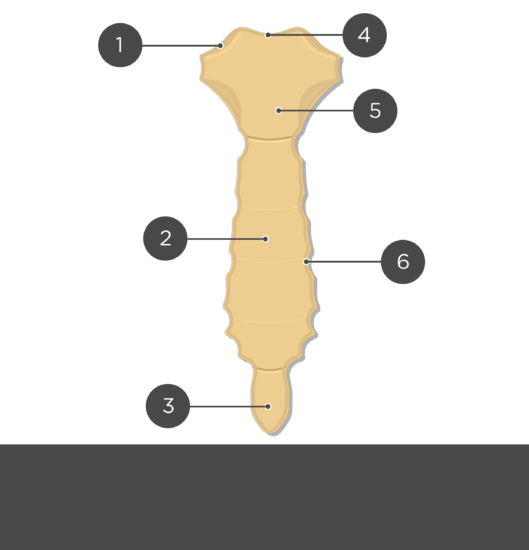
What is number 4?
jugular notch
clavicular notch
xiphoid process
body
Rib number 5 would be a ____ rib.
true
false
floating
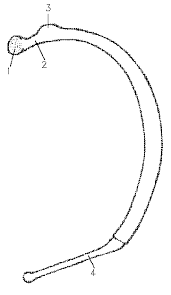
What is number 3?
neck
head
tubercle
What is number 1?
neck
head
tubercle
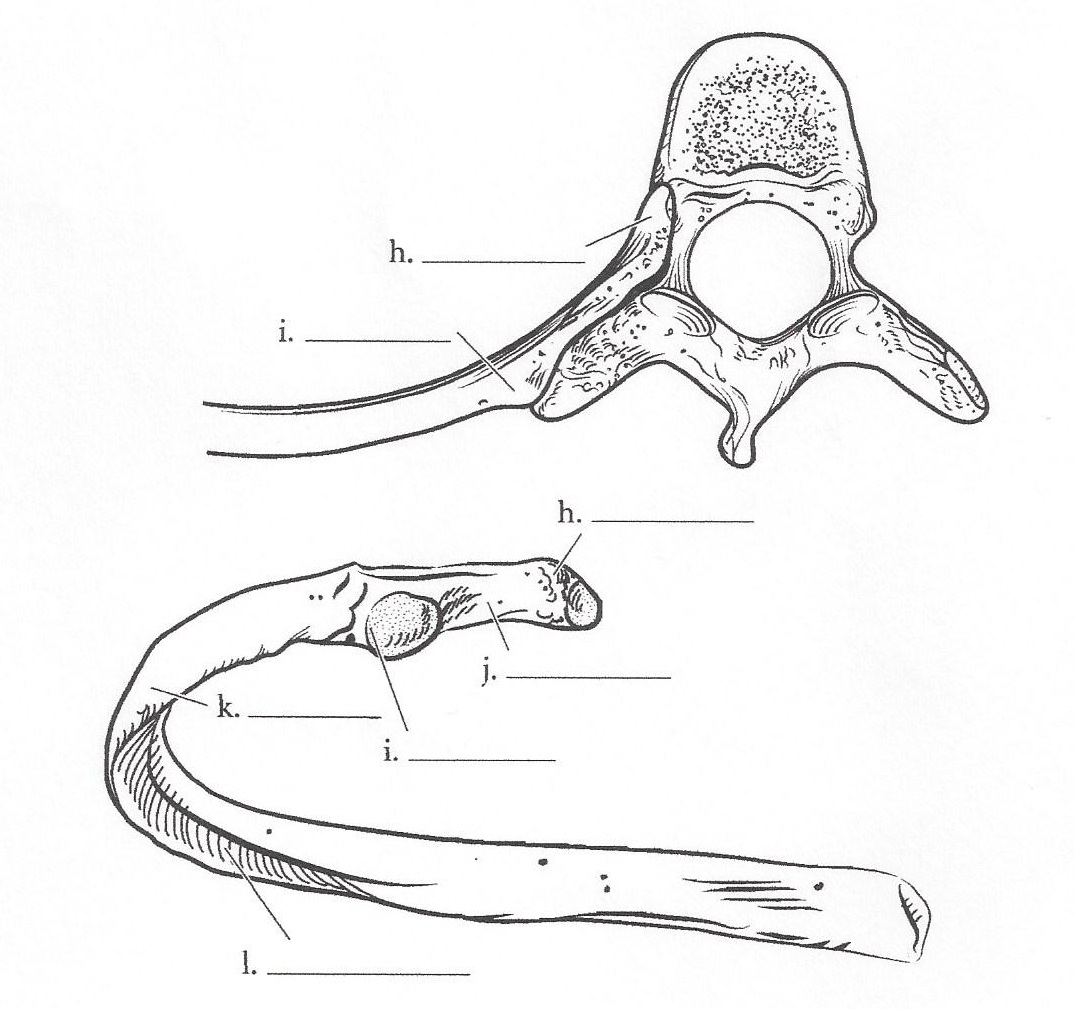
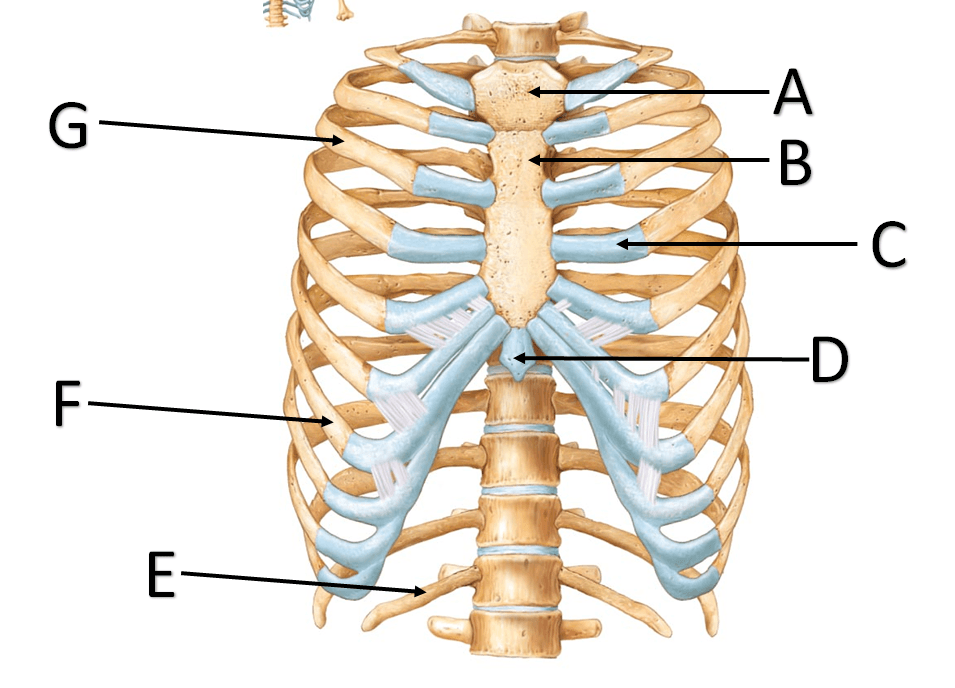
Letter A is pointing to:
Which of the following statements is true about Floating Ribs?
Floating ribs are not connected to the vertebrae column.
Women have one less floating rib than men
Floating ribs have no anterior attachment.
Floating ribs are the top two ribs "floating" directly under the clavicle.
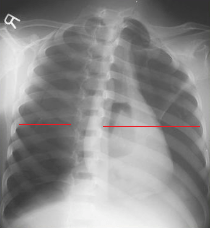
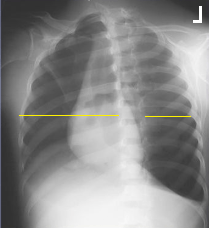
Both of these rib radiographs are PA projection and 45° anterior oblique position. Which one is the RAO?
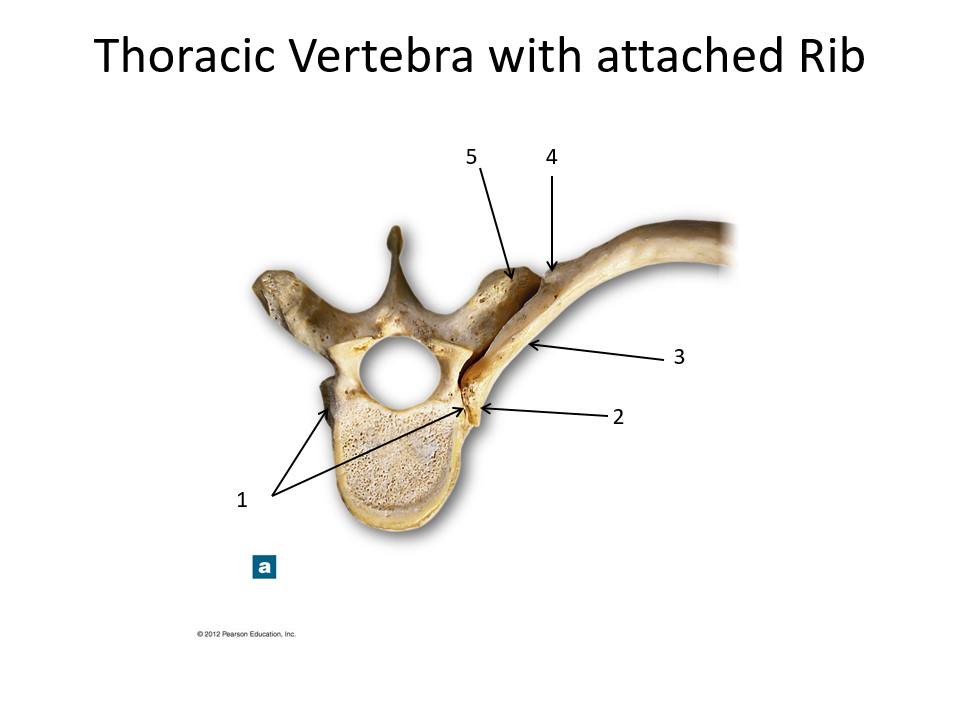
What is 5
costal process
tubercle
costovertebral joint
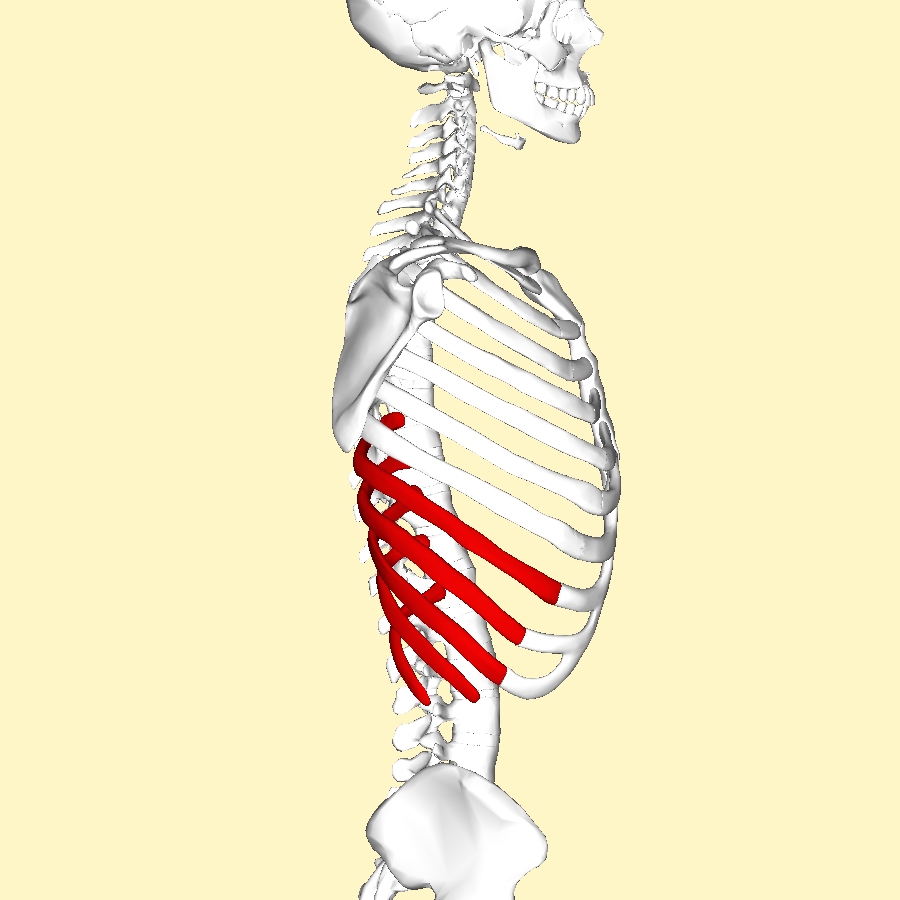
Ribs that are connected, via cartilage, to rib pair 7, and are thus indirectly connected to the sternum, are known as
true ribs
false ribs
floating ribs
suprasternal ribs
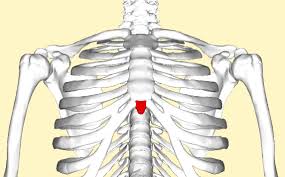
Identify the structure indicated in the image.
manubrium
body of sternum
xiphoid process
rib cage
sternum

