
 Worksheets
QSE 2 OL/KP
Total questions: 38
Worksheet time: 2hrs 7mins

How is cancer related to cell division?
Mutations can cause uncontrolled cell division which causes cancerous cells to spread rapidly and take nutrients from healthy cells.
Cancer stops cell division from happening.
Cell division causes viruses that spread around the body and cause cancer.
Cancer is not related to cell division.

Cells spend most of their lives in which phase?
Interphase
Prophase
Telophase
Metaphase

The G1, S, and G2 are parts of which phase of the cell cycle?
Prophase
Interphase
Telophase
Anaphase

Why do cells go through mitosis?
to make food from sunlight
to get air into the cells
to create proteins
to reproduce, grow, and repair/replace cells

Is interphase a part of Mitosis?
Yes, it happens after prophase
No, it happens before mitosis
The replication of DNA is being affected in a cell, which phase is responsible for this change?
G1
S phase
G2
Mitosis
What is cancer?
A polypeptide
Regular cell growth
Controlled cell division
Unregulated cell growth and division
During which phase are the chromosomes pulled away to opposite poles?
Prophase
Metaphase
Anaphase
Telophase
During interphase
DNA lines up in the middle of the cell and DNA attaches to spindle fibers
2 new nuclei form
2 new identical cells are created
DNA gets copied
Why is DNA important
it provides the instructions/blueprint for a cell
it makes energy
it stores wastes
it is responsible for making food

metaphase
prophase
anaphase
telophase

Which phase is shown here?
anaphase
telolphase
metaphase
prophase

metaphase
prophase
anaphase
telophase

metaphase
prophase
anaphase
telophase
During anaphase
DNA lines up in the middle of the cell and DNA attaches to spindle fibers
centrioles and spindle fibers appear
Each DNA gets pull to the opposite sides of the cell
DNA gets copied
What happens during anaphase of mitosis?
The nucleus disappears
The DNA divides
The DNA lines up
Two new nuclei form
Cells spend most of their lives in which phase?
Interphase
Prophase
Telophase
Metaphase
The G1, S, and G2 are parts of which phase of the cell cycle?
Prophase
Interphase
Telophase
Anaphase
→ Carbon dioxide + Water
→ Oxygen + Water
→ Glucose + Water


Which of the following statements is true
The products of photosynthesis are the reactants of cellular respiration.
The products of photosynthesis are not necessary for respiration to occur.
The reactants of photosynthesis are also the reactants of cellular respiration.
The products of photosynthesis are also the products of cellular respiration.
Which organisms do cellular respiration. Check all that apply.
plant
animal
fungus
protist
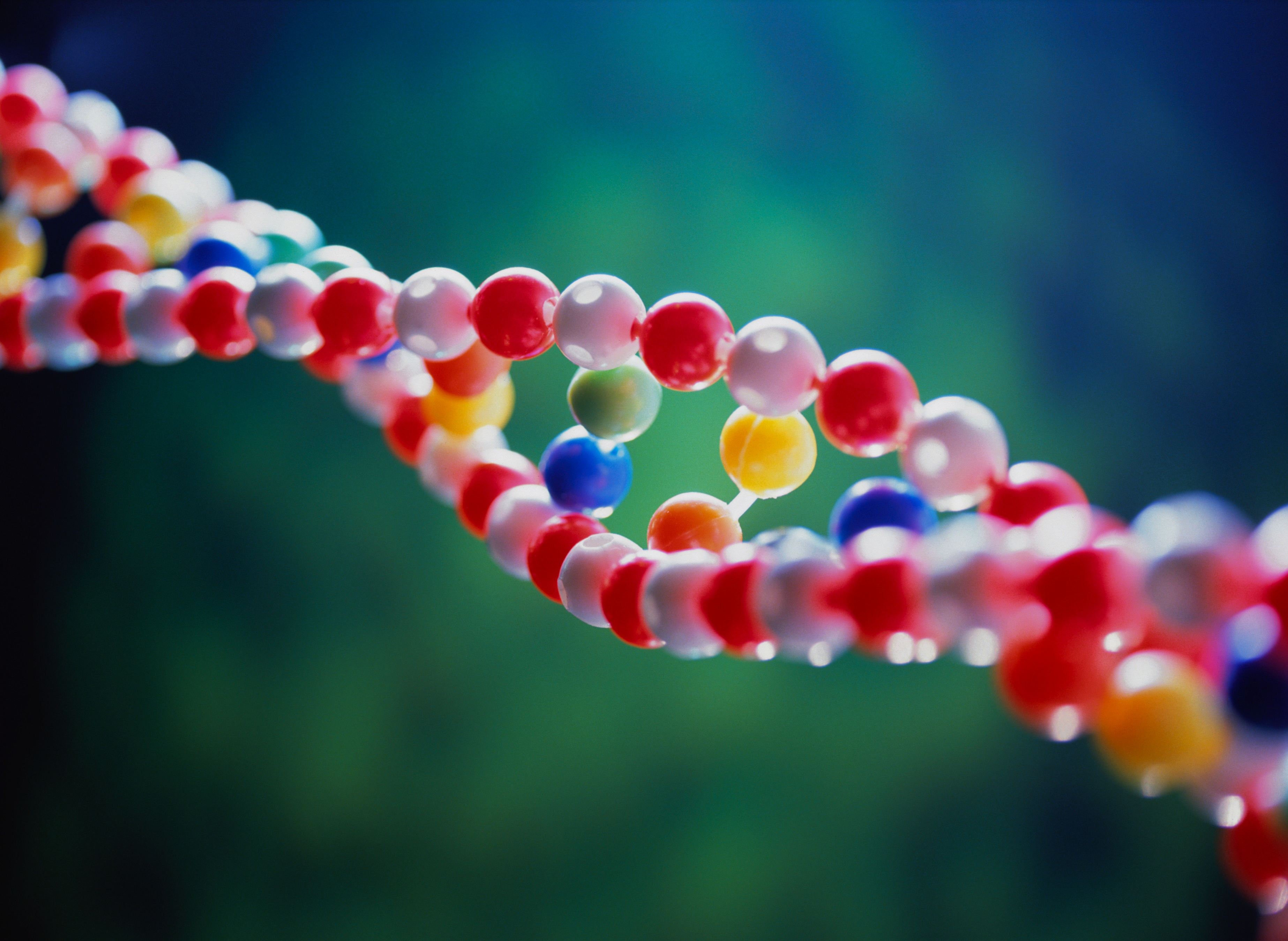
ATG TGA CAG


Which part of a DNA molecule is responsible for the direct coding of specific traits in an organism?
The number of hydrogen bonds that hold the strands of DNA together
The number of carbons in the DNA molecule.
The sequence of nucleotide bases in the DNA molecule
The sequences of phosphates along each DNA strand
![1学期期末テスト対策 [生物]](https://cf.quizizz.com/image/image-loader.svg)
