
Font size
 Worksheets
P5 Science UT Review
Total questions: 40
Worksheet time: 20mins
The ability to be bent, flattened, or hammered without breaking is called?
malleability
ductility
luster
You divide an object's mass by its volume to calculate its
mass
volume
density
The amount of space a matter takes up is its
mass
volume
weight
The amount of matter in an object is its
volume
mass
density
A material that cannot be broken down into anything simpler by chemical reactions is a(n)
molecule
element
compound
Shiny, luster, conductivity, and flexibility are all properties of a(n)
metalloids
nonmetals
metals
The smallest unit of an element that still has the properties of that element
molecule
atom
compound
A particle made of two or more atoms is called
element
compound
molecule
Anything that has mass and occupies space
physical change
mixtures
matter
The gradual wearing away of a metal by combining with nonmetals is called
suspension
corrosion
emulsion
Which of these measures an object's mass?
ruler
pan balance
spring scale
graduated cylinder
All the elements in a column of the periodic table have
similar properties
the same number of protons
the same atomic mass
nothing in common
The positive particles of an atom are
electrons
positrons
neutrons
protons
The central region of an atom where its neutrons and protons are is its
nucleus
electron cloud
core
center
Particles in an atom that are neutral and have no charge are
negatrons
electrons
neutrons
protons
In the modern periodic table, elements are arranged by:
atomic mass
atomic number
valence electrons
number of isotopes
An atom with atomic number 6 would have how many protons
6
12
3
cannot be determined
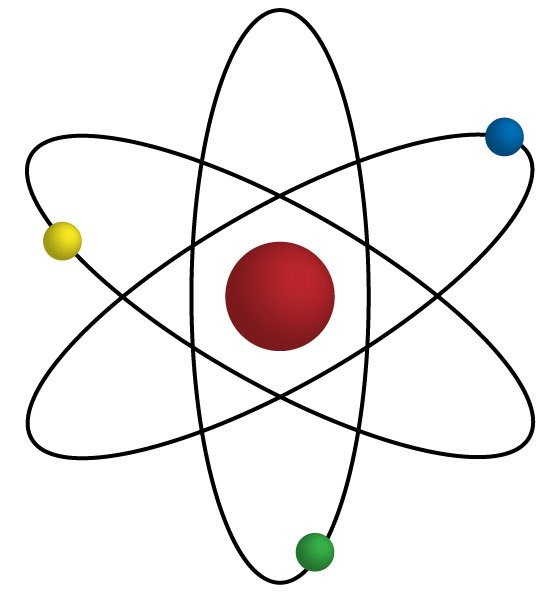
Carbon
CA
C
Ca
Cn
N
Sodium
Nitrogon
Nonium
Nitrogen

The nucleus of an atom is made of ________ and ________ .
protons + neutrons
electrons + protons
one carbon (C)
two oxygen (O)
(rust) made up of?
3 oxygen


Which elements are to the right of the zig zag?
metals
nonmetals
metalloids
The only metal that is liquid at a room temperature
gold
silicon
mercury
bromine
Write correctly the symbol of Sodium
(a)
Write correctly the symbol of Carbon
(a)
State of matter with a definite shape and volume
(a)
State of matter that does not have a definite shape and volume
(a)
The most abundant element in the earth's crust
oxygen
nitrogen
silicon
Scientists can use a scanning tunneling microscope to
study the shape of a water molecule
form new elements
change the density of an object
measure and objects weight

