Wayground logo

Free Printable Worksheets

Font size

S
M
L
XL
Worksheets

Final Exam: Understanding of Literary Terms (Part 1, AP Lit)

Total questions: 76

Worksheet time: 40mins

Name
Class
Date
1.

What Makes Poetry Different from Prose? Select all that apply.

a)

Poetry uses words, phrases, sentences, paragraphs, and chapters.

b)

Prose uses syllables, feet lines, stanzas, and cantos.

c)

Poetry uses syllables, feet lines, stanzas, and cantos.

d)

Prose uses words, phrases, sentences, paragraphs, and chapters.

2.

_________is a pattern of beats or accents.

a)

foot

b)

meter

c)

scansion

d)

end rhymes

e)

internal rhymes

3.
A _______ in a poem is like a sentence in a paragraph.  
a)
stanza
b)
line
c)
rhyme 
d)
figurative language
4.
All are found in poetry except...
a)
rhyme scheme
b)
rhythm
c)
stanza
d)
paragraphs
5.
A grouped set of lines in a poem, set apart from others with a space is a (this is like the paragraph of poetry)...
a)
stanza
b)
refrain
c)
ballad
d)
chorus
6.

The duplication of final syllable sounds in two or more lines of poetry is called________.

a)

foot

b)

meter

c)

scansion

d)

rhyme

e)

internal rhymes

7.

____________tells a story.

a)

Lyric poetry

b)

Narrative poetry

8.

____________presents a personal impression. It is highly personal and emotional.

a)

Lyric poetry

b)

Narrative poetry

9.

______________is one of the earliest poetic forms. It is a narrative that was originally spoken or sung and has often

changed over time. It

a)

The ballad

b)

The ode

c)

The elegy

d)

The villanelle

e)

The sonnet

10.

______________is a formal lyric poem that addresses subjects of elevated stature.

a)

The ballad

b)

The ode

c)

The elegy

d)

The villanelle

e)

The sonnet

11.

_____________is a formal lyric poem written in honor of one who has died.

a)

The ballad

b)

The ode

c)

The elegy

d)

The villanelle

e)

The sonnet

12.

_____________is the most popular fixed form in poetry. It is usually written in iambic pentameter and is always made

up of 14 lines.

a)

The ballad

b)

The ode

c)

The elegy

d)

The villanelle

e)

The sonnet

13.

_____________relates an episode in a speaker’s life through a conversational format that reveals the

character of the speaker.

a)

The dramatic monologue

b)

The ode

c)

The elegy

d)

The villanelle

e)

The sonnet

14.
What is the rhyme scheme for the poem “Dreams”?

Hold fast to dreams
For if dreams die
Life is a broken-winged bird
That cannot fly.
a)
AABB
b)
ABAB
c)
ABCB
15.

Choose any that apply: How does an author create a setting?

a)

Refer to specific time and place

b)

Provide clues about place and time using details that correspond to historical eras/events

c)

Describe weather and surroundings

d)

Weave details into descriptions of action

16.

Antagonist: A person who actively __________ or is ________ to someone or something; an ___________.

a)

stone, mom, height

b)

opposes, hostile, adversary

17.
Plot is defined as
a)
Two or more plots developing alongside each other
b)
The sequence of events in a story
c)
When a story begins and ends in the same place
d)
Two different stories with the same types of plot
18.
The antagonist can be known as
a)
The bad guy
b)
The character who saves the day
c)
The character who gets punished in the story
d)
The character(s) who oppose(s) the protagonist  
19.
The protagonist can be defined as
a)
The good guy
b)
The bad guy
c)

The character around whom the action revolves the most.
d)
The character who is mentioned mostly in the story
20.
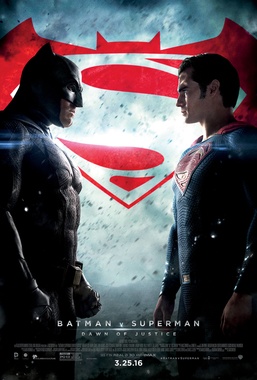
What type of conflict is the picture? 
a)
Person vs Person
b)
Person vs Nature
c)
Person vs Self
d)
Person vs Society
21.
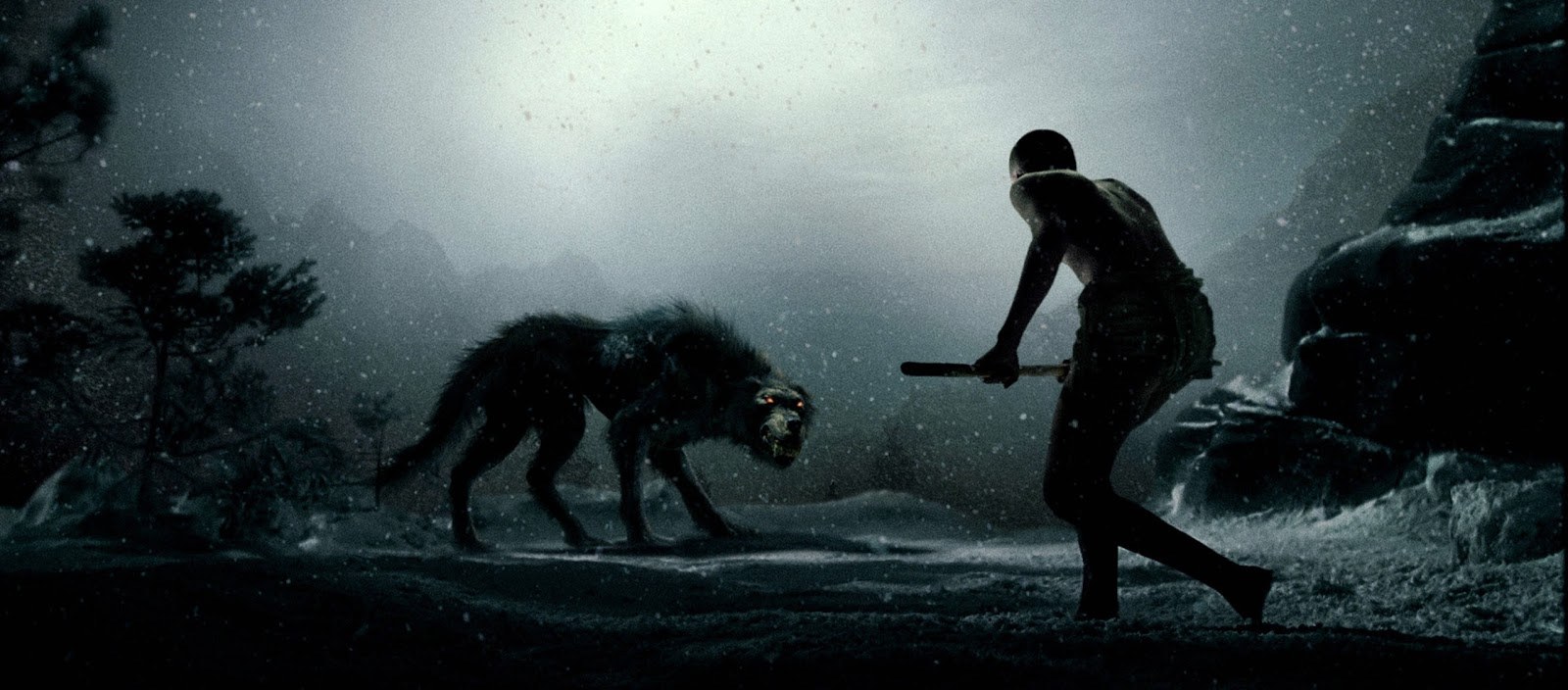
What type of conflict is the picture? 
a)
Person vs Person
b)
Person vs Nature
c)
Person vs Self
d)
Person vs Fate (God)
22.
What is third person omniscient Point of View?
a)
when the narrator, which is usually the main character  is telling the story from his or hers perspective.
b)
is a narrator that tells a story using the word YOU which places the reader in the story 
c)
The position which a narrator sees and understands what is happening 
d)
 the narrator knows all the thoughts, actions, and feelings of all characters. 
23.
When the narrator uses the pronouns "I", "me" , "us," the story is written in...
a)
1st person point of view
b)
3rd person point of view
c)
2nd person point of view
d)
none of the above
24.
When the narrator uses the pronouns, "she", "he", and "them", the story is written in...
a)
1st person point of view
b)
3rd person point of view
c)
2nd person point of view
d)
none of the above
25.
the narrator is the
a)
person telling the story
b)
the simile
c)
person who wrote the story
d)
a flat character
26.
How many types of literary irony exist?
a)
1
b)
2
c)
3
d)
4
27.
Situational Irony is when...
a)
The reader expects something to happen but a contrasting event occurs, leaving the reader surprised at the outcome
b)
The readers suspects there is truth behind what a character is saying in a story.
c)
The reader is clueless as to how a story ended a certain way.
d)
The reader knows what will happen next in a story.
28.
Verbal Irony happens when ...
a)
a character says something mean to another character
b)
a character says something intentionally opposite of what they mean; being sarcastic
c)
a character sings the Alanis Morrissette song
d)
the narrator surprises the reader at the end of the story
29.
Dramatic Irony happens when ...
a)
the reader is aware of what will happen next but the characters in the story are unaware.
b)
when a female character overreacts to something a male character did in a story
c)
the reader and the characters are unaware of what will happen next in a story
d)
the narrator drops clues about what will happen next in a story
30.

"Bang! The plate crashed to the floor." This is example of

a)

metaphor

b)

simile

c)

onomatopoeia

d)

allusion

31.

"If he's not careful, his love life could end up like Romeo and Juliet's." This is an example of

a)

hyperbole

b)

personification

c)

metaphor

d)

allusion

32.

"Life is like a box of chocolates, cute as a kitten, as blind as a bat, She hung her head like a dying flower." This is an example of

a)

onomatopoeia

b)

simile

c)

metaphor

d)

alliteration

33.

"The ocean danced in the moonlight." This is an example of

a)

hyperbole

b)

allusion

c)

personification

d)

idiom

34.

"Becky's beagle barked and bayed, becoming bothersome for Billy." This is an example of

a)

metaphor

b)

alliteration

c)

onomatopoeia

d)

allusion

35.

"He was a stainless steel ruler, tall, straight and always measured in response." This is an example of

a)

simile

b)

alliteration

c)

metaphor

d)

idiom

36.

What is a metaphor?

a)

A word that makes the sound it represents

b)

A comparison of two unrelated things

c)

An exaggerated statement

37.

What is figurative language?

a)

Language that has one literal meaning

b)

Language that uses extremely advanced vocabulary

c)

Language with a meaning that is different from the literal interpretation

d)

Language that communicates complicated concepts and ideas

38.

This refers to the writer’s use of vivid and descriptive language that appeal to the senses in order to add depth to his/her work.

a)

Description

b)

Imagery

c)

Senses

d)

Symbols

39.

Imagery in poetry appeal into the following senses.

a)

Sight

b)

Hearing

c)

Touch

d)

All of the above

40.

Is this an example of a well developed thesis?


"Through Harper's use of figurative diction, parallelism, and auditory imagery, she conveys the timeless and uniquely personal nature of music and its ability to evoke emotions of her childhood."

a)

Yes! It's well developed!

b)

No, it's not well developed.

41.

Your thesis should be:

a)

Arguable

b)

Have a clear subject

c)

Share words with the prompt

d)

Have claims

e)

All of the above

42.

Which of the following is a major component of any thesis?

a)

making a claim

b)

providing an amusing anecdote

c)

being at least three sentences

d)

only providing facts

43.

A thesis statement is generally located

a)

At the beginning of the intro

b)

Anywere

c)

the first sentence of your essay

d)

in the last sentence of your intro

44.

How long is a thesis statement?

a)

1-2 sentences

b)

1-2 paragraphs

c)

1-2 words

d)

1-2 pages

45.

True or False: It is best to use a quote in your thesis statement to support your point of view.

a)

True

b)

False

46.
A character that has many different sides, and is fully developed is...
a)
the antagonist
b)
the protagonist
c)
round
d)
flat
47.
A character that, has few traits and is easily described is...
a)
the antagonist
b)
the protagonist
c)
round
d)
flat
48.
Round characters display many personality traits.
a)
True
b)
False
49.

Characterization is

a)

the central message in a story

b)

the problem in a story

c)

the process by which a writer reveals a character's personality and qualities
50.
Which of the following is an example of direct characterization?
a)
He tapped his foot anxiously.
b)
"I wouldn't  trust that man," said Ma.
c)
Frank was a shy, quiet person.
d)
Every time he earned a high grade, he would hang the test on his wall.
51.
Which of the following is an example of indirect characterization?
a)
Marcia was a good listener and wonderful friend.
b)
Marcia felt the knot in her stomach grow when she saw the number of questions on the test, and she tugged her hair anxiously. 
c)
Marcia was a nervous person.
d)
Marcia was an optimist who always believed the best about people.
52.
Which of the following is an example of direct characterization?
a)
Jeff was compassionate when it came to taking care of his nephews.
b)
Jeff spoke gently to his nephews and catered to their needs.
c)
Jeff gave his nephews a big hug when he saw them.
d)
Jeff always asked about how his nephews were doing.
53.

Shows things that reveal the personality of a character.

a)

Direct characterization.

b)

Indirect characterization.

54.

Choose the best fit for: How characters react to people and events.

a)

Speech

b)

Thoughts

c)

Effect on Others

d)

Actions

55.

Choose the best fit for: What motivates a character.

a)

Speech

b)

Thoughts

c)

Actions

d)

Looks

56.

Choose the best fit for: How a character behaves.

a)

Thoughts

b)

Effect on Others

c)

Actions

d)

Looks

57.
What type of conflict is the picture? 
a)
Person vs Person
b)
Person vs Nature
c)
Person vs Self
d)
Person vs Fate (God)
58.
After breaking his mother's vase, Casey struggles to decide whether he should tell his mother the truth and face the consequences, or whether he should attempt to hide his mistake and blame the family dog. 
a)
Person vs. Person
b)
Person vs Nature
c)
Person vs. Self
d)
Person vs Fate (God)
59.
What is conflict?
a)
Two characters getting along.
b)
A struggle between two opposing forces.
c)
The climax in a story.
d)
Part of the resolution.
60.
What is the definition of an "internal" conflict?
a)
A hero in a story that saves many lives.
b)
A problem that a character has with other characters.
c)
A struggle between a character and a family member.
d)
A struggle that a character faces within him/her self.
61.
Which part of the story is represented by this blue blob?
a)
exposition
b)
rising action
c)
climax
d)
resolution
62.

The __________ introduces readers to the characters and setting of a story

a)

exposition

b)

expulsion

c)

resolution

d)

rising action

63.

What is the definition of plot?

a)

The lesson of a story

b)

The sequence of events in a story

c)

The turning point of a story

d)

The conflict of a story

64.
Which part of the story is represented by this blue blob?
a)
climax
b)
exposition
c)
falling action
d)
resolution
65.
Which part of the story is represented by this blue blob?
a)
climax
b)
rising action
c)
falling action
d)
resolution
66.
Define foreshadowing.
a)
A flashback of what happened previously
b)
A hint at something that will happen later
c)
Giving human-like characteristics to non-living things
d)
Comparing two unlike things using like or as
67.

__________is a method of narration in which present action is temporarily interrupted so that the reader can witness past events.

a)
Foreshadowing
b)
Flashback
c)
theme
d)
resolution
68.
What is the definition of irony?
a)
When something is ironic
b)
When words are intentionally used to convey a different message than expected.
c)
When someone is surprised
d)
That Alanis Morrisset song
69.

What is denotation?

a)

Direct meaning of a word or dictionary meaning.

b)

A negative association of a word.

c)

The figurative meaning of a word.

d)

It means to note the word.

70.

The dictionary definition refers to

a)

denotation

b)

connotation

c)

synonym

d)

antonym

e)

glossary

71.

What is the meaning of connotation?

a)

Emotional meaning of a word

b)

An emotional outburst

c)

Official meaning of a word

d)

Refers to emotional atmosphere produced by an author’s use of language

72.

What is connotation?

a)

Literal meaning of a word.

b)

Attitude or emotion a word makes you feel.

c)

The prefix of a word.

73.

"In a scary movie, the character walks into a house and the audience knows the killer is in the house." This is an example of

a)

Dramatic irony

b)

verbal irony

c)

situational irony

74.

"Of course I don't mind that you lowered my pay," he said. This is an example of

a)

Dramatic irony

b)

verbal irony

c)

situational irony

75.

"The marriage counselor files for divorce." This is an example of

a)

Dramatic irony

b)

verbal irony

c)

situational irony

76.

"In Of Mice and Men, Lenny kills a mouse, a puppy, and then later, Curley's wife." This is an example of

a)

foreshadowing

b)

flashback

c)

allusion

d)

assonance