

wayground logo

Free Printable Worksheets

Font size

S
M
L
XL
Worksheets

US 1 - First Semester Exam review

Total questions: 127

Worksheet time: 3hrs 49mins

Name
Class
Date
1.

Which battle is considered the first battle of the Revolutionary War?

a)

Battle of Lexington

b)

Battle of Concord

c)

Battle of Boston

d)

Battle of Breed's Hill

2.

Thomas Paine's pamphlet Common Sense led many colonial leaders to:

a)

reject Enlightenment ideas

b)

challenge British authority

c)

understand the good sense of monarchy

d)

agree to be bound by British laws

3.

Who was the main author of the Declaration of Independence?

a)

Benjamin Franklin

b)

Thomas Jefferson

c)

John Adams

d)

George Washington

4.

Why was the idea of taxation without representation so important to the revolutionary cause?

a)

Colonists believed King George III had violated their rights by taxing them without their consent

b)

Great Britain would have ended taxation if colonists had kept the peace

c)

Colonists believed that Great Britain should only tax certain items

d)

Great Britain only taxed the colonists to force them into war

5.

Why was the Battle of Saratoga a turning point for the Patriots?

a)

The Patriots gained the support of France and Spain

b)

The Patriots saved the army from losing enlisted men

c)

The Patriots got a Prussian to train the Continental Army

d)

The patriots realized they did not need foreign allies

6.

The winter at Valley Forge was a difficult time for the Continental Army because the army:

a)

lacked protection and supplies

b)

began to turn against the Revolution

c)

had just lost several important battles

d)

refused to drill and train

7.

The Battle of Yorktown:

a)

convinced colonists to comply with British rule

b)

allowed the French to gain colonial territory

c)

showed the British that they could beat the Patriots

d)

was the last major battle of the American Revolution

8.

Ratification of the Articles of Confederation was slowed down by conflicts over the:

a)

number of votes each colony would have in Congress

b)

use of colonial soldiers by Congress

c)

claims to western lands made by many colonies

d)

role of the judiciary in colonial government

9.

The Articles of Confederation established the:

a)

process of electing representatives to the Congress

b)

first national government of the United States

c)

requirements for being president of the Congress

d)

three branches of the US government

10.

The main cause of Shays's Rebellion was the:

a)

corruption of wealthy leaders

b)

collection of taxes on land to pay off war debts

c)

overproduction of worthless paper money

d)

inability of Congress to regulate trade

11.

What is federalism?

a)

a government where the central government holds supreme power

b)

a system that keeps each branch of government from obtaining too much power

c)

the sharing of power between a central government and the states of a country

d)

the part of government responsible for making the laws of a country or nation

12.

The Bill of Rights is the document:

a)

added to the Constitution to protect citizens' rights

b)

used to limit the power of state governments

c)

outlining the rights of the federal government

d)

stating the ways in which citizens can participate in government

13.

An amendment to the Constitution is:

a)

a suggested addition

b)

an official change

c)

a legal clarification

d)

a judicial opinion

14.

The federal government is divided into separate branches to:

a)

keep any one branch from becoming too powerful

b)

make the government run more efficiently

c)

provide flexibility in the interpretation of laws

d)

ensure one branch is in charge at all times

15.

In his farewell address, Washington warned against:

a)

observing good faith and justice towards all nations

b)

burdening future generations with debt

c)

establishing political unity within the nation

d)

maintaining the institution of slavery

16.

According to George Washington in his Farewell Address, what is the key to national success?

a)

political unity

b)

neutrality in foreign policy

c)

economic security

d)

checks and balances

17.
Main reason the American colonists wanted independence
a)
Taxes were too high
b)
British took American land in French Indian War
c)
No representation in parliament
d)
None of these
18.
Declaration of Independence was written to...
a)
set laws of a new nation
b)
tell the world why the US was breaking away
c)
tell the world that Parliament was the source of their problems
d)
none of these
19.
the role of government according to social contract is to...
a)
protect peoples rights
b)
keep taxes low
c)
build roads
d)
provide jobs
20.
The Northwest Ordinance provided a pathway for territories to apply for:
a)
statehood
b)
federal funding
c)
infrastructure grants
21.
Under the Articles of Confederation, more government power went to the - 
a)
state governments
b)
national government
c)
foreign governments
d)
Native American councils
22.
The Federalist believed in ___________________.
a)
having a weak national government
b)
having a strong national government
c)
having a weak county government
d)
having a no national government
23.
The Anti-Federalists believed in weak _____________.
a)
international government 
b)
county government
c)
city government
d)
national government
24.
What was written propaganda used to persuade the country to adopt the Constitution?
a)
Declaration of Independence
b)
Federalist Papers
c)
Bill of rights
d)
Harry Potter and the Prisoner of Azkaban
25.

What was a significant accomplishment of the Jamestown Colony?

a)

It served as a buffer colony to protect Virginia

b)

It was the first permanent English Colony

c)

It established a colonial government ran as a theocracy

26.

What is Thomas Hooker often called today?

a)

Father of America

b)

Father of the Puritan Religion

c)

Father of American Democracy

27.

How did Thomas Hooker earn his nickname?

a)

His ideas were inspiration for the US Constitution

b)

He founded the Puritan Religion

c)

He founded the Massachusetts Bay Colony
28.
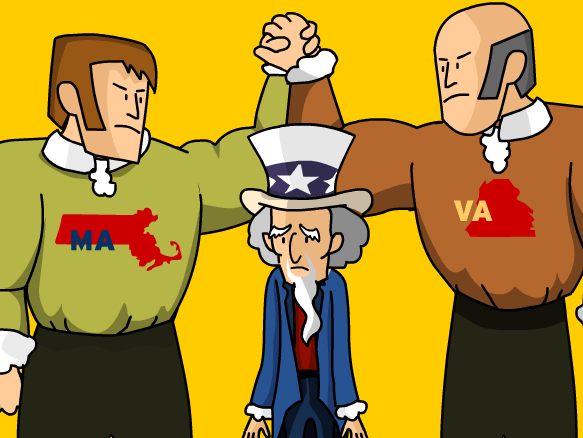
Which colonial region was settled by Puritans and Pilgrims seeking religious freedom?
a)
New England
b)
Southern
c)
Middle
d)
Backcountry
29.
In what year was Jamestown settled?
a)
1492
b)
1607
c)
1608
d)
2081
30.
Which region relied mostly on cash crops to make their money?
a)
New England
b)
Middle Colonies
c)
Southern Colonies
d)
Backcountry
31.
Large farms, called ___________________, were spread throughout the Southern colonies.
a)
Trade centers
b)
Plantations
c)
Settlements
d)
industrial centers
32.
Which colonial region contained rocky soil and cold climate?
a)
New England
b)
Middle
c)
Southern
d)
Backcountry
33.
Which set of colonies was the most "mixed" and diverse in terms of settlers including English, Dutch & German? 
a)
Southern
b)
Middle 
c)
New England 
34.
One weakness of the Articles of the Confederation was ____________. 
a)
The ability of Congress to tax.
b)
The inability of Congress to tax.
c)
The ability of Congress to declare war.
d)
The ability of Congress to create courts.
35.
The Articles of Confederation created a _________________ type of government.
a)
strong
b)
average
c)
weak
d)
federal
36.
Under the Articles of Confederation, which government had the MOST power?
a)
Legislative branch
b)
the president
c)
the state governments
d)
national government
37.
Why was this first U.S. government so weak?
a)
King George III  was still in charge of USA
b)
Americans were afraid to give their new government too much power
c)
The American army did not win their independence from Great Britain and King George III
d)
ask; no
38.
What is the name of the first written plan of government for the newly independent U.S.A.?
a)
Constitution
b)
Treaty of Paris
c)
Declaration of Independence
d)
Articles of Confederation
39.
 Why did the Pilgrims create the Mayflower Compact?
a)
 to show that they opposed representative government.
b)
to establish an orderly community
c)
 to reinforce the laws of England in the new colony
d)
 to guarantee universal religious tolerance in the colony
40.
When was Mayflower Compact written?
a)
1410
b)
1492
c)
1655
d)
1620
41.

The idea that the government could only hold power if it treated people with fairness was a part of...

a)

Social Contract Theory

b)

Revolutionary Theory

42.

A real of imaginary complaint or injustice.

a)

Deriving

b)

Abolish

c)

Grievance

d)

Self-Evident

43.

Which word most likely means "Obvious".

a)

Unalienable

b)

Self-Evident

44.

Which word means..."cannot be taken away"

a)

Unalienable

b)

Deriving

45.
The following quote is a list of grievances about the King of England. Which document is the quote from?

“He has refused his Assent to Laws necessary for the public good...
He has refused to pass Laws for large districts of people...
a)
Charters of the Virginia Company of London
b)
Virginia Declaration of Rights
c)
Declaration of Independence
d)
Charters of the Virginia Company of London
46.
Affirmed “certain unalienable rights” (life, liberty, pursuit of happiness)
a)
Virginia Declaration of Rights
b)
Declaration of Indpendence
c)
Charters of the Virginia Company of London
d)
Virginia Statute Religious Freedom
47.
Who was the Father of the Constitution?
a)
Alexander Hamilton
b)
George Washington
c)
James Madison
48.
The first part of the Constitution is the Preamble. Why was it written?
a)
to please the colonies
b)
the make changes to the Constitution
c)
to explain why the Constitution was written
49.
Constitution Day is _______________.
a)
January 1
b)
September 17
c)
July 4
50.

Which colony was established as a refuge for the Quakers?

a)

Massachusetts

b)

New York

c)

Pennsylvania

d)

Virginia

51.

Which colony was established as a safe haven for Catholics?

a)

Massachusetts

b)

Pennsylvania

c)

Maryland

d)

Virginia

52.

The Mayflower Compact - (check all that apply)

a)

written in 1607

b)

written in 1620

c)

was the first written Constitution in the colonies

d)

established self-government amongst the Pilgrims in Plymouth

e)

was issued by King James I to Jamestown

53.

The Fundamental Orders of Connecticut -

a)

was the first written Constitution in the colonies

b)

granted permission to establish settlments

c)

outlawed slavery

d)

expanded voting rights to all Puritan men (not just church leaders)

54.
Why were the colonists OUTRAGED about the Proclamation of 1763?
a)
It made them move west
b)
It created a religious divide in the colonies
c)
It stopped them from moving west of the Appalachian Mountains
d)
It did not allow them to move east of the Atlantic Ocean
55.
Who were the two Nations that fought in the French and Indian War?
a)
Indians and French
b)
Colonists and Britain
c)
Britain and Spain
d)
Britain and France
56.
Which tax was the beginning of the slogan "No taxation without representation"?
a)
Sugar Act
b)
Intolerable Acts
c)
Tea Act
d)
Boston Tea Party
57.
What group emerged to protest the economic policies of Britain?
a)
Boston Elite
b)
Sons of Liberty
c)
Colonial Army
d)
Gorilla Warfare
58.
Why did British economic policy change towards the colonies?
a)
Britain was in debt due to its war with Spain
b)
Britain needed extra money to pay off mercenaries 
c)
Cash crops were needed in the colonies
d)
War debt due to the French and Indian War
59.
What is Salutary Neglect
a)
When a parent drops a child off and never go back to get him/her
b)
When a marine salutes an officer in the army
c)
Britain left the colonies alone to fend for themselves
d)
Not allowing the colonies to interact with Native Americans
60.
Why did Salutary Neglect exist?
a)
Colonists wanted it that way
b)
Distance for the mother country
c)
Indians surrounded the Atlantic Ocean to isolate the colonies
d)
France and Spain wanted to control the colonies
61.
After the French and Indian War, Parliament passed new laws for the colonies. These laws were passed because Britain
a)
was afraid the French would support the colonies.
b)
was afraid many of the colonists would return to Britain.
c)
needed the colonists to help pay for the war. 
d)
wanted the Native Americans to return to their lands. 
62.
In 1754, war broke out between Britain and France. In Europe it was known as the Seven Years War. When the fighting started in North America it was called the
a)
French and Indian War. 
b)
Revolutionary War.
c)
Civil War.
d)
Mexican War.
63.
Who said, "Give me liberty or give me death!"?
a)
Patrick Henry
b)
Benjamin Franklin
c)
Thomas Paine
d)
George Washington
64.

These laws punished intended to punish Boston for the Tea Party.

a)

Stamp Act

b)

Townshend Acts

c)

Intolerable Acts

d)

Proclamation of 1763

65.

This law outlawed settlement west of the Appalachian Mountains.

a)

Quartering Act

b)

Stamp Act

c)

Declaratory Act

d)

Proclamation of 1763

66.

This British law required colonists to provide food and shelter to British Soldiers.

a)

Quartering Act

b)

Proclamation of 1763

c)

Stamp Act

d)

Coercive Acts

67.

This was the lawmaking body of the British empire.

a)

Stamp Act Congress

b)

Parliament

c)

First Continental Congress

d)

Second Continental Confress

68.

Which of the following men is credited with the founding of the Sons of Liberty?

a)

John Adams

b)

Sam Adams

c)

George Washington

d)

Thomas Gage

69.

This law asserted Parliament's power to pass laws and govern the colonies.

a)

Stamp Act

b)

Declaratory Act

c)

Proclamation of 1763

d)

Intolerable Acts

70.
First person killed in the Boston Massacre.
a)
Samuel Adams
b)
Crispus Attucks
c)
Benjamin Franklin
d)
General Wolfe
71.
His engraving of the Boston Massacre is a great example of propaganda.
a)
Samuel Adams
b)
Paul Revere
c)
Benjamin Franklin
d)
George Washington
72.
African American double spy who provided information about British movement, as well as, information leading to British defeat at Yorktown.
a)
Crispus Attucks
b)
James Armistead
c)
Marquis de Lafayette
d)
Bernardo de Galvez
73.
Wife of John Adams; known for her letters to her husband that served as primary accounts of Revolutionary life
a)
Abigail Adams
b)
Mercy Otis Warren
c)
Martha Washington
d)
Marquis de Lafayette
74.
Author of the "Albany Plan of Union"; helped write the "Declaration of Independence"; convinced France to become our ally in the Revolution; negotiated the "Treaty of Paris". 
a)
John Paul Jones
b)
Thomas Jefferson
c)
George Washington
d)
Benjamin Franklin
75.
King of England during the American Revolution
a)
King George III
b)
Prince Harry
c)
Bernardo de Galvez
d)
George Washington
76.
President of the 2nd Continental Congress, first to sign the "Declaration of Independence"
a)
Patrick Henry
b)
Samuel Adams
c)
John Hancock
d)
Thomas Jefferson
77.
Fierce supporter of the patriot cause; best known for "Give me Liberty or give me death" speech.
a)
Wentworth Cheswell
b)
Patrick Henry
c)
Haym Salomon
d)
Crispus Attucks
78.
African American that made the midnight ride with Paul Revere
a)
James Armistead
b)
Crispus Attucks
c)
Wentworth Cheswell
d)
John Paul Jones
79.
Famous US Navy commander; won important naval victories like the Bonhomme Richards victory over the Serapis
a)
George Washington 
b)
Patrick Henry
c)
Bernardo de Galvez
d)
John Paul Jones
80.
Female Author whose writing supported the patriot cause. Wrote a history of the revolution.
a)
Mercy Otis Warren
b)
Martha Washington
c)
Abigail Adams
d)
Molly Pitcher
81.
African American who was the first to be killed at the Boston Massacre. 
a)
James Armistead
b)
Samuel Adams
c)
Crispus Attucks
d)
Franklin Douglas
82.
Delegate to the Continental Congress and member of the Declaration Committee; the most outspoken proponent for Independence. 
a)
Thomas Jefferson
b)
John Hancock
c)
Benjamin Franklin
d)
John Adams
83.
Author of "Common Sense" and " American Crisis" 
a)
Thomas Paine
b)
Thomas Jefferson
c)
Benjamin Franklin
d)
George Washington
84.
French Aristocrat and leader in French and American Revolution. Became a major-general in the Continental Army. 
a)
Bernanrdo de Galvez
b)
Marquis de Lafayette
c)
Haym Salomon 
d)
John Paul Jones
85.
Delegate to the Continental Congress; primary author of the "Declaration of Independence".
a)
Thomas Jefferson
b)
George Washington
c)
John Locke
d)
Samuel Adams
86.
Started the Sons of Liberty, participated in the Boston Tea Party.
a)
George Washington
b)
Patrick Henry
c)
John Paul Jones
d)
Samuel Adams
87.
Continental Army commander, delegate to 1st and 2nd Continental Congress.
a)
Thomas Jefferson
b)
John Adams
c)
Benjamin Franklin
d)
George Washington
88.
Spanish governor of Louisiana; kept the British from using the ports of New Orleans.
a)
Bernardo de Galvez
b)
Marques de Lafayette
c)
Mercy Otis Warren
d)
John Paul Jones
89.
Patriot and financial backer of the colonies. Provided the money for Washington's march on Yorktown. 
a)
Haym Salomon
b)
Crispus Attucks
c)
James Armestead
d)
John Hancock
90.

America's Patriot army during the Revolutionary War

a)

continental army

b)

health

c)

rationale

d)

encampment

91.

is there when times are not difficult but not there during difficult times

a)

health

b)

valley forge

c)

summer soldier

d)

continental army

92.

Cruel and unjust government

a)

shillings

b)

rations

c)

tryanny

d)

Tyranny

93.

The General of the Continental Army during the American Revolution

a)

George Washington

b)

casualties

c)

sunshine patriot

d)

health

94.

Place where Washington's army spent the winter of 1777-1778, a 1/4th of troops died here from disease and malnutrition.

a)

encampment

b)

summer soldier

c)

Valley Forge

d)

rations

95.

_______ won the Battle of Bunker Hill.

a)

The Colonists

b)

The British

c)

The French

d)

The Indians

96.

After losing the Battle of Bunker Hill, __________ were driven out of Boston.

a)

The French

b)

The Indians

c)

The Colonists

d)

The British

97.

The Second Continental Congress sent ____________ to King George III.

a)

A petition to end war

b)

The Women's Petition Against Coffee

c)

The Olive Branch Petition

d)

A petition to end all taxes

98.
Which Continental Congress sent the Olive Branch Petition?
a)
First
b)
Second
c)
Third
d)
None
99.

Which of the following was NOT a major point in the Treaty of Paris?

a)

All 13 colonies were to be free and independent states.

b)

George Washington would be the new King.

c)

The boundaries of the United States were expanded to the Mississippi River.

d)

Resolved issues with American debts that were owed to British.
100.
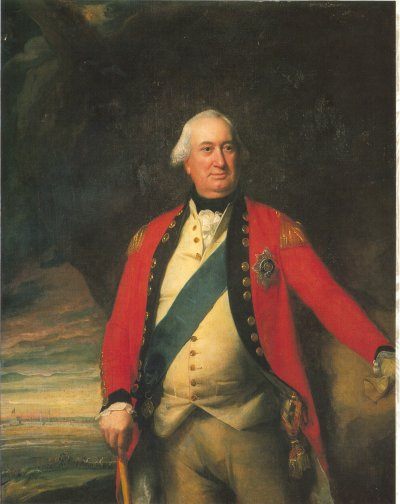
General Cornwallis surrenders to General Washington during this battle 
a)
Yorktown
b)
Lexington and Concord
c)
Saratoga
d)
Bunker Hill
101.

OFFICIALLY gives colonists independence

a)

Declaration of Independence

b)

Treaty of Paris 1783

c)

Yorktown

d)

2nd Continental Congress

102.
What plan did the Northern states have for slavery?
a)
Slaves wouldn't count as people
b)
Slaves would count as 1 person
c)
Slaves would count as 3 people
d)
Slaves would count as 1/2 of a person
103.
What was the 3/5ths Compromise?
a)
Slaves counted as 2/4ths of a person
b)
Slavery was outlawed
c)
Slaves counted as 3/5ths of a person
d)
Slaves in the South were set free
104.
Who were X, Y, and Z?
a)
Spanish Conquistadors
b)
US Diplomats
c)
French "secret" agents asking for a bribe
d)
US Sailors being impressed
105.
Who was John Adams's vice president?
a)
George Washington
b)
Thomas Jefferson
c)
John Quincy Adams
d)
Abigail Adams
106.
__________ means speaking out against a government official.
a)
Alien
b)
Sedition
c)
Cabinet
d)
Nullify
107.
What is the Quasi-War?
a)
The War between Quasi Moto and the Cardinal of Notre Dame
b)
The undeclared war between the US and France
c)
The 2nd French and Indian War
d)
The War between the Jedi and the Sith
108.

The _____________ _________________ was the most dangerous leg of the _______________ ______________ route. It took 2-3 months to reach the Americas.

a)

Last Passage, Triangle Trade

b)

Middle Passage, Triangle Trade

c)

Deadly Passage, Silk Road

d)

Triangle Trade, Middle Passage

109.

Patrick Henry once said, "Your President (central government) may easily become king. Your rights will be in the hands of a small minority." HENRY must have been a....

a)

Anti-Federalist

b)

Federalist

110.

Those opposed to ratifying the U.S. Constitution were called...

a)

Federalist

b)

Anti-Federalist

111.

Who would have said, "The states will surrender too much power to the federal government"

a)

Federalist

b)

Anti-Federalist

112.

Wanted to add a Bill of Rights to the U.S. Constitution.

a)

Federalist

b)

Anti-Federalist

113.

Wanted to strengthen the authority of the Federal government.

a)

Federalist

b)

Ant-Federalist

114.

"Power will be divided between the federal government and state government."

a)

Federalist

b)

Ant-Federalist

115.

"The existing national government lacks the power to perform essential functions"

a)

Federalist

b)

Ant-Federalist

116.

"The existing national government may lack power to perform essential functions but protects states rights, therefore we should only revise it."

a)

Federalist

b)

Ant-Federalist

117.

"The Constitution does not adequatly protect individuals from possible government abuse."

a)

Federalist

b)

Ant-Federalist

118.

Federalist wrote essays called the Federalist Papers. What might they have supported?

a)

Bill of Rights

b)

Strong central government

c)

Three-fifths compromise

d)

Women's Suffrage (voting)

119.

Anti-Federlalist want to add a bill of rights to protect...

a)

Individual freedoms

b)

State rights

c)

Women's suffrage

d)

Direct democracy

120.

Civic virtue is....

a)

Volunteering

b)

People doing the right thing to better the community.

c)

People doing whatever they want in a community.

d)

People doing what's best for them in the community.

121.

What does civics mean?

a)

showing high standards

b)

a belief

c)

a type of government in which people elect officials.

d)

dealing with citizenship or government

122.

Quaker refuse to fight in wars.

a)

True

b)

False

123.

A nickname given to the Middle Colonies is

a)

New England Colonies

b)

Southern Colonies

c)

Breadbasket Colonies

124.

According to details in both “Letter to John Adams” and the selection from Dear Abigail, which aspect of the new nation’s government most interested Abigail Adams?

a)

the status of women

b)

the abolition of slavery

c)

the rights of the individual states

d)

the relationship to other nations

125.

________________________was a Puritan spiritual advisor and religious reformer who challenged male authority figures in the Massachusetts Bay Colony.

a)

Roger Williams

b)

Anne Hutchinson

c)

Thomas Hooker

d)

Mayflower Compact

126.

___________________ was the founder of Rhode Island.

a)

Thomas Hooker

b)

William Penn

c)

Roger Williams

d)

Anne Hutchinson

127.

___________________ was the last of the 13 colonies to form. It formed for debtor to have a fresh start and served as a buffer for other colonies.

a)

Plymouth

b)

New Netherland

c)

Georgia

d)

Jamestown
