Worksheets
NEWTON'S LAWs OF MOTION REVIEW
Total questions: 34
Worksheet time: 20mins
50 miles per hour, West
acceleration
speed
velocity
A force is a ________________________ that acts on an object.
push
pull
push or pull
A force that opposes, or pushes back against, an object moving past another object
gravity
friction
mass
Acceleration is best described as a change in an object's
velocity
speed
direction
An object at rest will stay at rest unless an unbalanced force acts on it.
True
False
An object that is changing position (location) is
at rest
in motion
An object's tendency to resist (not) change its state of motion.
friction
force
inertia
Which of the following is not a force?
gravity
velocity
friction
a push
If an object in motion is not acted on by an unbalanced force, it will continue with the same speed and direction.
True
False
If an object is speeding up, it is accelerating.
True
False
If an object in motion is not acted on by an unbalanced force, it will continue with the same speed and direction.
True
False
If an object is speeding up, it is accelerating.
True
False
The rate or measure of how fast an object is moving
velocity
acceleration
speed
The measure of how fast an object is moving and what direction it is moving
velocity
force
speed
Which of the following will reduce (make less) friction?
make a surface rough
make a surface smooth
If a baseball and a cannonball are dropped from the same height at the same time, which ball will hit the ground first?
the cannonball
the baseball
The balls land at the same time.
A crumpled piece of paper hits the ground before a flat sheet of paper because
the acceleration of gravity is greater on the crumpled paper.
there is more air resistance against the flat paper.
the crumpled paper is less massive.
According to Newton’s first law of motion, a moving object that is not acted on by an unbalanced force will
remain in motion.
eventually, come to a stop.
change its momentum.

This equation goes with which law?
Newton's first law of motion
Newton's second law of motion
Newton's third law of motion

When the force on a car is doubled, the acceleration is doubled.
Newton's 1st Law
Newton's 2nd Law
Newton's 3rd Law

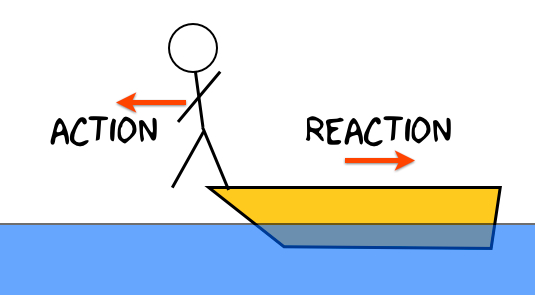
A skater pushes another skater forward, but the one pushing moves backwards.
Newton's 1st Law
Newton's 2nd Law
Newton's 3rd Law

The harder you hit a baseball, the faster it accelerates.
Newton's 1st Law
Newton's 2nd Law
Newton's 3rd Law

You push against a wall and the wall is pushing back on you.
Newton's 1st Law
Newton's 2nd Law
Newton's 3rd Law
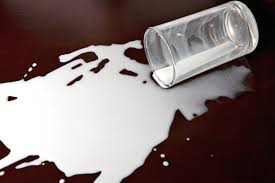
You are carrying a lunch tray when you bump into the edge of a table. Although the tray did not tip, your milk falls off of the front of the tray.
Newton's
1st
Law of Motion
Newton's
2nd
Law of Motion
Newton's
3rd
Law of Motion

Which law best explains why more force must be applied to the bowling ball to make it accelerate at the same rate as the tennis ball.
Newton's 1st Law
Newton's 2nd Law
Newton's 3rd Law