
 Worksheets
Unit 4- Chemical Bonding Unit Review
Total questions: 187
Worksheet time: 3hrs 18mins

This could be the dot diagram of
Mg
Cl
C
O

This is a correct dot diagram for nitrogen (N)
true
false

This is a correct dot diagram for neon (Ne)
true
false
Which of these is incorrect?


What are valence electrons?
The total number of electrons in an atom
The number of electrons in the outermost shell
The number of electrons in the second shell
The number of protons in the outermost shell
What are the elements (Be, Mg, Ca,...) in Group 2 called?
Alkali metals
Alkaline earth metals
Halogens
Noble Gases
Elements that have atoms with full valence shells in the ground state are in
Group 1
Group 2
Group 17
Group 18


This could be the dot diagram of an element with the atomic number
8
31
19
36
Which of these is correct?


Valence electrons are the
outer most electrons in an atom
total electrons in an atom
The _____ the element is in determines the number of valence electrons it has.
period/row
group/column
This could be the dot diagram of
Mg
Cl
C
O
USE THE PERIODIC TABLE
How many valence electrons does Phosphorus have?
31
5
15
4
How many valence electrons does Hydrogen have?
4
1
8
2
How many valence electrons should Magnesium have in its electron dot diagram?
1
2
3
4
How many valence electrons does potassium have?
19
6
39
1
How many valence electrons does Carbon have?
4
6
14
12
What is the "magic number" of valence electrons for atoms to be stable?
1
2
8
18
Neon is a noble gas because it is stable, nonreactive, and has ___ valence electrons.
1
8
10
4
Two objects that are similarly charged will...
attract.
repel.
not experience an electric force.
implode.
A positively charged object and a neutral object will...
attract.
repel.
not experience an electric force.
implode.
A negatively charged object and a neutral object will...
attract.
repel.
not experience an electric force.
implode.
An object becomes positively charged by...
gaining negative charges.
losing negative charges.
gaining positive charges.
losing positive charged.
An object becomes negatively charged by...
gaining negative charges.
losing negative charges.
gaining positive charges.
losing positive charged.
Metal atoms are most likely to form...
positively charged cations.
negatively charged anions.
neutral molecules.
bations.
Non-Metal atoms are most likely to form...
positively charged cations.
negatively charged anions.
neutral molecules.
bations.
Atoms from group 2 on the Periodic Table are likely to form ions of what charge?
+1
+2
0
−1
−2
The Lewis Dot structure for aluminum would have ______ electrons.
13
3
8
27
Valence electrons are those that are
closest to the nucleus.
freely floating between atoms.
in the outermost energy level of the atom.
unable to become involved in chemical bonding.
Which of the following is not a way that ions can form?
gaining electrons
gaining protons
losing electrons
All of the above are ways that ions can form.
Oxygen has six valence electrons. When forming an ion, oxygen will
lose six electrons and have a charge of +6.
lose six electrons and have a charge of -6.
gain two electrons and have a charge is +2.
gain two electrons and have a charge of -2.
Which of the following best describes the correct arrangement of the electrons in a Lewis dot structure for phosphorus?
five single electrons
two pairs of electrons and one single electron
three pairs of electrons and one single electron
three single electrons and one pair of electrons
Atoms and ions that are isoelectronic have
the same charge.
the same number of electrons.
the same number of protons.
no charge since the number of protons and electrons is equal.
Atoms and ions that are isoelectronic have
the same charge.
the same number of electrons.
the same number of protons.
no charge since the number of protons and electrons is equal.
Look at the periodic table. What should be the charge on the ion formed by calcium?
+1
+2
-1
-2
Atoms that have gained electrons form
cations.
anions.
negions.
positrons.
Most elements are most stable when their outermost energy levels contain ________ electrons.
2
6
8
18
Look at the Periodic table. Which of the following elements would you expect to form an ion that has the same charge as the oxide ion?
calcium
boron
sulfur
chlorine
Which of the following pairs of atoms and/or ions is isoelectronic?
Na and K
Cl and Cl-1
Ne and Na+1
O-2 and S-2
Which of the following elements is an exception to the octet rule?
helium
oxygen
chlorine
magnesium
Which of the following tend to gain electrons when forming ions?
metalloids
metals
nonmetals
cations
Anions have
gained electrons.
lost electrons.
gained protons.
lost protons.
Which of the following groups on the Periodic Table will only form ions with positive charges?
Group 2
Group 15
Group 17
Group 18
Na2S
Mg3N2
CrN
PtO2
FeP
calcium arsenide
beryllium iodide
tetra
six
Four
Five
seven



How many electrons can be used in the Lewis Structure for : NO3 -
23
20
18
24
Which compound would have a high melting point?
CaCl2
CO2
PI3
SO3


Which of the following is the correct Lewis diagram for the fluorine molecule, F2?


Which of the following is the correct Lewis diagram for ammonia, NH3?


What 3-D shape would this molecule have: H2S ?
bent
tetrahedral
linear
trigonal pyramidal
What are valence electrons?
The total number of electrons in an atom
The number of electrons in the outermost shell
The number of electrons in the second shell
The number of protons in the outermost shell
According to the Octet Rule, atoms of elements react with each other in order to attain ____ electrons in their outermost energy level or shell.
2
4
6
8
10
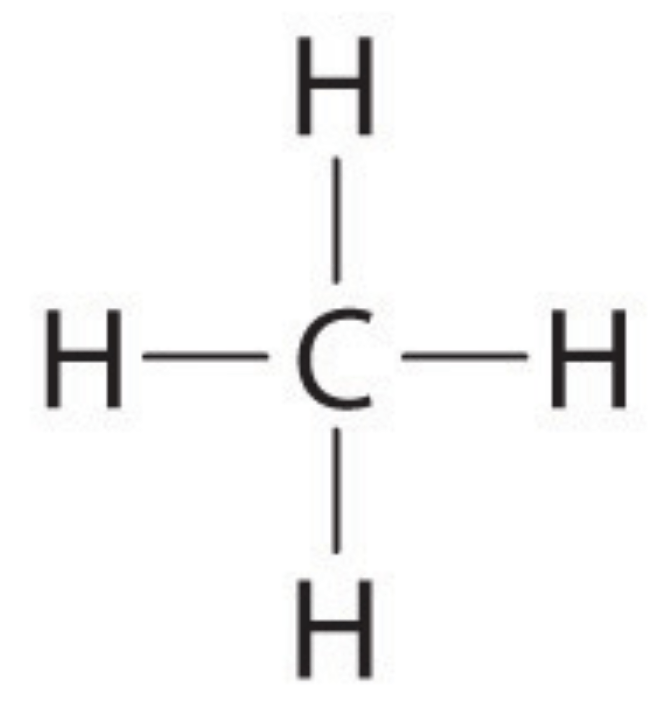
Classify the following molecule.
polar
nonpolar

Classify the following molecule.
polar
nonpolar

Classify the following molecule.
polar
nonpolar

Is the following molecule polar or nonpolar?
polar
nonpolar

Is the following molecule polar or nonpolar?
polar
nonpolar

Is the following molecule polar or nonpolar?
polar
nonpolar

Is the following molecule polar or nonpolar?
polar
nonpolar

Is the following molecule polar or nonpolar?
polar
nonpolar

Why is the molecule polar?
There is a nonbonding pair on the central atom.
There are different types of elements bonded to the central atom.
There are no nonbonding pairs on the central atom and all of the atoms bonded to the central atom are the same.

Classify the following molecule.
polar
nonpolar
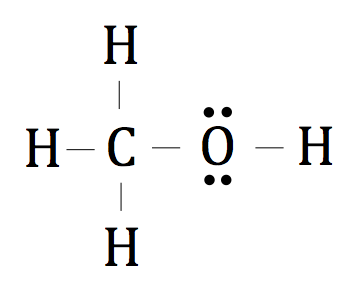
Is the following molecule polar or nonpolar?
polar
nonpolar

What is the name of the compound H2S ?
(a)
What is the name of the compound SF6 ?
(a)
What is the name of the compound H2CO3 ?
(a)
What is the name of the compound (NH4)2SO4 ?
(a)
What is the chemical formula of calcium carbide?
CaC
CaC2
Ca2C
Ca2C4
What is the correct formula for the compound Tin (IV) oxide?
SnO2
SnO
SnO4
Sn2O
What is the chemical formula of Tetraphosphorous nonasulfide?
P4S8
P4S7
P4S10
P4S9
When metals bond with non-metals they form what type of bonds
covalent
ionic
Which of the following anions is polyatomic?
Hydride
Fluoride
Cyanide
Iodide
What is the charge of copper in the compound: CuBr2 ?
+1
-1
+2
-2
What is the charge of barium in the compound: BaCrO4 ?
+1
+2
+3
+4
When naming compounds that contain a nonmetal bonded to a nonmetal, _____ must be used.
ionic charges
Parentheses
Lewis structure
Greek prefixes
For monoatomic anions, the name of the element is modified by the suffix ____
-ide
-ic
-ite
-ate
The net charge of an ionic compound must be _____
1
0
3
2
Which substance would have the weakest intermolecular forces of attraction?
CH4
NaCl
H2O
MgF2
________________________ have the strongest intermolecular forces of attraction.
Dipole- Dipole
Dispersion
Hydrogen Bonds

Intermolecular forces for: NH3
Dispersion Force
Dipole dipole
Hydrogen bonding

Intermolecular forces for: CO2
Dispersion Force
Dipole dipole
Hydrogen bonding

Which type of IMF is responsible for the attraction pictured above?
Dipole-Dipole Interaction
Ion-Dipole Interaction
Hydrogen Bonds
Covalent Bond
Ionic Bond

Which type of IMF is responsible for the attraction pictured above?
Dipole-Dipole Interaction
Ion-Dipole Interaction
Hydrogen Bonds
Covalent Bond
Ionic Bond
Which state of matter has a high density and an indefinite shape?
solids
liquids
gases
both solids and liquids
The tendency of a liquid to minimize its surface area is called:
capillary action.
viscosity.
surface tension.
vaporization.
The measure of the resistance to the flow of a liquid is called:
vapor pressure.
sublimation.
viscosity.
condensation.
Which intermolecular force is present in all molecules and atoms?
dispersion forces
dipole-dipole forces
hydrogen bonding
none of the above
Select all the physical properties true for ionic compounds.
high melting and boiling points
low melting and boiling points
can dissolve in water
cannot dissolve in water
can dissolve in organic solvents
Which of the following will NOT have hydrogen bonding?



