
 Worksheets
Semester 2 Final Review Chem
Total questions: 186
Worksheet time: 5hrs 41mins

Which compound's strongest IMF is London Dispersion Forces (LDF)?
A
B
C
None
Which compound's strongest IMF is Dipole-Dipole (DD)?
A
B
C
None
Which compound's strongest IMF is Hydrogen Bonding (HB)?
A
B
C
None
Which compound would have the highest boiling point?
A
B
C
None
Which compound would have the lowest viscosity?
A
B
C
None
Which compound would evaporate the fastest?
A
B
C
None

Identify the states of matter of each picture- in the order shown.
Liquid, Solid, Gas
Gas, Solid Liquid
Liquid, Gas Solid
Solid, Liquid, Gas
Which beaker has the strongest IMFs?
A
B
C
All the same.
Which beaker has the highest kinetic energy?
A
B
C
All the same.
Which beaker has particles that take the shape and volume of their container? (no definite shape or volume)
A
B
C
All the same.
Which beaker has particles that move enough to allow the substance to flow?
A
B
C
All the same.
If picture 3 was cooled to the point of changing its phase, which picture represents the new state of matter?
A
B
C
All the same.
Which picture shows particles with a definite shape and volume?
A
B
C
All the same.
Which picture shows particles with no definite shape and but a definite volume? (takes the shape of its container but not the volume)
A
B
C
All the same.

What state of matter is present in area 1?
Solid
Liquid
Gas
Triple Point
What state of matter is present in area 2?
Solid
Liquid
Gas
Triple Point
What state of matter is present in area 3?
Solid
Liquid
Gas
Triple Point
What is the boiling point of the substance at 100kPa?
120oc
65oc
87oc
80oc
What is the triple point?
Where all three states of matter exist at the same time.
Where the substance is a gas.
The triple point is where a substance exists in two different phases simultaneously.
It's the point where the substance can transition directly from solid to gas without passing through the liquid phase.
At what pressure will sublimation occur at 30oc?
40 kPa
15 kPa
30 kPa
Will not occur.
At 110 kPa and 20oc, what is the state of matter?
Solid
Liquid
Gas
Triple Point

At what sections is the temperature increasing? Select all that apply.
I
II
III
IV
V
At what sections is a phase change occuring? Select all that apply.
I
II
III
IV
V
What state of matter is occurring at 70oc?
Solid
Liquid
Gas
Boiling
Melting
What is occurring at 100oc?
Solid
Liquid
Gas
Boiling
Melting
What would the change in temperature be for a liquid at 55oc that has heated up and reached the boiling point.
55oc
45oc
100oc
155oc

Which substance would take the longest to heat up?
Silver
Iron
Aluminum
Water
Which substance would take the longest to cool down?
Silver
Iron
Aluminum
Water
Which substance would be the fastest to heat up?
Silver
Iron
Aluminum
Water

Which beaker is evaporating the fastest?
Beaker I
Beaker II
Beaker III
Beaker IV
Which beaker is evaporating the slowest?
Beaker I
Beaker II
Beaker III
Beaker IV
Which beaker contains a substance with the strongest IMFs?
Beaker I
Beaker II
Beaker III
Beaker IV
Which beaker contains a substance with the weakest IMFs?
Beaker I
Beaker II
Beaker III
Beaker IV
What is the difference between boiling and evaporation?
Boiling and evaporation are essentially the same process, just with different names.
Boiling is a liquid becoming a solid, while evaporation is a liquid into a gas.
Boiling requires heat, while evaporation occurs at room temperature.
Boiling can happen spontaneously
If isopropyl alcohol freezes at −89.5 °C, at what temperature will it melt?
-100*C
0*C
-89.5*C
Not enough information given
If water is boiling at 100oC and you come back later to see the water still boiling, what temperature will the water be?
100oC
120oC
89.5oC
Not enough information is given.
When some hot metal is placed in a calorimeter, what happens to the energy?
It is absorbed by the water
It is released by the water
The metal retains its heat
The energy is released outside the calorimeter
If 50 grams of water at 20°C is mixed with 50 grams of water at 40°C in a calorimeter, what will be the final temperature of the mixture assuming no heat is lost to the surroundings?
20oC
30oC
40oC
60oC
If 50 grams of water at 30°C is mixed with 50 grams of water at 50°C in a calorimeter, what will be the final temperature of the mixture assuming no heat is lost to the surroundings?
20oC
30oC
40oC
60oC
If water at 125oC cools, condenses and cools as water to 50oC, what is the temperature change of the gas?
25oC
75oC
-25oC
-75oC
125oC
If water at 125oC cools, condenses and cools as water to 50oC, what is the temperature change of the water?
50oC
75oC
-50oC
-75oC
125oC
If ice at -20oC heats up, melts and continues heating up to 55oC, what is the temperature change for the ice?
20oC
75oC
-20oC
-75oC
55oC
If ice at -20oC heats up, melts and continues heating up to 55oC, what is the temperature change for the ice?
20oC
55oC
-20oC
-75oC
75oC
Q= m c ∆T
The units for specific heat are:

The ______ is the smaller part of the solution.
solute
solvent
system of a down
This is a mixture that will settle over time if you let it sit.
Suspension
Colloid
Mix - Mix a lot
A solution that has more than the maximum amount of solute dissolved in the solvent is called __________________.
saturated
supersaturated
unsaturated
suspension
When sugar is dissolved in water, the ______ is the solute.
sugar
water
When you have added as much solute as can dissolve in the solvent, the solution is called:
concentrated
supersaturated
saturated
unsaturated
The formula M1V1 = M2V2 is used when:
dissolving a solute in a solvent
diluting a solution
reacting an acid with a base
determining the pH of an acid


This type of mixture has large enough particles that you can see the different types of particles.
Homogeneous
Heterogeneous
Colloid
Solution
A colloid mixture does not have particles large enough to settle to the bottom, but they are large enough to
be filtered out of the solution.
be pulled out by hand.
float to the top.
scatter light waves.
A mixture with such small particles that you cannot see the individual particles.
Suspension
Sublimation
Heterogeneous
Homogeneous
Which of the following examples is a Heterogeneous mixture?
Tap Water
Beach Sand
Vanilla Cake Mix
Bottle of Cola
Which of the following examples is a Homogeneous mixture?
Tap Water
Beach Sand
Chocolate chip cookie
Mud water
Which of the following examples is a Suspension?
Mud water
Well water
milk
Fog
Which of the following types of solutions has more room to dissolve solute?
supersaturated
saturated
unsaturated
Which of the following will produce crystals if cooled or disturbed?
unsaturated solution
saturated solution
supersaturated solution
all of the above
Which solution is more concentrated?
Solution 1:
500 mL of water
100 g of salt
Solution 2:
500 mL of water
90 g of salt
Solution 1
Solution 2
They have the same concentration
I have no idea
Which solution is more diluted?
Solution 1:
1000 mL of water
60g of salt
Solution 2:
500 mL of water
60 g of salt
Not enough information to tell
Solution 1
Solution 2
They are equally diluted
As we dilute a solution.....
The volume increases and the molarity (M) increases
The volume increases and the molarity (M) decreases
The volume decreases and the molarity (M) increases
The volume decreases and the molarity (M) decreases
What volume, in milliliters, of 10.0 M NaOH is needed to prepare 300.0 mL of 2.00 M NaOH by dilution?
0.067 mL
60.0 mL
100 mL
125 mL

Which beaker has the lowest concentration?
Beaker A
Beaker B
Beaker C
Beaker D
Which beaker has the highest concentration?
Beaker A
Beaker B
Beaker C
Beaker D
Beaker D is diluted, which beaker represents this change?
Beaker A
Beaker B
Beaker C
PCl5 + ___ H2O → ___ HCl + H3PO4
4, 5
1, 6
3, 8
2,2
__ Al + __ FeO → Al2O2 + __ Fe
1, 1, 2
2,1,2
2, 2, 2
2,4,2
_SnO2 +_H2-->_Sn +_H2O
_CF4 + _Br2 -- _CBr4 + _F2
Example: H2
_Al +_HCl --> _H2 +_AlCl3
_CH4 + _O2 --> _CO2 + _H2O
_CF4 + _Br2 -- _CBr4 + _F2

The two sides of a chemical equation are called?
Reactants (left) and Products (right)
Ingredients (left) and Product (right)
Cations and Anions
Reactants (left) and Results (right)
H2SO4


This picture is an example of burning a hydrocarbon which is what type of reaction?
Combustion
Synthesis
Endothermic
Decomposition
Which of the following is an example of a synthesis reaction?
AX -> A + X
A + X -> AX
ABC -> A + B + C
CH + 02 -> CO2 + H2O
Which of the following is an example of a decomposition reaction?
AX -> A + X
A + X -> AX
A + B + C -> ABC
CH + O2 -> CO2 + H20

Which type of reaction has the following general pattern?
ABC → A + B + C
synthesis
combustion
decomposition
endothermic
Identify the type of reaction:
Ca + O2 --> CaO
Decomposition
Synthesis
Endothermic
Combustion
Predict the products :
C3H8 + O2 -->
CH4
CO2
H2O
H2
Predict the products:
Al + Cl2 -->
AlCl
AlCl2
AlCl3
What type of chemical rxn this?
Mg + O2 --> MgO
Decomposition
Combustion
Synthesis
Single Replacement
What type of reaction involves the production of CO2 and H2O usually?
Synthesis
Decomposition
Combustion
Activity Series
Mg + I2 -->
Predict the product of the following synthesis reaction.
Fe (III) + O2 -->
Fe2O3
Fe3O3
Fe3O2
FeO
If an element is diatomic it should have a subscript of___
1, always
2, only when it is an element
it shouldn't have a subscript, it should have a coefficent
2, when bonded in a compound
Predict the products for the decomposition of aluminum oxide, Al2O3 →
Al + O2
O + Al2
Al2 + O3
Al + O
180.18 g/mol
180.12 g/mol
180.24 g/mol
180.06 g/mol
How many moles of water can be produced if 8 moles H2 are used?
How many grams of potassium chloride (KCl) can be produced from 356 g of potassium bromide (KBr)?
How many moles of carbon dioxide are produced from the combustion of 110 g of CH4?
_Bi + _O2 → _Bi2O3
4Fe + _O2 → 2Fe2O3
2 H2 + O2 → 2 H2O

D represents
Potential Energy of Products
Potential Energy of Reactants
Change in Enthalpy
Activation Energy
A represents
Potential Energy of Products
Potential Energy of Reactants
Change in Enthalpy
Activation Energy
B represents
Potential Energy of Products
Potential Energy of Reactants
Change in Enthalpy
Activation Energy
When balancing an equation, you can NEVER change the...
Coefficients
Subscripts

The small number after an element is called a...
Reactants
Products
Coefficient
Subscript
The molecules and atoms on the right side of the arrow are called...
Reactants
Products
Coefficient
Subscript
The molecules and atoms on the left side of the arrow are called...
Reactants
Products
Coefficient
Subscript
The large number in front of a molecule is called then....
Reactants
Products
Coefficient
Subscript

This reaction is an example of....
Synthesis
Decomposition
Combustion
Single Replacement
Double Replacement

This reaction is an example of....
Synthesis
Decomposition
Combustion
Single Replacement
Double Replacement

This reaction is an example of....
Synthesis
Decomposition
Combustion
Single Replacement
Double Replacement
Baking a cake is a...
Chemical change
Physical change
Mixing salt and water is a...
Chemical change
Physical change
How do we make a dilution?
Add more solute
Remove solute
Remove solvent
Add more solvent
As we dilute a solution.....
The volume increases and the molarity (M) increases
The volume increases and the molarity (M) decreases
The volume decreases and the molarity (M) increases
The volume decreases and the molarity (M) decreases
Balance this equation (a) N2 + (b) H2 --> (c) NH3
Balance this equation. _CF4 + _Br2 → _CBr4 + _F2
3,1,2,1
1,2,1,2
2,2,2,2
12CO2 +H2O --> C6H12O6 + O2
CO2 + 9H2O --> C6H12O6 + O2
CO2 + H2O --> 3C6H12O6 + O2
6CO2 + 6H2O --> C6H12O6 + 6O2
180.18 g/mol
180.12 g/mol
180.24 g/mol
180.06 g/mol
Fe2O3(s) + 3H2(g) → 2Fe(s) + 3H2O(l)
How many moles of iron can be made from 6 moles H2?
How many moles of water can be produced if 8 moles H2 are used?
What mass of O2 will be needed to burn 36.1 g of B2H6?
12.00 moles of NaClO3 will produce how many grams of O2?
48.86 g of cobalt is equal to how many moles of cobalt?
2879 moles
8.291 moles
.8291 moles
.829 moles
In an endothermic reaction, energy is _________.
absorbed
released
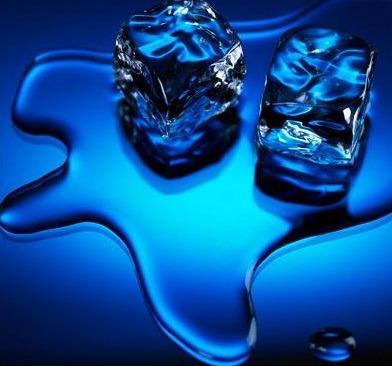
____ reactions usually feel cold.
endothermic
exothermic
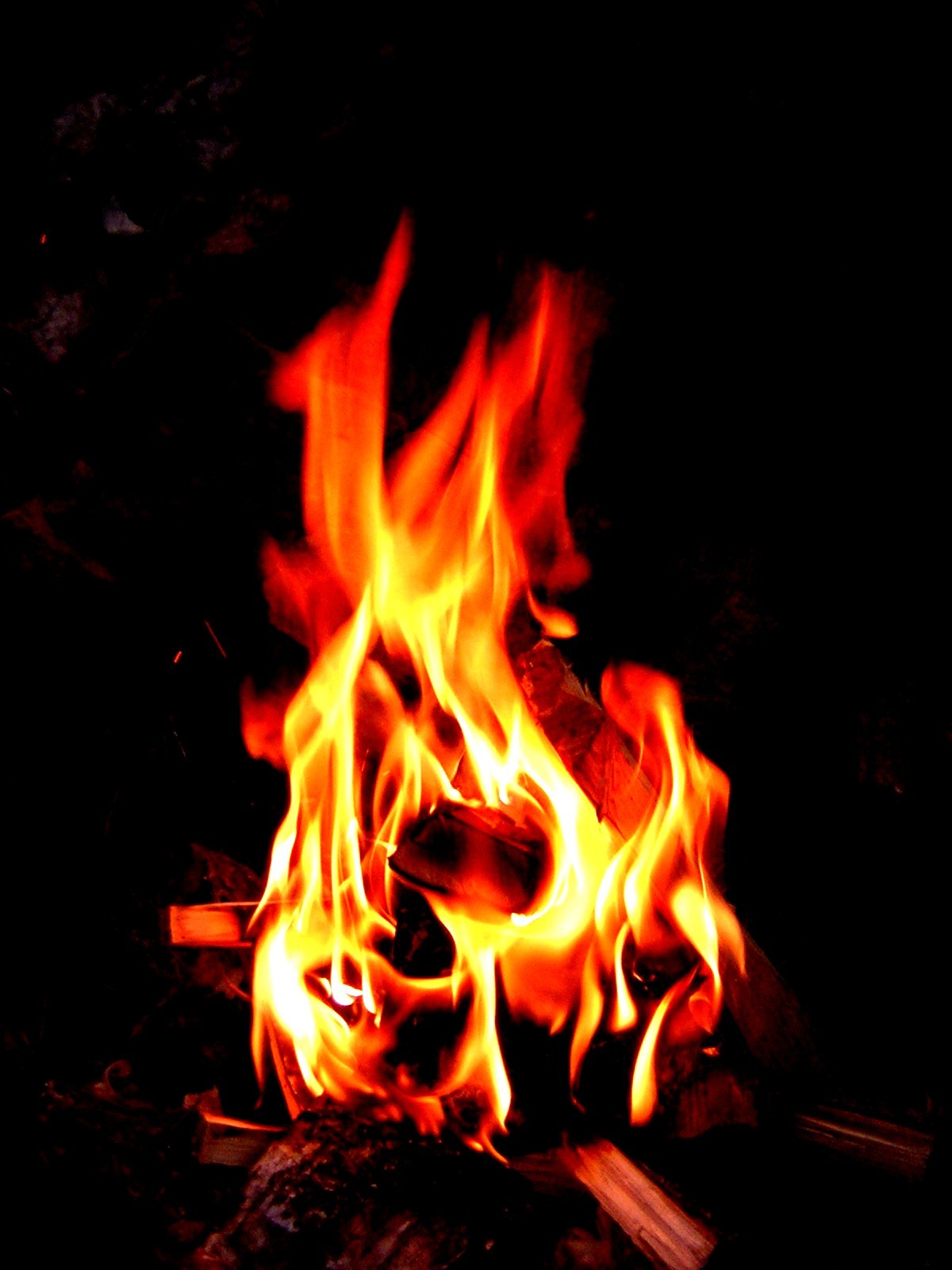
_____ reactions usually feel hot!
endothermic
exothermic
Solid --> liquid --> gas is what type of reaction?
endothermic
exothermic
catalytic
inhibited
gas --> liquid --> solid is what type of reaction?
endothermic
exothermic
catalytic
inhibited
Endo means in or _______.
absorbed
released
Exo means out or ________.
absorbed
released

What is the Heat of Reaction ΔH for this reaction?
-200 KJ
200 KJ
400 KJ
-300 KJ
How much activation energy is needed for this reaction?
300 KJ
500 KJ
400 KJ
100 KJ
What type of reaction is this?
Exothermic
Endothermic
Energy Producing
No way to tell
What kind of equation is this: 2KI + MgCl2 + 200KJ ----> 2KCl + MgI2
Endothermic
Exothermic
How can you tell this reaction is exothermic: MgO + CaS ----> CaO + MgS + 200 KJ
Energy is written on the reactants side
Energy is being released
Energy is being absorbed
if more heat energy is released in making bonds in the products than is taken in when breaking bonds in the reactants
Exothermic
Endothermic
Exotermic
Endotermic

The potential energy diagram of a reaction is shown. Which statement below is correct relating to this reaction?
#1 represents the enthalpy change for this exothermic reaction.
#2 represents the enthalpy change for this endothermic reaction.
#3 represents the enthalpy change for this endothermic reaction.
#4 represents the enthalpy change for this exothermic reaction.
When heat flows from system to the surroundings that is an example of an ________________ process.
exothermic
endothermic
Heat flows from _______ to _________.
warm to cool
cool to warm
When a bond is being formed, energy must be....
absorbed
released
When a bond is being broken, energy must be....
absorbed
released
If 7.62g Fe react with 8.67g S, what is the limiting reactant?
When reacting Na with Cl2, we calculated that the theoretical yield should be 13 grams. Our actual yield was 12.5 grams. What is the percent yield?
90.4%
104%
96.15%
1.04%
2Fe2O3 + 3C → 4Fe + 3CO2
You add 28 grams of carbon. You find the actual yield to be 81.2 grams of CO2. What is the percent yield of CO2? (Hint: calculate theoretical yield of CO2 first)
58.83%
308%
6435%
79.14%

