wayground logo

Free Printable Worksheets

Font size

S
M
L
XL
Worksheets

Human Rights Issues

Total questions: 100

Worksheet time: 59mins

Name
Class
Date
1.

Hostility to or prejudice against Jews.

a)

Anti-Democratic

b)

Neo-Nazism

c)

Anti-Semitism

d)

Jewism

2.

An organized massacre of a particular ethnic group, in particular that of Jews in Russia or eastern Europe.

a)

Pogrom

b)

Blitzkrieg

c)

Kristallnacht

d)

Einsatzgruppen

3.

These laws excluded German Jews from Reich citizenship and prohibited them from marrying or having sexual relations with persons of "German or German-related blood."

a)

Jewish Race Laws

b)

The Berlin Laws

c)

The Holocaust Laws

d)

The Nuremberg Laws

4.

"The Night of the Broken Glass", The name refers to the wave of violent anti-Jewish pogroms which took place on November 9 and 10, 1938.

a)

Einsatzgruppen

b)

Blitzkrieg

c)

Kristallnacht

d)

Reich-Stag

5.
What did Jewish people in Nazi controlled areas have to wear to identify them as Jews?
a)
a yellow star of David
b)
a sign that said Jew
c)
Black clothes
d)
A yellow cross
6.
Certain sections of cities were set aside to imprison Jews, these sections were called
a)
apartments
b)
projects
c)
ghettos
d)
government housing
7.
Which of the following best describes the “final solution?” 
a)
The implementation of the Balfour Declaration.
b)
The Nazi desire for complete destruction of the Jews.
c)
The conscription of German males into the military.
d)
The Jewish desire for a homeland within Germany.
8.
By the end of the Holocaust, over __________ Jews had been killed? 
a)
2 Million
b)
4 Million
c)
6 Million
d)
8 Million
9.

The deliberate destruction, in whole of an ethnic, racial, religious or national group is called

a)

Holocaust

b)

Genocide

c)

Concentration Camp

d)

Nuremberg Laws

10.

What is a Jewish country in the Middle East established in 1948?

a)

Israel

b)

Palestine

c)

Saudi Arabia

d)

Syria

11.

What is an area in the Middle East that some recognize as an independent country but others do not?

a)

Israel

b)

Palestine

c)

Afghanistan

d)

Jordan

12.

After World War I, which European country took control of Palestine?

a)

Great Britain

b)

Italy

c)

Spain

d)

France

13.

What was the goal of Zionism?

a)

To create a Jewish homeland in the Middle East

b)

To wipe out all Jewish people

c)

To protect the mostly Arab nation of Palestine

14.

Which international organization voted to divide Palestine into a Jewish country and an Arab country in 1948?

a)

the Red Cross

b)

the United Nations

c)

the World Bank

d)

the World Health Organization

15.

What was the Jewish Diaspora?

a)

the spreading out of Jewish people all of the world

b)

a type of disease often transmitted in the Middle East

c)

a religious book

d)

a special Jewish holiday that happens in the winter

16.
The British promised the land of Palestine to:
a)
The Jews
b)
The Arabs
c)
The French
d)
All of these
17.

West Bank is located _________ of Jordan.

a)

North

b)

South

c)

East

d)

West

18.

What were the Troubles?

a)

a civil war that occurred in the USA

b)

a civil war that occurred in Northern Ireland

c)

a civil war that occurred in England

d)

a civil war that occurred in Scotland

19.

When did it take place?

a)

from 1868 to 1898

b)

from 1918 to 1998

c)

from 1968 to 1998

d)

from 1998 to 2008

20.

The IRA stands for...

a)

the Irish Republican Army

b)

the Irish Royal Army

c)

the Irish Republican Association

d)

the Irish Revolutionary Association

21.

The IRA (and Sinn Fein on the political field) fought for...

a)

Northern Ireland to join the Republic of Ireland

b)

Northern Ireland to be independent

c)

Northern Ireland to remain part of the UK

d)

Prostestants to leave Northern Ireland

22.
Pakistan was created because which major religion was afraid of being persecuted? 
a)
Muslims
b)
Sikhs
c)
Hindus
d)
Christians
23.
One of the major problems with the Partition of Pakistan was...
a)
China control of Northern India
b)
Forced migration of people of different religions caused bitter feelings and anger
c)
Jinnah would still be a ruler of India from Pakistan
d)
None of the above
24.

Who was India's colonial ruler

a)

France

b)

Britain

c)

Germany

d)

United States

25.

Who was the leader of Indian independence

a)

Gandhi

b)

Jinna

c)

Neru

d)

Buddha

26.

Gandhi was a supporter of independence from Britain, but was opposed to:

a)

nonviolence

b)

partition of India and Pakistan

c)

Hinduism

d)

the ending of the caste system

27.
What year did India gain its' independence?
a)
1920
b)
1947
c)
1930
d)
1980
28.
How was Gandhi killed?
a)
heart disease
b)
lung cancer
c)
health issues from the Salt March
d)
assassinated by a Hindu militant 
29.
Gandhi is best known for his ... .
a)
non-violent protests
b)
education
c)
soul
d)
weapons
30.

Rwanda is a country located in:

a)

Southern Africa

b)

Eastern Africa

c)

Central Africa

d)

Western Africa

31.

The two major ethnic groups in Rwanda are:

a)

Hera and Tari

b)

Hutu and Tari

c)

Hutu and Tulsi

d)

Hutu and Tutsi

32.

The Rwandan genocide took place in:

a)

1991

b)

1998

c)

1992

d)

1994

33.

Historically, the Tutsis were:

a)

Elite and were rich in cattle

b)

Had less livestock and less power

34.
What was a political consequence of British settlement in South Africa?
a)
South Africans enjoyed a sense of equality
b)
Great Britain extended the protection of the English Bill of Rights to all people
c)
A system of apartheid developed
d)
Great Britain established a free & open democracy in South Africa
35.
South Africa was governed by an all-white government that controlled the native African population. This system is known as
a)
Africanism
b)
Apartheid
c)
Minority Rule
d)
Majority Rule
36.
The _______ was organized to fight against the all white government in South Africa.
a)
Southern Christian Leadership Conference
b)
Student Nonviolent Coordinating Committee
c)
African National Congress
d)
Sharpeville Congress
37.
This man would become the first African President of South Africa.
a)
Nelson Mandela
b)
Kanye
c)
Gandhi 
d)
Malcolm X
38.
Pan-Africanism is a movement which
a)
was popularized by Jamaican Bob Marley & African-American Martin Luther King Jr.
b)
Advocated the unity of all African peoples in the global struggle against white supremacy & colonialism
c)
In many ways used ideas of Chinese nationalism
d)
was a combination of ideals of the Poor Peoples Alliance
39.
The greatest impact of WWII on Africa was what?
a)
WWII increased the presence of European military operations in Africa 
b)
At the Paris Peace Conference, it was decided that Africans could no longer be rule by European powers 
c)
Support for colonialism significantly increased among African citizens
d)
WWII was the starting point of anti-colonial independence movements
40.
Decolonization in Africa often involved struggles, as people of European descent fought against indigenous Africans in an attempt to retain:
a)
control of resources
b)
personal privileges
c)
political power
d)
All of these
41.
Military coups, often stemming from the Cold War, have been frequent in sub-Saharan Africa. Which country witnessed a massive case of ethnic cleansing in 1994?
a)
Egypt
b)
Namibia
c)
Nigeria
d)
Rwanda
42.

What does the political cartoon indicate about the world's response to genocides over the past century?

a)

Nations funnel money and supplies readily

b)

The United Nations always responds swiftly to genocide around the world

c)

Failure of countries and world organizations to address genocide

d)

Genocides only occur in democratic nations

43.

What were the main goals of the Indian Nationalist Movement and Muslim League? Check all that apply.

a)

Independence from British rule

b)

Establishing a laissez-faire economy

c)

Forming a totalitarian state

d)

Expansion of territory

e)

End foreign control

44.

The main purpose of the International Monetary Fund and the World Bank is to:

a)

supply raw materials and natural resources to the imperial nations

b)

promote economic development and political stability

c)

help fund the Soviet Union during the Cold War

d)

helped Ho Chi Minh fight the United States during the Vietnam War

45.
The twentieth-century conflict in Northern Ireland was the result of political 
a)
Catholics and Muslims
b)
Jews and Protestants
c)
Protestants and Catholics
d)
Muslims and Jews
46.
Treatment of Armenians by Ottoman Turks during World War I and the Serb treatment of Muslims in Yugoslavia in the 1990s both provide examples of-
a)
Coalition rule
b)
Universal rule
c)
Liberation theology
d)
Attempted genocide 
47.
How were Kwame Nkrumah of Ghana and Ho Chi Minh of Vietnam similar?
a)
They both led successful independence movements in colonies.
b)
Both formed communist governments.
c)
Neither wanted their countries in the United Nations.
d)
Both promoted a policy of Apartheid.
48.
Kwame Nkrumah in Ghana supported
a)
Africans joining the British military
b)
migration of Africans to industrialized nations
c)
foreign aid to help African countries
d)
independence movements in Africa. 
49.
Sudan is primarily made up of by Arab and Muslim people, whereas South Sudan is made up of by...
a)
African and Muslim people
b)
Arab and Muslim people
c)
Arab and Christian people
d)
African and Christian people
50.
The terrorist group the Sudanese government funded/equipped to kill and expel Darfurians.
a)
Taliba
b)
Janjaweed
c)
Addis Ababa
d)
Al Qaeda
51.
A refugee is an individual forced to flee their own country to another for survival, whereas a Internally Displaced Person (IDP)...
a)
Refugee and IDP are synonyms (same thing)
b)
a person who goes on vacation within their own country
c)
none of the following
d)
flees where they lived, to another place in their own country, for survival
52.
Why did South Sudan want to separate with Sudan (why did Civil War(s) start?)
a)
they wanted to escape ethnic tension/violence
b)
they wanted some of the oil revenue coming from South Sudan/Darfur
c)
they wanted social, political, economic rights
d)
all of the following
53.

Students began protesting for democracy in China in the 1970s

a)

True

b)

False

54.

How did the CCP respond to 1978 pro-democracy movement?

a)

They suppressed the movement by murdering the activitists

b)

They suppressed the movement by arresting and imprisoning key activists

c)

They ignored the protestors and hoped they would go away

55.

The Tiananmen massacre is also known as the...

a)

June 10th incident

b)

June 4th incident

c)

June 6th incident

d)

June 5th incident

56.

What was the name of the leader who led the Great Leap Forward and Cultural Revolution?

a)

Deng

b)

Mao

c)

Meow

d)

Qing

57.

What were the goals of the Great Leap Forward?

a)

To modernize China through agriculture and industry

b)

To develop a stronger military

c)

To make all the Chinese people work harder than ever before

d)

To grow enough crops that they could sell what they don't eat

58.

Why was there a food shortage during the Great Leap Forward?

a)

A bad hurricane hit China

b)

Farmers were turned into steel workers and there was bad weather

c)

The farmers were given freedom to grow crops, but they failed

d)

Farmers grew the wrong kinds of crops

59.

How many people died in the Great Leap Forward? (estimated)

a)

25,000-30,000

b)

2,500,000-3,500,000

c)

350,000-500,000

d)

25,000,000+

60.

What was the Cultural Revolution?

a)

Mao's attempt to regain control of China and get rid of anything "old" in the country

b)

Introducing democracy to the Chinese people

c)

Showing the rest of the world how powerful Mao was

d)

Growing crops and producing steel at a very rapid rate

61.

Why were protestors gathered at Tiananmen Square in 1989?

a)

They were mad at the military

b)

For freedom to open their own business

c)

To ask for freedom of religion

d)

To protest the corrupt Communist government

62.

How did the Chinese government deal with the protestors at Tiananmen Square?

a)

They asked them to leave

b)

They let them protest as long as they wanted

c)

They sent in soldiers and tanks and killed people

d)

They dropped poison gas from the air and dispersed the crowd

63.

What year did the Cambodian Genocide commence?

a)

1984

b)

1975

c)

1979

d)

1934

64.

Who was Pol Pot?

a)

Prime Minister of Cambodia

b)

Leader of Vietnamese Military

c)

Coach of the Chicago Bulls

d)

Marxist Dictator

65.

What group did Pol Pot create?

a)

Khmer Military

b)

Khmer Rogue

c)

Cambodia Communist Association

d)

Youns

66.

What was Pol Pot’s goal?

a)

Create a dictatorship

b)

To form a communist Agrarian utopia

c)

Destroy the government

d)

To kill all Cambodians

e)

All of the Above

67.

The genocide in Cambodia resulted in the deaths of _________ million people

a)

3

b)

1

c)

2

d)

5

e)

4

68.

APARTHEID happened in.........

a)

England

b)

Malta

c)

South America

d)

South Africa

69.
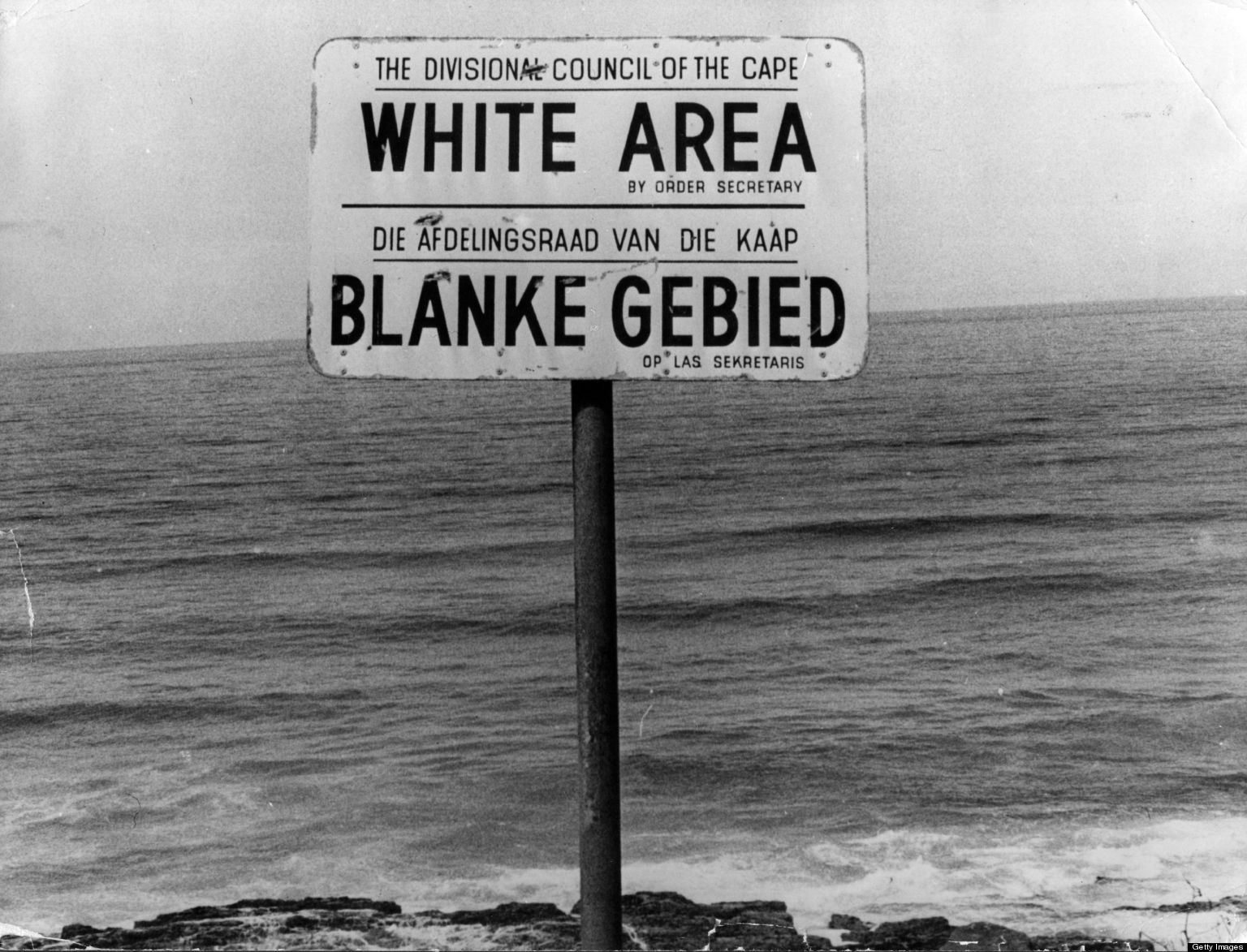
In what African country would you likely have seen this sign during 1975? (Click text to reveal the picture)
a)
Nambia
b)
Egypt
c)
United States
d)
South Africa
70.
What was the role of F.W. deKlerk in ending apartheid? 
a)
he added new and harsher apartheid laws
b)
he began to repeal apartheid laws
c)
he worked to spread apartheid to neighboring countries
d)
he lifted segregation laws in the cities
71.
What percentage of South Africans were black when the country achieved indepenence? 
a)
25%
b)
40%
c)
50%
d)
70%
72.

Who was the main leader of the Civil Rights Movement?

a)

Thurgood Marshall

b)

Rosa Parks

c)

Martin Luther King, Jr.

d)

Jackie Robinson

73.
These black teenagers were the first to integrate into Little Rock Central High
a)
Elite Eight
b)
Little Rock Nine
c)
Arkansas Seven
d)
Final Four
74.
Keeping things or people separate 
a)
integration
b)
discrimination
c)
DISTRACTION!
d)
segregation
75.
Brown v. Board of Education was famous because the court ruled that it is illegal
a)
allow children to work.
b)
to pay black people less than white people.
c)
to return a slave.
d)
to segregate schools.
76.
Court case that created "Separate-but-equal" doctrine.
a)
Sweatt v. Painter
b)
Brown v. Board of Education
c)
Plessy v. Ferguson
d)
Mendez v. Kirby ISD
77.
Who was arrested for refusing to give up their seat on a bus?
a)
Charlayne Hunter
b)
Harriet Tubman
c)
Rosa Parks
d)
Rebecca L. Felton
78.
What was the goal of the Black Panthers?
a)
to turn American citizens against democracy
b)
to end the Vietnam War
c)
to convince African Americans to support "black power"
d)
to gain equal pay for black Americans
79.
The main goal of the freedom riders was to 
a)
pressure the federal government to enforce the law banning segregation on interstate buses
b)
inspire students to protest in Birmingham against Jim Crow
c)
encourage Congress to pass Kennedy's civil rights agenda
d)
desegregate urban bus systems in the south
80.

What was the major goal of the American Indian Movement (AIM)?

a)

to gain U.S. citizenship and representation in Congress

b)

to relocate American Indians to urban Areas

c)

to obtain greater understanding of the American-Indian point of view

d)

to end segregation American Indians in public places

81.

What did the Women's Liberation Movement see as its major goal in the 1960s?

a)

obtaining the right to vote for women

b)

guaranteeing women equal pay for equal work

c)

enabling women to stay at home as well as work

d)

laws that would allow women to own property

82.

What was the major goal of the Civil Rights Movement of the 1950s and 1960s?

a)

to end racial segregation

b)

to reduce prejudice against Mexican-American immigrants

c)

to reform prison conditions

d)

to improve living conditions for Native American Indians

83.

Which Civil Rights leader also became the first African American to serve on the U.S. Supreme Court?

a)

W.E.B Du Bois

b)

Martin Luther King Jr.

c)

Thurgood Marshall

d)

Rosa Parks

84.

In 1963, Martin Luther King, Jr., spoke of his dream that the United States would reach a time "... when all God's children, black men and white neb,... will be able to join hands..." This speech expressed his desire to--

a)

unite all churches into one religious faith

b)

establish religious freedom for Americans

c)

replace racial segregation with an integrated society

d)

create a separate nation for African Americans within the United States.

85.
What was the result of the Brown v. Board of Education case?
a)
Segregation in public schools became illegal
b)
African-Americans began playing profession sports
c)
Rosa Parks refused to give up her seat on the bus
d)
MLK led a March on Washington
86.
What was the purpose of the Civil Rights Act of 1964?
a)
It made Jim Crow Laws illegal
b)
It allowed African-Americans to run for political office
c)
It ended segregation in school
d)
It made poll taxes illegal
87.
What was the purpose of the Voting Rights Act of 1965?
a)
It gave African-American women the right to vote
b)
It made literacy tests to vote illegal
c)
It made Jim Crow Laws illegal
d)
It allowed all African-Americans to vote
88.
The March on Washington is most famous for...
a)
causing race riots in Washington, D.C.
b)
200,000 people worked together to get the right to vote
c)
the KKK became an illegal organization
d)
MLK gave his famous "I Have a Dream" speech
89.
What is the purpose of the 24th Amendment?
a)
It ended slavery
b)
It ended segregation based on race
c)
It made poll taxes illegal
d)
It made it legal for Thurgood Marshall to be selected for the Supreme Court
90.
Which civil rights leader advocated separation  for African Americans and was opposed to integration ?
a)
Martin Luther King
b)
Medgar Evers
c)
Malcolm X
d)
Eldrige Cleaver
91.

What group/individuals sought to improve the treatment of migrant workers through boycotts and strikes?

a)

SNCC, Martin Luther King

b)

Black Panthers, Newton

c)

United Farm Workers Union, Dolores Huerta & Cesar Chavez

d)

Immigration Union, Dolores Huerta & Cesar Chavez

92.

Failed 1961 Invasion of Cuba.

a)

Bay of Pigs Invasion

b)

Communist Invasion

c)

Castro Invasion

d)

Exile Invasion

93.

Name the person who inspired revolution in Latin America, especially Cuba.

a)

Che Guevara

b)

Fidel Castro

c)

Raul Castro

d)

JFK

94.

Pinochet was involved in Operation Condor, a cooperative _____ by several South American governments to remove leftist opposition_____, often by murder.

a)

occasion - bosses

b)

effort - leaders

c)

collective - groups

95.
What type of government did Pinochet set up in Chile? 
a)
Military dictatorship
b)
Open democracy
c)
Communist 
d)
Socialist
96.

The Arab Spring is described as what?

a)

The warming of equatorial regions due to global warming.

b)

The renewed study of Islam in Arab countries.

c)

The protests against long-term political leaders in Arab countries.

d)

A movement to create lasting peace between Muslims, Christians and Jews.

97.

The image shows how the Arab Spring spread so quickly. Which best describes the diffusion of the Arab Spring?

a)

Social media showed problems and spread ideas very quickly.

b)

Long-term dictators did not know how to use Twitter and Facebook.

c)

The people of Arab countries were hesitant to use technology for fear of being arrested.

d)

Dictators blocked the internet so that the message of freedom could not spread.

98.

In which country did the Arab Spring start?

a)

Egypt

b)

Libya

c)

Yemen

d)

Tunisia

99.

In what country did President Assad brutally fight back against the Arab Spring starting a civil war?

a)

Saudi Arabia

b)

Syria

c)

Tunisia

d)

Egypt

100.

Which terrorist group was able to gain a lot of land in Syria due to the civil war?

a)

Al-Qaeda

b)

Taliban

c)

Hamas

d)

ISIS