
 Worksheets
WORK & ENERGY REVIEW
Total questions: 21
Worksheet time: 20mins

Which has the most kinetic energy?
a basketball rolling down a hill
a bus stopped at the top of a hill
a large truck driving down a hill
a golf ball sitting at the top of the hill
A baguette is dropped off the top of the Eiffel Tower. What is true concerning of the mechanical energy of the ball as it falls?
The potential energy of the baguette is conserved as it falls.
The sum of the kinetic and potential energies of the baguette is a constant.
The kinetic energy of the baguette is conserved as it falls.
A) The total energy of the object increases as it falls since it gains speed.
In which of the following situations is kinetic energy decreasing?
A lit tinsel llama is dropped from a building.
A satellite is moving in a circular orbit around the moon.
A baseball is headed upward after being thrown up in the air.
An elevator is moving upward at a constant velocity.

A cheetah can run briefly with a speed of 31.0 m/s. Suppose a cheetah with a mass of 47.0 kg runs at this speed. What is the cheetah’s kinetic energy?
1457 Joules
22,584 Joules
15 Joules
45,167Joules

What is the Total Energy at the top?
15,000 J
3,750 J
7,500 J
11,250 J
What is the KE 1/4th of the way down?
15,000 J
3,750 J
7,500 J
11,250 J
What is the KE 1/2 of the way down?
15,000 J
3,750 J
7,500 J
11,250 J
What is the KE at the bottom?
15,000 J
3,750 J
7,500 J
11,250 J
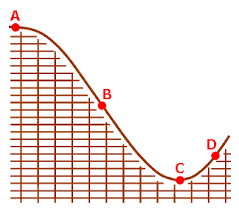
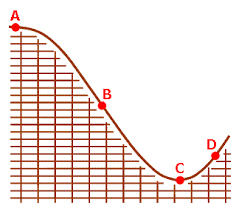

What happens when the ball goes from the highest position to the lowest position
PE and KE increases and decreases together
Impossible to know without knowing the mass of the object
the PE decreases while KE increases
What is an example of a force?
Energy
Power
Pressure
Weight
A 100 kg airplane is traveling in a resistance free atmosphere when it's engines suddenly cut out and it begins to fall. When the engines cut out, the plane was traveling at 250 m/s and was at an altitude of 10,000 m. What was the starting energy of the plane? (from the moment the engines cut out)
Only gravitational potential energy
Only kinetic energy
Gravitational and kinetic energy combined
It doesn't have any initial energy
A 100 kg airplane is traveling in a resistance free atmosphere when it's engines suddenly cut out and it begins to fall. When the engines cut out, the plane was traveling at 250 m/s and was at an altitude of 10,000 m. What was the starting energy of the plane (exact number of joules)?

