Wayground logo

Free Printable Worksheets

Font size

S
M
L
XL
Worksheets

Retake - TEst 2 - Ch10 & Ch11

Total questions: 50

Worksheet time: 52mins
Name
Class
Date
1.
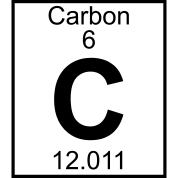
What does the 6 represent?
a)
atomic mass
b)
atomic number
c)
element name
d)
chemical symbol 
2.
What does 12.011 represent?
a)
atomic mass
b)
atomic number
c)
element name
d)
chemical symbol 
3.
These are found on the Periodic Table.
a)
Compounds
b)
Elements
c)
Mixtures
4.
The Modern Periodic Table of Elements is arranged by
a)
atomic mass
b)
atomic number
c)
valence electrons
d)
number of isotopes
5.

the basic structural unit of matter

a)

atom

b)

matter

c)

element

d)

nucleus

6.

the positively charged subatomic particle contained in the nucleus of an atom

a)

proton

b)

neutron

c)

electron

d)

matter

7.

a subatomic particle, contained in the nucleus of an atom, having the same mass as a proton but no electrical charge

a)

proton

b)

neutron

c)

electron

d)

matter

8.

a negatively charged subatomic particle that orbits the nucleus of an atom

a)

proton

b)

neutron

c)

electron

d)

matter

9.

one or two letters that represent the name of an element

a)

element name

b)

element symbol

c)

atomic number

d)

atomic mass

10.

a grouping of elements based on similar properties, arranged by columns in the periodic table; also known as a group

a)

family

b)

period

c)

row

d)

isotope

11.

a row on the Periodic Table of Elements

a)

family

b)

period

c)

row

d)

isotope

12.
Most of the mass of an atom is found it its _____.
a)
electron cloud
b)
nucleus
c)
atomic number
d)
empty space
13.
Which is an electron?
a)
A
b)
B
c)
C
14.
What is the number of protons that the element in this image contain?
a)
14
b)
7
c)
15
d)
18
15.

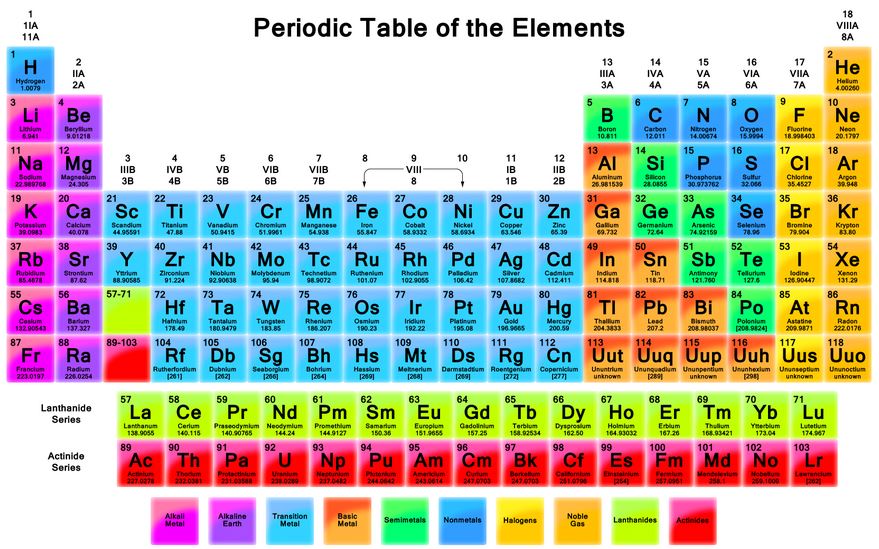
Which color on the image of the periodic table corresponds with the metalloids.

a)

bright yellow

b)

gold

c)

teal

d)

light blue

16.

The periodic table is mostly comprised of what type of element?

a)

Metals

b)

Nonmetals

c)

Metalloids

17.

Which elements are colored red?

a)

nonmetals

b)

metals

c)

metalloids

18.

Which elements are to the LEFT of the zigzag?

a)

metals

b)

nonmetals

c)

metalloids

19.
Silicon is a semiconductor and has properties of both metals and nonmetals. What type of element is Silicon? 
a)
Metal
b)
Nonmetal
c)
Metalloid
d)
Pretty
20.

what group number are the noble gases

a)

17

b)

18

c)

14

d)

15

21.
Group Name and Number for Flourine
a)
Transition Metals 3-12
b)
Noble Gases 18 or 8A
c)
Halogens 17 or 7A
d)
Alkali Metals 1 or 1A
22.
Group Name and Number for Neon
a)
Alkaline Earth Metals 2 or 2A
b)
Noble Gases 18 or 8A
c)
Halogens 17 or 7A
d)
Alkali Metals 1 or 1A
23.
What is the atomic mass of Neon?
a)
10
b)
30
c)
10.18
d)
20.18
24.
Which is a neutron?
a)
A
b)
B
c)
C
25.
What is the formula to solve for the neutron?
a)
Mass + Atomic Number= Neutrons
b)
Mass x Atomic Number = Neutrons
c)
Mass - Atomic Number = Neutrons
d)
Mass + Number of Protons = Neutron
26.
Who first developed the Periodic Table?
a)
Mendeleev
b)
Mosely
c)
Mendella
d)
Murphy
27.

The first energy shell can hold ______ electrons.

a)

2

b)

8

c)

18

28.
Elements on the LEFT side of the periodic table will most likely form:
a)
Positive ions
b)
Negative ions
c)
Neutral Ions
d)
None of these
29.
Which of the following has a full valence shell?
a)
Oxygen
b)
Neon
c)
Barium
d)
Carbon
30.
An ionic bond forms when atoms ___________ electrons.
a)
gain
b)
share
c)
increase
d)
transfer
31.
Which type of bond has an equal sharing of electrons?
a)
Polar Covalent 
b)
Non Polar Covalent
c)
Ionic
d)
Metallic
32.
Which type of bond has an unequal sharing of electrons?
a)
Polar Covalent 
b)
Non Polar Covalent
c)
Ionic
d)
Metallic
33.
Which type of bond has a transfer of an electron from on atom to another?
a)
Polar Covalent 
b)
Non Polar Covalent
c)
Ionic
d)
Metallic
34.
All chemical bonds involve two atoms sharing electrons.
a)
True
b)
False
35.
Chemical bonds form when atoms
a)
combined nuclei
b)
give up neutrons
c)
gain protons
d)
share or transfer electrons
36.
Bonds that form between two metals are called ______________ bonds.
a)
ionic 
b)
covalent
c)
metallic
d)
pervasive
37.
How many valence electrons in this structure?
a)
6
b)
5
c)
4
d)
7
38.
What is the correct formula for this molecule?
a)
NH
b)
N3H
c)
NH3
d)
NH4
39.
According to the octet rule most elements need _______ valence electrons.
a)
2
b)
8
c)
6
d)
18
40.
This is the correct dot diagram for sodium (Na)
a)
true
b)
false
41.
This is a correct dot diagram for fluorine (F)
a)
true
b)
false
42.

Which of the elements in the picture has correct electron dot notation?

a)

1

b)

2

c)

3

d)

4

43.
Which of the following is the correct Lewis dot structure for the molecule fluorine (F2)?
a)
A
b)
B
c)
C
d)
D
44.
How many valence electrons are in Phosphorus?
a)
15
b)
4
c)
5
d)
31
45.
Chemical bonds form when atoms
a)
combined nuclei
b)
give up neutrons
c)
gain protons
d)
share or transfer electrons
46.
A bond that forms when electrons are transferred is called a/an
a)
ionic bond
b)
covalent bond
c)
hydrogen bond
47.

An atom that gains or loses an electron becomes

a)

an isotope

b)

a new element

c)

an ion

d)

a molecule

48.
What type of bond is formed when electrons are transferred (stolen, or given) from one atom to another?
a)
Ionic Bond
b)
Covalent Bond
c)
Metallic Bond
d)
Acidic Bond
49.
What type of bond forms when atoms share electrons?
a)
Ionic Bond
b)
Covalent Bond
c)
Metallic Bond
d)
Gold Bond Medicated Powder
50.
What does an atomic number tell you about an atom?
a)
Number of Protons in an atom or ion
b)
Number of Neutrons in an atom or ion
c)
Number of Nuclei in an atom or ion
d)
Number of fingers on a hand