
 Worksheets
EVS 3_CHAPTER 11: OUR PLANET- THE EARTH
Total questions: 50
Worksheet time: 53mins

Earth is the only planet in the solar system with liquid water.
True
False

How much water is on Earth?
Water covers more than 70% of earth's surface
Water covers more than 10% of earth's surface
Water covers more than 50% of earth's surface.
There is no water on earth

Where is most of the water on earth?
Oceans
Rivers
Lakes
Swimming Pools
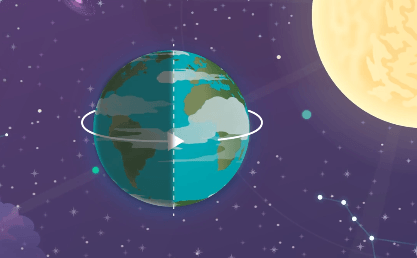
The spinning of the Earth on its axis is called....
revolution
orbit
rotation
a year
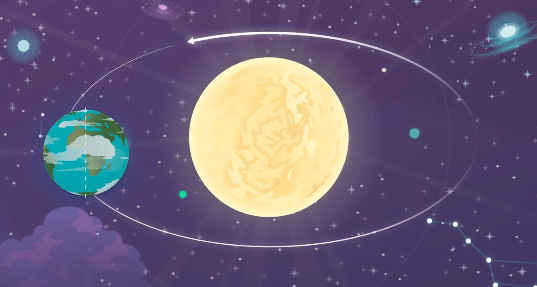
The pathway the Earth takes around the sun is...
revolution
orbit
rotation
a year
The imaginary line that goes through the Earth that cause day and night in 24 hours
orbit
axis
solar system
north pole
The orbiting of the Earth around the sun is called...
revolution
orbit
axis
rotation
This takes 24 hours:
rotation
revolution
This takes 1 year:
rotation
revolution
This causes day and night:
rotation
revolution
This causes the seasons to change:
rotation
revolution
One effect of the sun is that it
is made of hot plasma gas
helps plants to grow and heats the Earth
is 93 million miles away from Earth
is the center of our solar system
Energy that is created by the sun is called:
sun energy
hot energy
solar energy
solar heat

How long does it take for the earth to rotate
day
week
hour
month

How many seasons are there
4
20
1
none
The shape of the Earth is ?
Square
Round
Triangle
The brown and the green parts on Earth show?
Land
Water
Air
More than half of the Earth is?
Land
Air
Water
Earth is also called ?
green planet
blue planet
brown planet
Sea Water is -
Sour
Sweet
Salty



How can I take care of the earth?
Eating a lot food.
Doing little things every day.
Using a lot of water to clean everything.
Buying a lot of things that make me happy
If Earth was not tilted, what statement would be correct?
The seasons are unaffected.
The seasons are reversed.
There are no seasons.
Choose ALL the correct statements from the list below. There may be more than one.
It takes 365 days for the Earth to revolve once around the sun.
The Earth completes a rotation on its axis every 12 hours.
The Earth's axis is tilted.
The Sun orbits the Earth in a clockwise direction.
The rotation of the Earth makes it appear as if the Sun is moving across the sky.
What happens to our day and night hours on December 21st (Winter Solstice)?
Days are longer and nights are shorter.
Days and nights are 12 hours.
We probably have eclipses.
Days are shorter and nights are longer.

Day and night are caused by movement of...
The Sun
The Earth

The seasons are...
Winter, summer, autumn and hotter
Summer, spring, tuna and snow
Spring, summer, autumn and winter

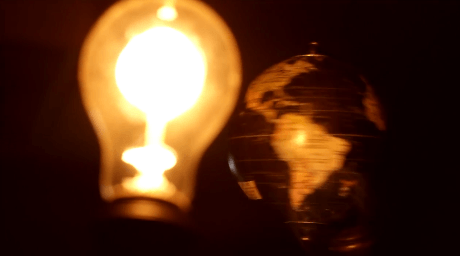
The Night happens because one side of the Earth is facing away from the Sun.
True
False

What are the consequences of revolution and the tilt of our planet?
Day and de night
Seasons
Shadows

The Earth’s rotation and revolution happen at the same time.
True
False

All the planets take the same time to complete an orbit around the Sun.
True
False

The summer happens when…
the hemisphere is tilted toward the Sun.
the hemisphere is tilted away from the Sun.
It is believed that life on earth first appeared in _____
air
water
land
rock
In which direction the Earth rotates on its axis?
East to West
West to East
North to South
South to North
The Earth is also called as a ________
green planet
red planet
blue planet
Which of the following objects similar to the shape of the Earth?
a shoebox
a football
a water bottle
a mobile phone

