
 Worksheets
Fall Final Review 1 - 2021
Total questions: 29
Worksheet time: 25mins
Made of monosaccharides linked together to form polysaccharides
Carbohydrate
Lipid
Protein
Nucleic acid
Biomolecule composed of nucleotides.
Carbohydrate
Lipid
Protein
Nucleic acid
Structure of humans (hair, nails, skin, bones, muscle)
Carbohydrate
Lipid
Protein
Nucleic acid
Structure of plants (cellulose) and insects (chitin)
Carbohydrate
Lipid
Protein
Nucleic acid
Stores and transmits genetic information
Carbohydrate
Lipid
Protein
Nucleic acid
Animals store most of their excess energy reserves as _____ because _______.
glucose, it is easy to break down
fat, they store twice as much energy per gram
protein, it is a compact source of energy in their bodies
carbohydrates, they store twice as much energy per gram of glucose

The activation energy needed for a chemical reaction is decreased by a
catalyst (enzyme)
reactant
product
substrate
Which phrase best describes the function of the ATP molecule?
absorbs energy
increases energy
stores energy
creates energy
Which of the following would most easily move through the phospholipid bilayer by diffusion?
CO2
glucose
K+
starch
Which of the following types of solutions will cause a cell to shrink?
hypertonic
isotonic
hypotonic
hydrophobic

Which of the following structures are found in plant cells only? (not in animal cells)
Cell Wall
Ribosomes
Chloroplasts
Centralized Vacuole (large)
Several Vacuoles (small)
Which of the following structures can be found in BOTH plant and animal cells?
Cell Wall
Cell Membrane
Cytoplasm
Ribosomes
Nucleus
Which of the following represent differences in prokaryotic and eukaryotic cells?
prokaryotic cells have membrane-bound organelles
prokaryotic cells do not have membrane-bound organelles
eukaryotic cells are larger than prokaryotic cells
prokaryotic cells divide by binary fission, while eukaryotic cells divide using the cell cycle
prokaryotic cells contain ribosomes


Cells can only work if their enzymes are functioning. What can you infer from the graph?
Cells function best at low pH values
Cells function fine at all pH values
Cells function best at high pH values
Cells do not function well if the pH is too high or too low
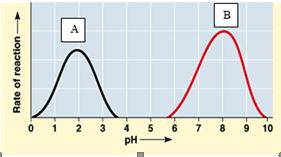
What is the optimal pH of enzyme A?
8
2
5.7-10
10
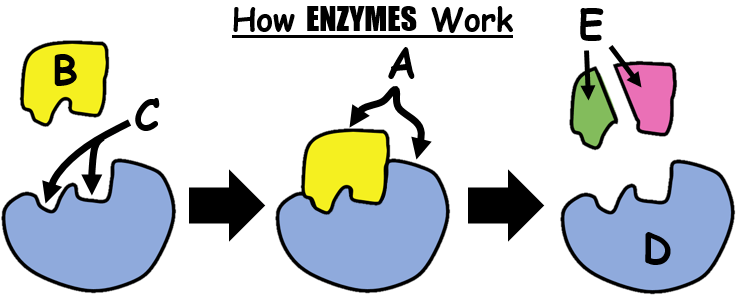
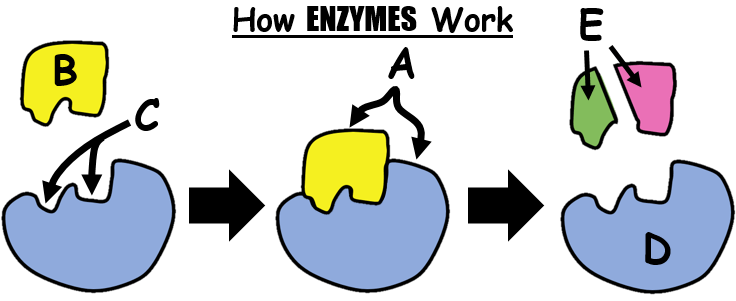
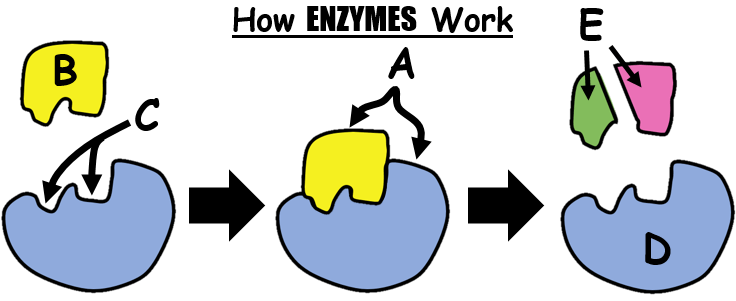
What is it called when large molecules move across the cell membrane from an area of high concentration to an area of low concentration through a protein channel?
Diffusion
Osmosis
Active Transport
Facilitated Diffusion
How does a cell maintain homeostasis?
By controlling what enters and leaves the cell
Flexibility
Protective barrier
Structure and support
What is the name of the process in which small molecules move from an area of high concentration to an area of low concentration across the cell membrane
Diffusion
Osmosis
Active Transport
Facilitated Diffusion

Look at the diagram of a cross-section of a cell membrane below. The cell membrane controls movement of materials into and out of the cell. The following particles are moving from high concentration to low concentration and are using a carrier protein. How would you describe this type of movement across the membrane?
simple osmosis
active transport
simple diffusion
facilitated diffusion


