wayground logo

Free Printable Worksheets

NEW

Font size

S
M
L
XL
Worksheets

Gravity and Energy

Total questions: 80

Worksheet time: 53mins

Name
Class
Date
1.

What two things determine the gravity of an object?

a)

mass & weight

b)

mass & distance

c)

density & mass

d)

volume & distance

2.

When will the forces of gravity between two objects be the GREATEST?

a)

when the masses of both objects are small and the objects are far apart

b)

when the masses of both objects are large and the objects are close together

c)

when the masses of both objects are small and the objects are close together

d)

when the masses of both objects are large and the objects are far apart

3.

When will the gravity between two objects be the LEAST?

a)

when the masses of both objects is small and the objects are close together

b)

when the masses of both objects is small and the objects are far apart

c)

when the masses of both objects is large and the objects are close together

d)

when the masses of both objects is large and the objects are far apart

4.

Which statement about gravity is true?

a)

gravity causes objects to pull towards one another

b)

gravity causes objects to push away from each other

c)

gravity only takes place between planets

d)

the moon doesn't have any gravity

5.
What is the SI unit used to measure force? 
a)
pounds 
b)
grams 
c)
newtons 
d)
kg/ m2
6.
Look at the picture.  Is the force of gravity on the boy a push or a pull? 
a)
Pull
b)
Push
7.
An object with mass has gravity.
a)
True
b)
False 
8.
The amount of matter in an object.
a)
force 
b)
mass
c)
weight 
d)
pressure 
9.
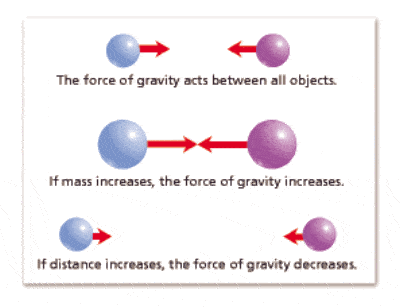
As mass increases, what happens to gravitational force?
a)
increases
b)
decreases
c)
stays the same
d)
i don't know
10.
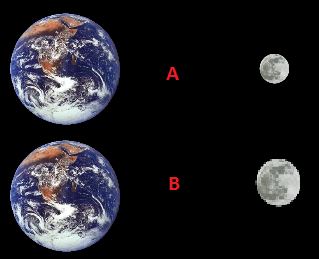
Which model has greater gravitational attraction (if any)
a)
Model A
b)
Model B
c)
Both Model A and Model B (same gravity)
11.
Which system has the greater gravitational attraction between the two objects (if any)?
a)
System A
b)
System B
c)
Same gravitational attraction fro System A and System B
12.
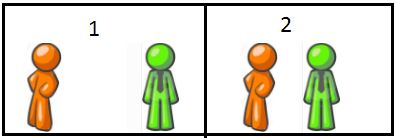
Which System has the greater gravitational pull between the two objects?
a)
System 1
b)
System 2
c)
Same: there is no gravitational attraction between the two objects
13.

More mass equals:

a)

less gravity

b)

less distance

c)

more gravity

d)

more distance

14.

Less mass equals:

a)

less gravity

b)

less distance

c)

more gravity

d)

more distance

15.
Gravity attracts all objects towards one another.
a)
False
b)
True
c)
It depends
d)
I don't care
16.
Any object with mass is surrounded by a gravitational field.
a)
True
b)
Sometimes
c)
False
d)
Never
17.
The force of gravity is also known as
a)
Mass
b)
Weight
c)
Distance
d)
Acceleration
18.
As distance between two objects increase the pull of gravity 
a)
Increases
b)
Decreases
c)
Stays the same
19.
The force of gravity acting on an object is the object's ______.
a)
mass
b)
matter
c)
weight 
d)
terminal velocity 
20.
Which of the following will not change in different gravitational fields?
a)
weight
b)
force
c)
mass
d)
pounds
21.
An object is falling but is not accelerating. What do you know?
a)
Gravity is stronger than air resistance
b)
Air resistance is stronger than gravity
c)
Air resistance is equal to gravity
d)
Forces are unbalanced
22.
Both of these are measured in Netwons
a)
Force and acceleration
b)
Force and weight
c)
Mass and weight
d)
Mass and acceleration
23.
This FORCE pulls things.  It PULLS things into orbit around the sun. 
a)
Newton
b)
gravity
c)
weight
d)
path
24.
The Ability to do work
a)
Soil 
b)
Energy 
c)
Matter
d)
Math
25.
Energy of moving particles of atoms that make up all  matter. 
a)
Thermal Energy 
b)
Chemical Energy 
c)
Electrical Energy 
d)
Electromagnetic Energy 
26.
Energy stored in atomic bonds that form molecules
a)
Thermal Energy
b)
Chemical Energy
c)
Electrical Energy
d)
Electromagnetic Energy
27.
Energy of electric charges moving through conductors
a)
Electrical Energy
b)
Electromagnetic Energy
c)
Thermal Energy
d)
Chemical Energy
28.
One form of energy changes to another
a)
Energy Transformation
b)
Energy Transfer
29.
Energy stored in the nucleus of an atom, released when protons or neutrons are added to or removed from the nucleus 
a)
Chemical Energy 
b)
Electrical Energy 
c)
Mechanical Energy 
d)
Nuclear Energy 
30.

True or false: Energy cannot change from one type to another.

a)

True

b)

False

31.

A plant turns thermal energy from the sun into chemical energy during photosynthesis. This is an example of a(n)...

a)

Energy transformation

b)

Matter transformation

c)

Energy change

d)

Physical Change

32.

Which of the following is an example of thermal energy?

a)

A light bulb

b)

The movement of a car

c)

The digestion of food

d)

Heat from a fire

33.

True or False: Energy can be created.

a)

True

b)

False

34.

Which has more gravitational energy?

a)

A snowboarder at the top of a mountain

b)

A person laying on the beach

35.

Energy that is stored is called...

a)

Kinetic Energy

b)

Potential Energy

c)

Mechanical Energy

d)

Thermal Energy

36.

Which has the most kinetic energy?

a)

A caught baseball

b)

A turtle swimming

c)

A parked car

37.

What is potential energy?

a)

moving energy

b)

stored energy

c)

renewable energy

d)

non renewable energy

38.

What is kinetic energy?

a)

moving energy

b)

potential energy

c)

stored energy

d)

renewable energy

39.

At what point does the biker have the greatest Kinetic Energy?

a)

Point A

b)

Point B

c)

Point C

d)

Point D

40.

At what point does the biker have the greatest Potential Energy?

a)

Point A

b)

Point B

c)

Point C

d)

Point D

41.

At what point does Potential Energy transform into Kinetic Energy?

a)

Point A

b)

Point B

c)

Point C

d)

Point D

42.

Which Apple has the greatest Gravitational Potential Energy?

a)

Apple A

b)

Apple B

c)

Apple C

d)

Apple D

43.
According to the Law of Conservation of Energy, energy cannot be _________ or ____________. 
a)
destroyed, destroyed
b)
created, saved
c)
created, destroyed
d)
lost, found
44.
Can you create energy?
a)
Yes
b)
No
45.

Stored energy or energy due to its position is called

a)

mechanical energy

b)

potential energy

c)

kinetic energy

d)

thermal energy

46.

Which of the following statements about a skier skiing down a steep slope is true?

a)

His kinetic energy decreases and his potential energy increases

b)

His potential energy decreases and his kinetic energy increases

c)

His chemical energy increases

d)

Both his potential and kinetic energy increases

47.

Potential energy depends on ______ and _______.

a)

height, mass

b)

weight, mass

c)

speed, mass

d)

height, speed

48.

Kinetic energy depends on_________ and _________.

a)

speed and mass

b)

speed and height

c)

height and mass

d)

energy and height

49.

Energy that transforms from potential to kinetic is neither_____ nor _______.

a)

created, force

b)

created, destroyed

c)

force,motion

d)

destroyed, law of conservation of energy

50.

Which of the following is NOT an example of potential energy?

a)

A diver on the edge of a diving board

b)

A parachute falling to the ground

c)

A pencil sitting on a desk

d)

A car parked in the parking lot of a mall

51.
What kind of energy is in a rock at the edge of a cliff?
a)
Potential
b)
Kinetic
c)
Both potential and kinetic energy
d)
none of the above
52.
Energy can be _____________ or changed from one type to another.
a)
destroyed
b)
transferred
c)
created
d)
ignored
53.
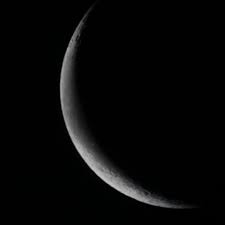
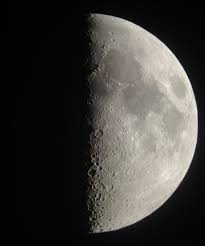
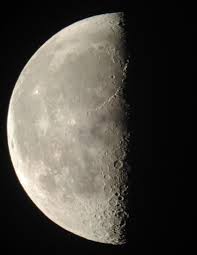
What Moon phase is this?
a)
Old Moon
b)
Far Side of the Moon
c)
New Moon
d)
Waxing Gibbous
54.
What Moon phase is this?
a)
Waning Crescent
b)
Waxing Crescent
c)
Waxing Gibbous
d)
Waning Gibbous
55.
What Moon phase is this?
a)
Full Moon
b)
Waxing Gibbous
c)
New Moon
d)
Half Moon
56.
What Moon phase is this?
a)
Waxing Crescent
b)
Waning Gibbous
c)
Waning Crescent
d)
Waxing Gibbous
57.
Name the moon phase
a)
waning crescent
b)
waxing crescent
c)
waning gibbous
d)
waxing gibbous
58.
Name the moon phase
a)
First Quarter
b)
Last Quarter
c)
New Moon
d)
Full Moon
59.
Name the moon phase
a)
First Quarter
b)
Last (3rd) Quarter
c)
New Moon
d)
Full Moon
60.
What is illuminating the Moon?
a)
Nuclear Fusion
b)
Sunlight
c)
Mirrors
d)
Flashlights
61.
Which moon phases are "crescents"?
a)
1 and 5
b)
2 and 8
c)
4 and 6
d)
3 and 7
62.
Which moon phases are "gibbous"?
a)
1 and 5
b)
2 and 8
c)
4 and 6
d)
3 and 7
63.
Which moon phases are "waning"?
a)
1 and 2
b)
2 and 4
c)
6 and 8
d)
1 and 5
64.
Which moon phases are "waxing"?
a)
1 and 2
b)
2 and 4
c)
6 and 8
d)
1 and 5
65.
The Moon ________ around the Earth.
a)
moves parallel
b)
rotates
c)
doesn't move
d)
revolves
66.

The cycle of the moon lasts about ___________.

a)

15 days

b)

7 days

c)

28-29 days

d)

30-31 days

67.
What moon phase would be seen from Earth when the moon is at position 5? 
a)
new moon
b)
first quarter
c)
full moon
d)
third quarter
68.
What phase of the moon would be visible when the moon is at position 3? 
a)
new moon
b)
first quarter
c)
full moon
d)
third quarter
69.
What phase of the moon would be visible when the moon is at position 1? 
a)
new moon
b)
first quarter
c)
full moon
d)
third quarter
70.
Changes in the moon's appearance are
a)
phases
b)
eclipses
c)
stages
d)
cycle
71.
Define Full Moon
a)
None of moon is visible
b)
Half moon phase is visible
c)
Complete moon face is visible
d)
Less Than half of moon is visible
72.
Define New Moon
a)
None of moon is visible from Earth
b)
All of moon visible from Earth
c)
Moon is 1/2 visible from Earth
d)
Moon is more than Half Visible from Earth
73.
Define New Moon
a)
None of moon is visible from Earth
b)
All of moon visible from Earth
c)
Moon is 1/2 visible from Earth
d)
Moon is more than Half Visible from Earth
74.
What moon phase came right BEFORE this one?
a)
First Quarter
b)
Last Quarter
c)
New Moon
d)
Full Moon
75.

Which diagram best represents a first quarter moon?

a)
b)
c)
d)
76.
The phase of the moon you see depends on
a)
where you are on Earth's surface
b)
how much of the sunlit side of the moon faces Earth
c)
if the moon is making its own light
d)
whether or not an eclipse is occurring.
77.
Which moon phases comes directly after a new moon?
a)
waning crescent
b)
waning gibbous 
c)
waxing crescent
d)
first quarter
78.

When the Earth is between the Moon and the Sun, we will most likely see a:

a)

Full Moon

b)

Half Moon

c)

3rd Quarter Moon

d)

Crescent Moon

79.
We can see the light shining on the Moon during the New Moon Phase. 
a)
True
b)
False
80.

How long does it take the moon to make one complete revolution around the earth?

a)

365 days

b)

24 hours

c)

29 days

d)

no one has ever measured it.