
 Worksheets
Weather
Total questions: 75
Worksheet time: 47mins
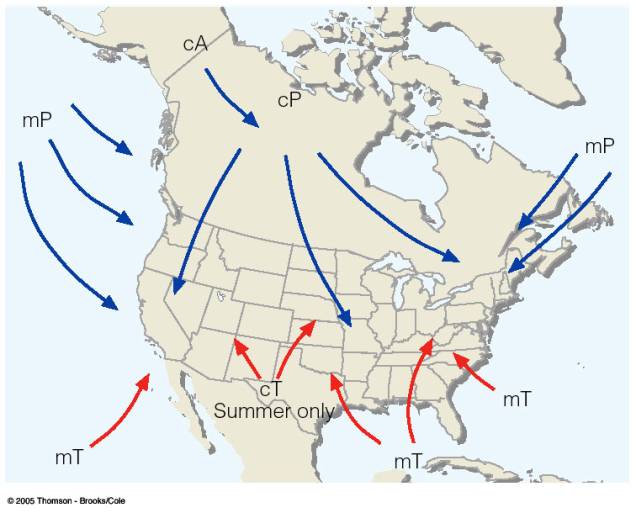
How do we characterize an air mass that forms over the ocean?
Dry
Humid
Cold
Warm
How do we characterize an air mass that forms over land?
Dry
Humid
Cold
Warm

amount of water vapor in the air
cloud
fog
air pressure
humidity
a warm, dry air mass that forms over land in tropical regions
continental polar
continental tropical
maritime polar
maritime tropical
a cold, dry air mass that forms over land in polar regions
continental polar
continental tropical
maritime polar
maritime tropical
a warm, moist air mass that is formed over the ocean in tropical areas
continental polar
continental tropical
maritime polar
maritime tropical
cold, moist air mass that is formed over the ocean in polar areas
continental polar
continental tropical
maritime polar
maritime tropical
forms
when cold air moves under warm air which is less dense and pushes air
up quickly (produces thunderstorms, heavy rain, or snow followed by cold
weather)
cold front
warm front
occluded front
stationary front
boundary between two air masses
air mass
weather
front
sometimes brings weather
forms
when cold air moves under warm air which is less dense and pushes air
up quickly (produces thunderstorms, heavy rain, or snow followed by cold
weather)
cold front
warm front
occluded front
stationary front
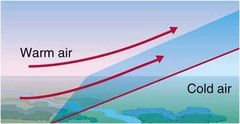
forms
when warm air approaches and slides up and over a cold air mass (brings
gentle rain or light snow followed by warmer weather)
cold front
warm front
occluded front
stationary front
when
a warm air mass and a cold air mass meet and no movement occurs (brings
light rain, clouds, and several days of precipitation)
cold front
warm front
stationary front
occluded front
weather changes when
the season changes on the calendar
precipitation occurs
every Monday
when two air masses meet
precipitation always occurs
during the night
during the day
at a front
at the change in seasons
brings severe weather of thunderstorms
stationary front
warm front
occluded front
cold front




Which winds were crucial to sailors because it helped them get their items across the ocean to sell?
Trade Winds
Prevailing winds
Westerlies
Jet Stream
Westerlies blow in which direction?
West to East
North to South
South to North
East to West
Easterlies blow in which direction?
East to West
North to South
South to North
West to East
Narrow bands of strong winds that blow near the top of the troposphere are referred to as what?
Jet Streams
Cirrus Clouds
Easterlies
Sea Breeze
The windless, rainy zone near the equator is called the what?
Doldrums
Easterlies
Tropics
Jet Stream

These global winds blow from 30 degree latitude to the equator.
Polar Easterlies
Westerlies
Tradewinds
Doldrums
These global winds blow from the poles to about 60 degree latitude.
Polar Easterlies
Westerlies
Tradewinds
Doldrums
Air always wants to move from areas of ______________ pressure to _______________ pressure.
low to high
high to low
doesn't matter
huh?
The highest pressure on Earth is found here due to the amount of cold sinking air.
poles
30 degree latitude
60 degree latitude
equator
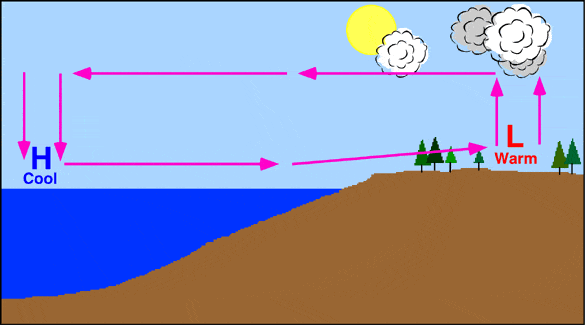
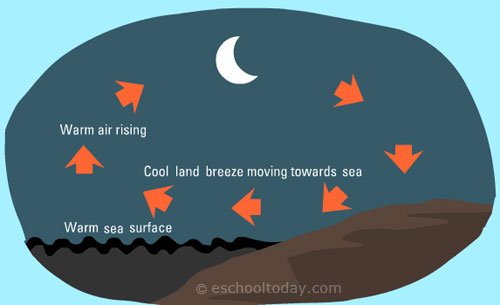
The transfer of heat through the circulation of a liquid or a gas.
convection
radiation
conduction
Copper transfers heat to the pan by

