Wayground logo

Free Printable Worksheets

Font size

S
M
L
XL
Worksheets

Study Guide for Finals 6th Grade

Total questions: 70

Worksheet time: 1hrs 3mins

Name
Class
Date
1.
Which of the following is the smallest unit of life that can carry out all life functions?
a)
the mitochondria
b)
the vacuoles
c)
the nucleus
d)
the cell
2.
Which structures are found in every living cell?
a)
cell membrane and cytoplasm
b)
chloroplasts and mitochondria
c)
a cell wall and nucleus
d)
chloroplasts and cell wall
3.
Which cell structure is found in plant and animals cells and controls what can come into or leave a cell?
a)
cell membrane
b)
cytoplasm
c)
nucleus
d)
vacuole
4.
What is the function of the cell nucleus found in both plant and animal cells?
a)
to produce energy
b)
to control cell activity
c)
to remove waste products
d)
to allow molecules to enter the cell
5.
Chloroplasts in plant cells allow the plant to perform a function that animal cells cannot do.  What is the main function of the chloroplasts found in plant cells?
a)
to absorb light energy and manufacture food
b)
to remove waste materials by active transport
c)
to manufacture chemical energy from food
d)
to control the shape of the cell
6.
All cells need energy to function.  Which cell organelle is responsible for producing energy in the cell?
a)
chloroplasts
b)
mitochondria
c)
nucleus
d)
vacuoles
7.
What is the function of a cell wall?
a)
to protect and support the cell
b)
to perform different functions in each cell
c)
to prevent water from passing through it
d)
to prevent oxygen from entering the cell
8.
Which of the following is not part of the cell theory?
a)
cells must contain DNA 
b)
all living things are made from cells
c)
cells can only come from other cells
d)
cells are the basic unit of life
9.
The basic unit of structure and function in a living things.
a)
chloroplast
b)
nucleus
c)
cell
d)
cell membrane
10.
A tiny cell structure that carries out a specific function within a cell.
a)
organelle
b)
cell
c)
nucleus
d)
ribosomes
11.
What is the water cycle?
a)
the 3 forms of water
b)
the movement of water on, above, or below the surface of the Earth
c)
when water melts
d)
when clouds form
12.
What part of the water cycle does this picture show?
a)
condensation
b)
precipitation
c)
evaporation
13.
Which of these is an example of precipitation?
a)
snow
b)
air
c)
clouds
d)
vapor
14.
Snow, sleet, hail, and rain are all examples of  ________________. 
a)
evaporation
b)
condensation
c)
accumulation
d)
precipitation
15.
What is the next stage after EVAPORATION in the water cycle?
a)
CONDENSTATION
b)
GROUNDWATER
16.
What is it called when plants give off water vapor as a waste product?
a)
condensation
b)
evaporation
c)
sublimation
d)
transpiration
17.
The Coriolis Effect is caused by
a)
Earth rotating around the sun
b)
Earth rotating on its axis
c)
The tides
d)
Gravity
18.
As you go deeper in the ocean, the water is colder and less salty.
a)
True
b)
False
19.
Due to the Coriolis Effect, water in the northern hemisphere moves
a)
clockwise
b)
counter clockwise
c)
both
d)
neither
20.
Due to the Coriolis Effect, water in the southern hemisphere moves
a)
clockwise
b)
counter-clockwise
c)
both
d)
neither
21.
Warm ocean currents generally come from
a)
The North Pole
b)
The South Pole
c)
The Equator
d)
Both A and B
22.
Cold ocean currents generally come from
a)
The North Pole 
b)
The South Pole
c)
The Equator
d)
Both A and B
23.
The California Current (west coast) carries _________ water from canada
a)
Cold 
b)
Warm
c)
Freezing
d)
Fresh
24.
What process brings the deep cold ocean currents up to the surface?
a)
Conduction
b)
Global Wind Patterns
c)
Convection Currents
d)
Temperature and salinity
25.
What is the definition of CONDUCTION?
a)
When heat is transferred from objects like rays of light or electromagnetically.
b)
a  hot liquid or air that  expands, becomes less dense, and rises or becomes more dense, and sinks.
c)
When heat transfers from objects that are touching.
d)
When heat transfers through the heater or AC in your house.
26.
What is the definition of CONVECTION
a)
When heat transfers through waves.
b)
When heat transfers from objects that are touching.
c)
a  hot liquid or air that  expands, becomes less dense, and rises or becomes more dense, and sinks.
d)
Heat traveling from the sun
27.
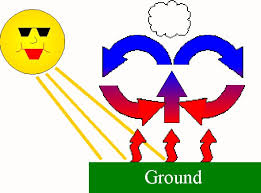
What kind of heat transfer happens when the sun is heating your body?
a)
Conduction
b)
Radiation
c)
Convection
d)
Density
28.
Which of the following is an example of convection?
a)
A hair dryer is drying up your hair.
b)
When the AC or heater changes the temperature.
c)
When a car engine turns hot after being turned on.
d)
When you are making soup and the water is rising and lowering.
29.
Which of the following is an example of convection?
a)
A hair dryer is drying up your hair.
b)
When the AC or heater changes the temperature.
c)
When a car engine turns hot after being turned on.
d)
When you are making soup and the water is rising and lowering.
30.
Which of the following is needed for convection to happen?
a)
Fluid/s
b)
Light in the form or rays
c)
Electromagnetic waves
d)
Fire
31.
Warm air rises and the cool air sinks demonstrates this type of heat transfer. 
a)
conduction
b)
convection
c)
radiation
d)
Insolation 
32.
The baby chickens are kept warm from the heat lamps demonstrates this type of heat transfer. 
a)
conduction
b)
convection
c)
radiation
33.
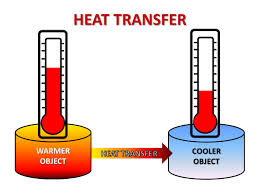
Heat transfers from an area of ____temperature to an area of ___ temperature.
a)
high to low
b)
low to high
c)
high to high
d)
It can travel high to low and low to high. 
34.
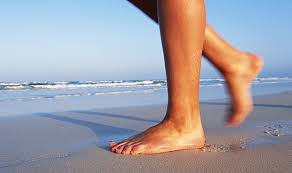
Walking on the warm sand sand with your bare feet demonstrates this type of heat transfer. 
a)
conduction
b)
convection
c)
radiation
35.
Ironing a shirt is an example of...
a)
condensation
b)
conduction
c)
convection
d)
radiation
36.
Ironing a shirt is an example of...
a)
condensation
b)
conduction
c)
convection
d)
radiation
37.
Near the ceiling of a room the air is warmer.  The warm air rises because of
a)
conduction
b)
convection
c)
radiation
38.
A huge rock at the state park gets so hot during the day because of
a)
conduction
b)
convection
c)
radiation
39.
You get sunburned due to __________ from the sun.
a)
conduction
b)
convection
c)
radiation
40.
The cause of weather systems on earth is
a)
conduction
b)
convection
c)
radiation
41.

Which is NOT an insulator.

a)

Wool

b)

Plastic

c)

iron

d)

Glass

42.
What is a example of a conductor?
a)
wood 
b)
metal
c)
rubber
d)
rock
43.
The handle of a frying pan is often coated in rubber because rubber provides...
a)
Heat insulation
b)
Heat conduction
c)
A low melting point
d)
A nonstick surface
44.
Is iron a conductor or insulator?
a)
Conductor
b)
Insulator
45.
Is wood a conductor or insulator?
a)
Conductor
b)
Insulator
46.
What is NOT an example of an insulator in the kitchen?
a)
An oven mitt
b)
Pots and pans
c)
A wooden spoon
d)
A plastic measuring cup
47.
Conductors are materials that...
a)
Allow heat to pass through
b)
Stop heat from passing through
c)
Allow cold to pass through
d)
Stop cold from passing through
48.
Gloves help keep your hands warm in winter because:
a)
They are conductors of heat.
b)
They are fuzzy.
c)
They are conductors of electrical energy.
d)
They are insulators.
49.
An object that doesn't conduct heat well is known as:
a)
a conductor
b)
an insulator
50.
Thermal energy travels...
a)
Hot to cold
b)
Cold to hot
c)
Inside to outside
d)
Outside to inside
51.
Thermal energy travels...
a)
Hot to cold
b)
Cold to hot
c)
Inside to outside
d)
Outside to inside
52.

Why is the base of iron is made from metal?

a)

To easier the ironing process.

b)

To enable it to conduct heat.

53.

Which of the examples are heat insulators?

a)
b)
c)
d)
54.

Two energy which are in thermal contact can exchange...

a)

Heat energy between them.

b)

Temperature between them.

55.

What is the solution for a cup of coffee to stay hot at room temperature?

a)

Put the cup under the lamp.

b)

Wrapped the cup with an insulator

56.
Energy due to motion is ____________ energy. 
a)
Potential 
b)
Energy
c)
Kinetic
d)
Friction
57.
__________ is stored energy. 
a)
Potential
b)
Kinetic
c)
None of the above 
d)
All of the above 
58.
Gravitational potential energy depends on the ________ and ________ of the object. 
a)
Height and mass
b)
Friction and movement
c)
Mass and Movement
d)
Height and Friction 
59.
What kind of energy is in a rock at the edge of a cliff?
a)
Potential
b)
Kinetic
60.
What kind of energy is in a moving skateboard?
a)
Potential
b)
Kinetic
61.
What kind of energy is in a waving hand?
a)
Potential
b)
Kinetic
62.
What kind of energy is in a stretched rubber band?
a)
Potential
b)
Kinetic
63.
Energy can not be created or destroyed, only converted from one form to another.
a)
true
b)
false
64.
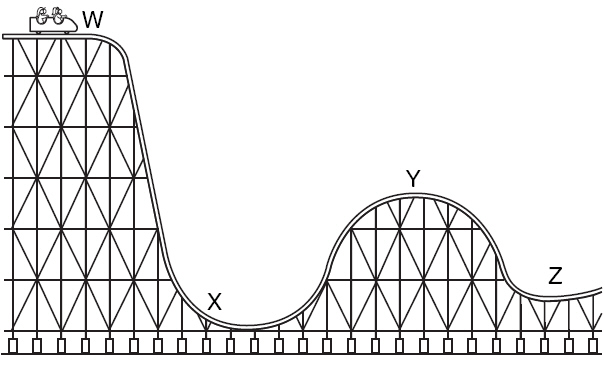
At which point is potential energy greatest?
a)
W
b)
X
c)
Y
d)
Z
65.
At which point is kinetic energy greatest? 
a)
W
b)
X
c)
Y
d)
Z
66.
Energy can be _____________ or changed from one type to another.
a)
destroyed
b)
transferred
c)
created
d)
ignored
67.
__________ energy is the energy of motion.
a)
Light
b)
Sound
c)
Kinetic
d)
Chemical
68.
A basketball is being held in the hands of a player.
a)
Potential
b)
Kinetic
69.

What do your senses do?

a)

Give you formation about the match/game situation.

b)

Take the information received from the display.

c)

Allow you to hear and see during a game.

d)

Allow you to smell and touch during a game.

70.

Output is....

a)

The movement we do next.

b)

The response to the input given from the display.

c)

The information that our brain sends to our muscles to carry out the response.

d)

The result of correct selective attention.