
 Worksheets
6th Grade Science Final Exam Review Quizizz
Total questions: 65
Worksheet time: 2hrs 56mins
Define the term 'Mitochondria'.
A cell organelle that releases energy from stored food molecules
The basic unit of life
A structure within the nucleus that manufactures ribosomes
A type of connective tissue in animals
Define the term 'Nucleus'.
The central and most important part of an object, movement, or group, forming the basis for its activity and growth.
A membrane-bound organelle found in eukaryotic cells.
A small group of people having control of a larger organization.
The positively charged central core of an atom, consisting of protons and neutrons and containing nearly all its mass.
Define the term 'Cell membrane'.
The thin layer that surrounds and encloses the contents of a cell
The structure that contains the DNA of a cell
The part of the cell that produces energy
The fluid inside the cell
Define the term 'Chloroplast'.
A structure within green plant cells that conducts photosynthesis
A cell organelle that packages proteins
A part of the cell that contains genetic material
A membrane-bound compartment that stores food
Define the term 'Predator'.
An animal that naturally preys on others
A type of plant
A geological term for rock formations
A weather pattern
Define the term 'Prey'.
An animal hunted or caught for food
A device used for catching fish
A type of plant
A weather phenomenon
Define the term 'Solar eclipse'.
A celestial event where the Moon passes between the Sun and Earth, blocking all or part of the Sun's light.
A celestial event where the Earth passes between the Sun and the Moon, casting a shadow on the Moon.
A celestial event where the Sun moves behind the Moon, making the Moon invisible.
A celestial event where the Earth's shadow is cast onto the Sun, darkening it.
What is a 'Lunar eclipse'?
The event when the Earth comes between the Sun and the Moon, causing the Moon to fall into Earth's shadow
The event when the Moon comes between the Earth and the Sun, causing the Sun to be obscured
The event when the Moon is at its closest point to Earth
The event when the Moon is at its farthest point from the Earth
Define the term 'Velocity'.
The speed of something in a given direction.
The rate of change of displacement.
The force exerted by an object.
The distance covered per unit time.
Define the term 'Acceleration'.
The rate at which velocity changes over time
The force applied on an object
The distance covered per unit time
The change in displacement in a given direction
Define the term 'Momentum'.
A measure of the quantity of motion of a moving body, expressed as the product of its mass and velocity.
The force that keeps an object in motion.
The speed at which an object travels.
The resistance of an object to changes in its state of motion.
Define the term 'Mutualism'.
A relationship between two species of organisms in which both benefit from the association.
A relationship where one organism benefits and the other is harmed.
A type of interaction where one species benefits and the other is unaffected.
A biological interaction where both species compete for resources.
Define the term 'Commensalism'.
A relationship where one organism benefits and the other is neither helped nor harmed
A relationship where both organisms benefit
A relationship where one organism is harmed and the other benefits
A relationship where both organisms are harmed
Define the term 'Parasitism'.
A symbiotic relationship where one organism benefits and the other is harmed
A relationship where both organisms benefit
A relationship where both organisms are harmed
A relationship where one organism benefits and the other is unaffected
Which of the following best describes Newton’s third law of motion?
For every action, there is an equal and opposite reaction.
Objects in motion tend to stay in motion unless acted upon by an external force.
The acceleration of an object is dependent upon two variables - the net force acting upon the object and the mass of the object.
Energy cannot be created or destroyed, only transformed.
What prevents the planets from colliding with one another?
Gravitational forces between planets
Magnetic fields of the sun
Atmospheric resistance in space
Random motion of celestial bodies
What causes the Earth to go from day to night?
The Earth's rotation on its axis
The Earth's orbit around the Sun
The Moon blocking the Sun's light
Changes in the Earth's atmosphere
What causes the Earth to go through different seasons throughout the year?
The Earth's rotation on its axis
The Earth's orbit around the Sun and its axial tilt
The distance between the Earth and the Sun
The Moon's orbit around the Earth
When light bends through a glass and causes the straw to look bent, this is called:
Absorption
Transmission
Reflection
Refraction
True or False: If there is a reduced number of grasshoppers, we can expect the population of rats to decline.
True
False
What would happen to the population of corn if the grasshopper population declined?
The corn population would increase due to less consumption by grasshoppers.
The corn population would decrease due to less pollination by grasshoppers.
The corn population would remain unchanged.
The corn population would decrease due to increased competition.
What prevents the moon and earth from colliding with one another?
Gravitational pull between the two
Magnetic fields
Atmospheric pressure
Solar winds
Lighter colors absorb more visible light and darker colors reflect more light.
True
False
How does the distance between a magnet and an object affect the strength of a magnet?
The strength increases as the distance decreases
The strength decreases as the distance increases
The strength is not affected by the distance
The strength fluctuates unpredictably with distance
How does the size of a magnet affect the strength of a magnet?
It does not affect the strength
Larger magnets are generally stronger
Smaller magnets are generally stronger
The effect depends on the material of the magnet
Does the energy of a wave increase or decrease when the amplitude increases?
Increases
Decreases
Remains the same
Which type of organisms' cells will have organelles?
Bacteria
Humans
Dogs
Plants
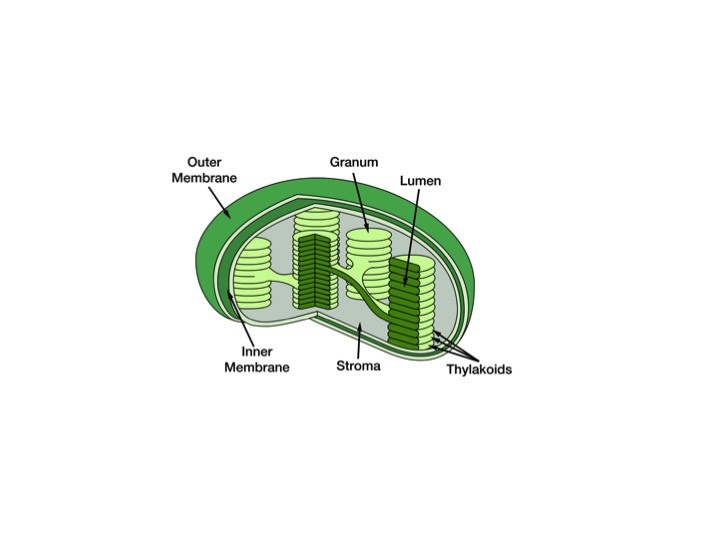
This is a:
Mitochondria
Chloroplast
What is the basic unit of life?
Organ
Cell
Tissue
Organism
H2O

Which of the following accurately describes the chemical formula of the molecule shown above?
3CH8O
C3H7O
C4H8O2
C3H8O


Pluto is a..?
Tiny planet
Dwarf planet
A planet
Moon
Which statement is correct about the inner planets?
They are more dense than the outer planets
They are larger than the outer planets
They are farther from the sun than the outer planets
They do not revolve around the sun
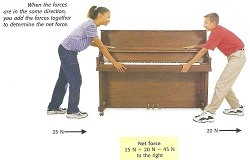
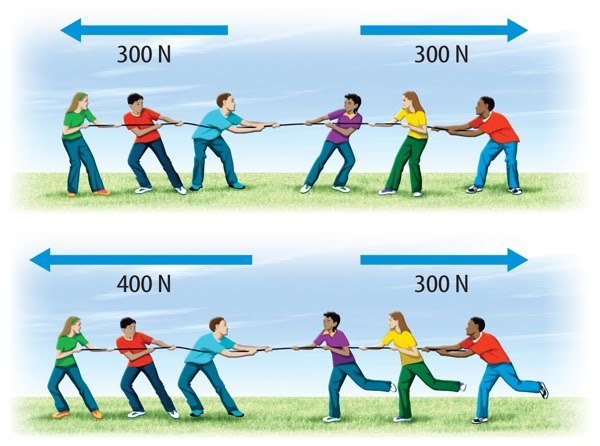
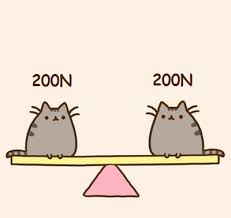
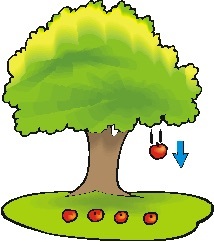
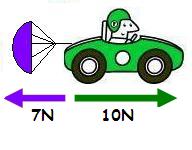
Which is NOT an example of Acceleration?
An object speeds up
An object slows down
An object changes direction
An object is in constant motion.
True or False: You are standing at the bus stop and not moving at all. Since you are not moving, your acceleration would be 0 (zero). Support with how you know.
True since you are not speeding up, slowing down or changing directions.
True since you are traveling no distance in a certain amount of time.
False since you are speeding up, slowing down and/or changing directions.
False since you were going to get on a moving bus.


What is another name for Newton’s 1st law?
Law of Inertia
Law of Acceleration
Law of Action/Reaction
What is the formula for the law of acceleration?
M = F x A
F = M x A
A = F x M

Which of Newton's laws is shown
1st law
3rd law
2nd law
What force slows objects down and keeps them from moving?
Acceleration
Gravity
Friction
Net Force



