wayground logo

Free Printable Worksheets

Font size

S
M
L
XL
Worksheets

PMA 3 Cells, Cell Theory, Homeostasis, Organization & Symbiotic

Total questions: 60

Worksheet time: 47mins

Name
Class
Date
1.

All organisms are made of

a)

organs

b)

tissues

c)

cells

2.

The idea that all living things are composed of cells, the cell is the basic unit of structure and function, and all cells come from cells is known as the

a)

Theory of relativity

b)

Agenda Theory

c)

Cell Theory

d)

Theory of naturalization

3.

Control center of the cell

a)

Cell Membrane

b)

Endoplasmic reticulum

c)

Ribosome

d)

Nucleus

4.

Name the symbiosis.

a)

Parasitic

b)

Mutualism

c)

Commensalism

d)

Symbiotosis

5.

Name the symbiosis.

a)

Mutualism

b)

Commensalism

c)

Parasitic

d)

Symbiotosis

6.
a)

Mutualism

b)

Commensalism

c)

Parasitic

d)

Symbiotosis

7.

Name the symbiosis

a)

Mutualism

b)

Commensalism

c)

Parasitic

d)

Symbiotosis

8.
Two organisms fighting over the same resource.
a)
commensalism
b)
niche
c)
competition
9.
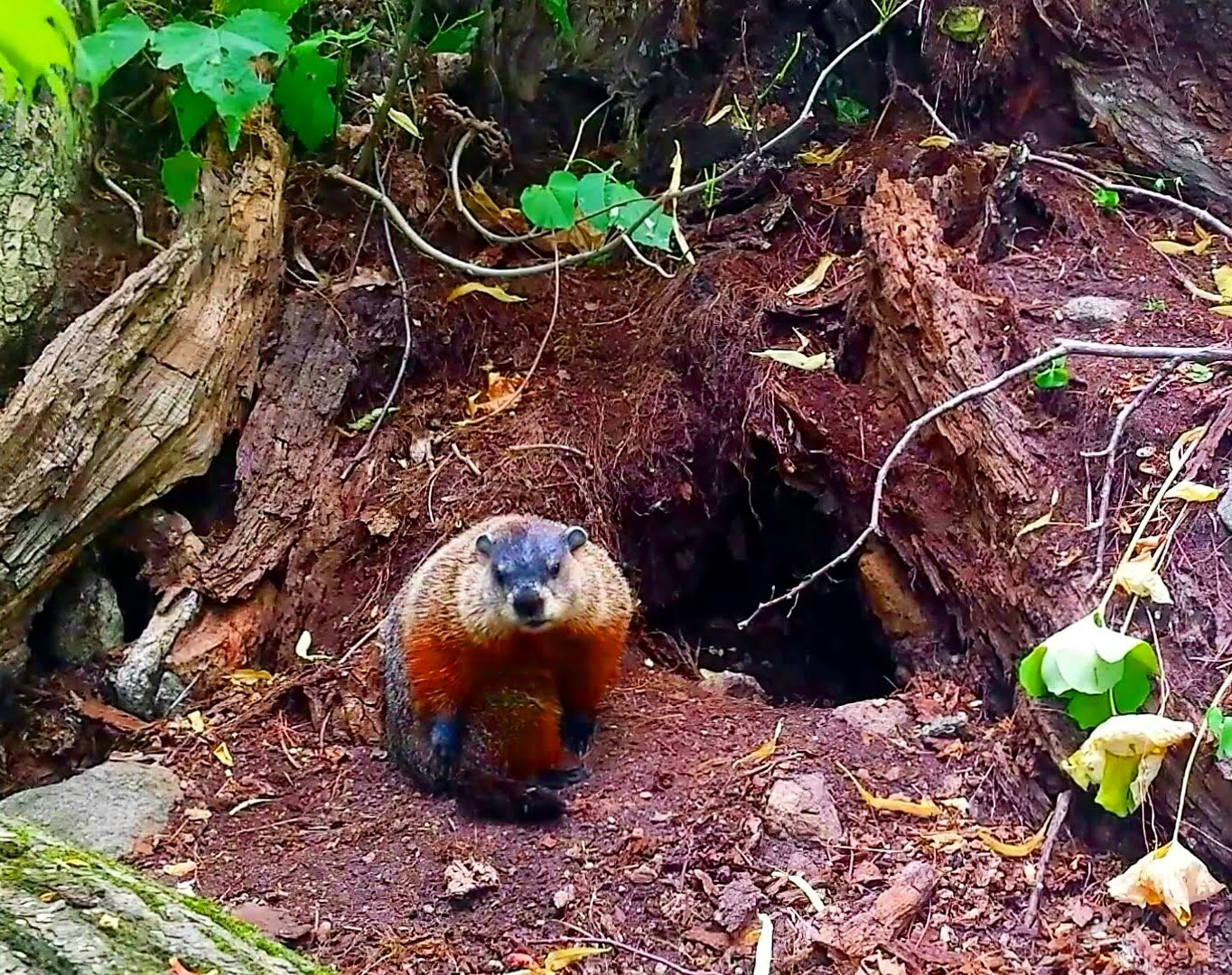
What type of symbiosis?  Skunks often live in burrows that have been dug and abandoned by woodchucks.  
a)
commensalism
b)
mutualism
c)
parasitism
d)
predation
10.
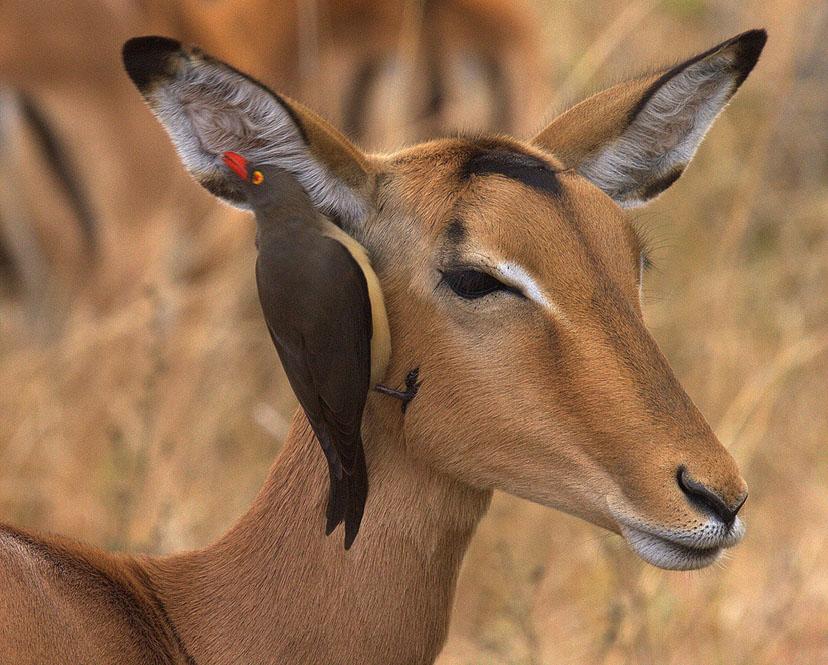
Red-billed oxpeckers are birds that often feed on parasites that infest impala.  This is an example of _______.
a)
commensalism
b)
mutualism
c)
neutralism
d)
competition
11.
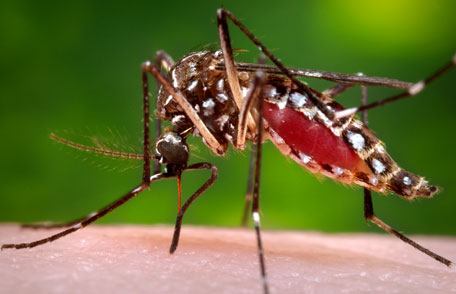
When a mosquito bites you, you are the __________ and the mosquito is the  ____________.
a)
host, hostess
b)
parasite, host
c)
host, parasite
d)
prey, predator
12.

A 3-point buck is killed by a hunter. What type of symbiotic relationship is this?

a)

mutualsim

b)

commensalism

c)

parasitism

d)

predation

13.

Mosquitoes are parasitic with humans because:

a)

They feed off human blood

b)

The human host is harmed

c)

They are annoying

d)

they spread disease

14.

A relationship in which two different organisms live in close association with each other

a)

Symbiosis

b)

Predation

c)

Mutualism

15.
In this food web, the grasshopper and the mouse have this relationship:
a)
mutualism
b)
commensalism
c)
competition
d)
predation
16.
a deer population has significantly increased, the best hypothesis is 
a)
the deer's main predator has been eliminated
b)
competition increased
c)
decreased water levels of local ponds
d)
organisms that rely on similar food sources migrated to the area
17.
Which event is the best example of competition between species in a pond?
a)
dragonflies landing on lily pads
b)
lizards and snakes lying in the sun
c)
hawks eating mice
d)
frogs and toads eating flies
18.
Grass is considered a ...
a)
consumer
b)
producer
c)
decomposer
d)
composers
19.
An organism that gets energy from eating other organisms is a ______________
a)
producer
b)
consumer
c)
decomposer
d)
prey
20.
What are the organisms that break down dead stuff?
a)
Producers
b)
Consumers
c)
Decomposers
d)
Organisms
21.
A cell is...
a)
the basic unit of structure and function in living organism
b)
an organism
c)
a basic part of everything that we see
d)
found only in animals, not plants
22.
Which of the following are NOT found in animal cells
a)
chloroplasts and cytoplasm
b)
chloroplasts and cell wall
c)
cell wall and cell membrane
d)
mitochondria and nucleus
23.

Which of the following converts food into energy for the cell?

a)

vacuole

b)

mitochondria

c)

cytoplasm

d)

cell membrane

24.
What do vacuoles do? 
a)
They actually do not have an important role
b)
They protect the cell
c)
They are the brain of the cell
d)
storage area for cells; water storage in plants 
25.
Which of the following, found ONLY in plant cells, provides structure?
a)
cell wall
b)
chloroplast
c)
mitochondria
d)
vacuole
26.
The maintenance of an organism’s internal environment is called:
a)
compensating
b)
homeostasis
c)
balancing
d)
routine
27.
What is another word that can be used to describe "homeostasis"?
a)
STABLE
b)
EQUAL
c)
COMPLETE
d)
CORRECT
28.

Which of the following could help you maintain homeostasis? Choose all that apply

a)

Going to the bathroom

b)

Riding a roller coaster

c)

Sweating

d)

Eating a snack

e)

Taking a test

29.
What is one way in which all living things on Earth are alike?
a)
All living things have hair.
b)
All living things are made of cells and come from other cells.
c)
The cells of all living things have chloroplast.
d)
All living things can move. 
30.
When cells are damaged, new cells are created by cell division. How does the cell theory support this fact?
a)
It states that all cells have a nucleus which divides.
b)
It states that all living things are made up of one or more cells.
c)
It states that cells come from previously existing cells.
d)
 It states that the basic units of structure and function are cells.
31.

Cell theory states that...

a)

cells are the basic building block of life

b)

cells are cool

c)

cells are microscopic

d)

cells cannot be destroyed

32.

Which statement was NOT included in cell theory?

a)

All living things are composed of cells.

b)

Living cells come only from other living cells.

c)

Each cell contains a cell membrane, cytoplasm, nucleus, mitochondria, and endoplasmic reticulum.

d)

Cells are the smallest structure of living things that can perform the functions necessary for life.

33.
What are the 7 levels of classification, listed in order from most specific to least specific?
a)
a.  Kingdom, phylum, order, class, family, genus, species 
b)
Kingdom, phylum, class, order, family, genus, species 
c)
Species, genus, family, order, class, phylum, kingdom
d)
Species, genus, order, class, family, phylum, kingdom 
34.
What is the most specific level of classification?
a)
Family
b)
Domain
c)
Species
d)
Carolus Linnaeus
35.
What is the correct order of organization
a)
tissues-cells-organs-organ systems-organism
b)
cell-tissue-organs-organ systems-organism
c)
organism-cells-tissues-organ systems-organism
d)
tissues-cells-organs-organ sytems-organism
36.
I am one of the structures found only in the plant cell.  What is in the picture?
a)
cell wall
b)
mitochondria
c)
cytoplasm
d)
chloroplast
37.
I store water in both plant and animal cells. What am I?
a)
cytoplasm
b)
ribosomes
c)
vacuole
d)
lysosomes
38.
I am the outer most layer of an animal cell, controlling what enters and leaves the cell. What am I?
a)
cell wall
b)
nucleus
c)
cell membrane 
d)
cell skin
39.
Which part of the cell is often called "the brain of the cell"?
a)
nuclear membrane
b)
endoplasmic reticulum
c)
nucleus
d)
ribosomes
40.
Which structure is found in plant cells and not in animal cells?
a)
cell wall
b)
centriole
c)
nucleus
d)
cytoplasm
41.
Which organelle breaks down glucose and converts it to energy for the cell?
a)
mitochondria
b)
nucleus
c)
chloroplasts
d)
vacuoles
42.
Consists of a jelly-like substance that contains many organelles.
a)
ribosomes
b)
cytoplasm
c)
chloroplasts
d)
cell wall
43.
Gives the cell a rigid, box-like shape; outside of the cell membrane; in plants.
a)
cytoplasm
b)
chromatin
c)
cell wall
d)
cell membrane
44.

This rainforest organism is multicellular and autotrophic.

a)

Domain Eukarya, Kingdom Plantae

b)

Domain Achaea, Kingdom Plantae

c)

Domain Eukarya, Kingdom Fungi

d)

Domain Eukarya, Kingdom Protista

45.

This rainforest organism is unicellular with no nucleus and live in the soil.

a)

Domain Bacteria, Kingdom Bacteria

b)

Domain Arachea, Kingdom Archaea

c)

Domain Eukarya, Kingdom Protista

d)

Domain Eukarya, Kingdom Fungi

46.
I am unicellular
I am prokaryotic
I am found in extreme ecosystems
What kingdom do I belong to?
a)
The Candy Kingdom
b)
Kingdom Plantae
c)
Kingdom Animalia
d)
Kingdom Archaebacteria
47.
Kingdom Animalia is
a)
Eukayotic
b)
Prokaryotic
c)
Pick me!
d)
No, Pick me!!
48.
Kingdom Archaebacteria is...
a)
unicellular
b)
multicellular
c)
bigger than life!
d)
really pretty, just so pretty.
49.
My Kingdom includes mushrooms and yeast!
a)
Animalia
b)
Plantae
c)
Eubacteria
d)
Fungi
50.
In my kingdom, we have strange and amazing members that don't seem to fit well in any of the other kingdoms.
Who am I?
a)
Plantae
b)
Animalia
c)
Oz
d)
Protista
51.
What is the difference between unicellular and multicellular?
a)
They are the same
b)
One has a nucleus and one doesn't
c)
Unicellular has one cell and multicellular has many 
d)
One is bacteria and the is archaebacteria
52.

A cell that does not have a nucleus is a

a)

Multicelular

b)

Prokaryotic

c)

Eukaryotic

d)

Unicellular

53.
Which is TRUE about members of the domain Eukarya?
a)
They have a nucleus
b)
They are only multicellular
c)
They are only heterotrophs
d)
They all have cell walls and chloroplasts
54.
The broadest or most general taxonomic classification of living organisms is organized by -- 
a)
Kingdom
b)
Domain
c)
Species
d)
Organisms
55.
What are the three domains?
a)
Archaea, Bacteria, and Eubacteria
b)
Archaea, Protists, and Eubacteria
c)
Archaea, Bacteria, and Eukarya
d)
Archaea, Fungi, Animalia
56.
How many generations are shown in this pedigree?
a)
1
b)
2
c)
3
d)
4
57.
In the second generation-how many people are carriers of the trait?
a)
2
b)
3
c)
5
d)
6
58.
In the second generation-how many people have the disease or display the physical trait?
a)
2
b)
4
c)
5
d)
6
59.
If B = brown hair and b = blonde hair, what is the probability of brown hair?
a)
25%
b)
50%
c)
0%
d)
75%
60.

One parent producing offspring without meiosis and fertilization that creates offspring identical to the parent is called...

a)

asexual reproduction.

b)

sexual reproduction.