wayground logo

Free Printable Worksheets

NEW

Font size

S
M
L
XL
Worksheets

Unit 6: Weather and Climate - Review

Total questions: 62

Worksheet time: 44mins

Name
Class
Date
1.
Air pressure is greatest:
a)
closer to Earth
b)
farther from Earth
2.
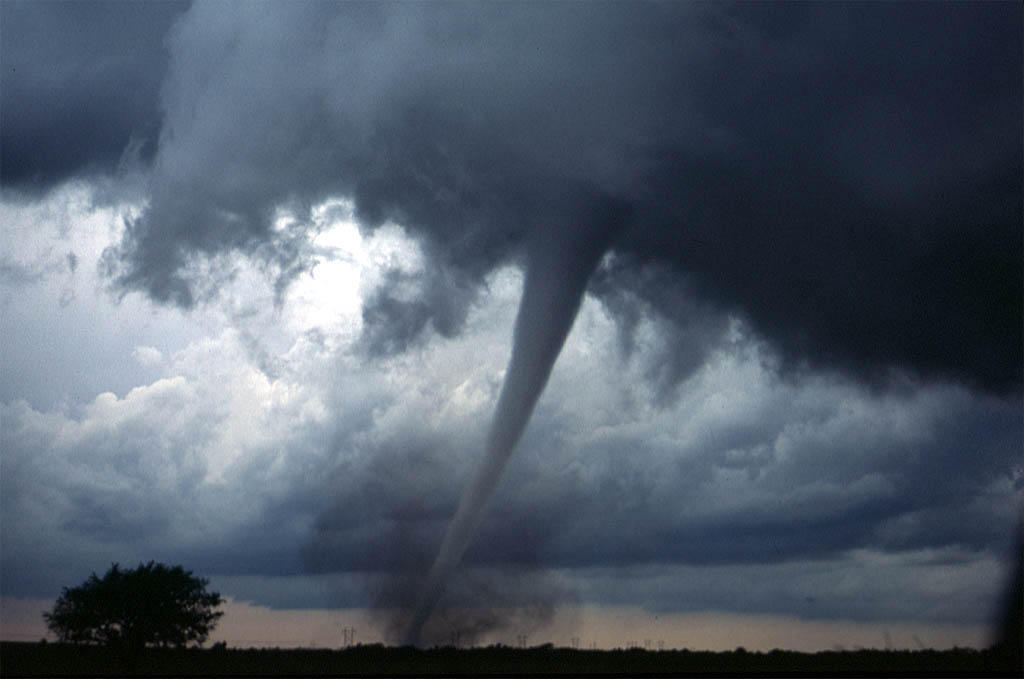
A severe storm which involves a funnel cloud forming over land is:
a)
hurricane
b)
tornado
c)
thunderstorm
d)
blizzard
3.
A severe storm that involves winds over 119mph and forms over water is:
a)
tornado
b)
thunderstorm
c)
hurricane
d)
blizzard
4.
This severe weather involves low temperatures and snow either falling or drifting
a)
hurricane
b)
thunderstorm
c)
tornado
d)
blizzard
5.
The boundary  between two air masses is known as:
a)
front
b)
storm
c)
climate
d)
flood
6.
Cold air traveling south from Canada is:
a)
continental tropical
b)
continental polar
c)
maritime tropical
d)
maritime polar
7.
Warm air moving upwards from the Gulf of Mexico is:
a)
continental tropical
b)
continental polar
c)
maritime tropical
d)
maritime polar
8.
Warm air mass that does not carry water:
a)
continental tropical
b)
continental polar
c)
maritime tropical
d)
maritime polar
9.
Cold air mass that is carrying water is:
a)
continental tropical
b)
continental polar
c)
maritime tropical
d)
maritime polar
10.
These can be produced by thunderstorms
a)
stationary fronts
b)
tornadoes
c)
volcanoes
d)
tsunamis
11.
This type of front can bring strong storms
a)
cold
b)
warm
c)
stationary
d)
occluded
12.
This type of front results in the same weather for several days
a)
warm
b)
cold
c)
stationary
d)
occluded
13.
This weather tool measures wind speed and direction
a)
thermometer
b)
barometer
c)
anemometer
d)
psychrometer
14.
Which weather tool measures air pressure?
a)
thermometer
b)
barometer
c)
anemometer
d)
psychrometer
15.
Large body of air with the same temperature, pressure, and moisture characteristics is called?
a)
warm front
b)
cold front
c)
air mass
d)
jet stream
16.
______ is the average pattern for weather over a long period of time.
a)
climate
b)
weather
c)
forecast
d)
sunlight
17.
The result of the weight of a column of air pushing down on an area is called _.
a)
altitude
b)
pressure
c)
density
d)
air pressure
18.
What does the picture show?
a)
climate
b)
weather 
19.
What does the picture show?
a)
climate
b)
weather 
20.

To make this prediction, meteorologist could use _________ data because air flows from _________ pressure areas.

a)

air pressure, high to low

b)

relative humidity, high to low

c)

rainfall, low to high

d)

temperature, low to high

21.
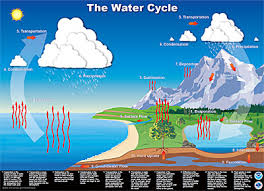
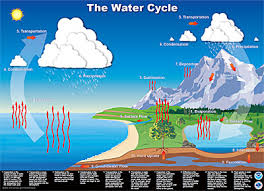
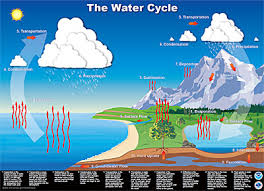
During which stage do clouds form?
a)
condensation
b)
evaporation
c)
precipitation
22.
Which stages does liquid water from the ocean turn into water vapor?
a)
condesantion
b)
evaporation
c)
precipitation
d)
run off
23.
Which stage does ground water try to return to the ocean or soak into the ground?
a)
condensation
b)
evaporation
c)
precipitation
d)
run off
24.
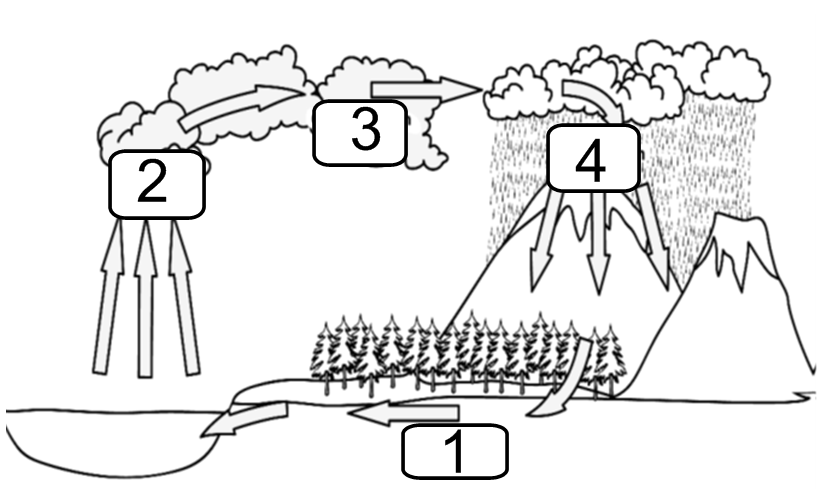
Which stage does the #2 show in the diagram?
a)
condensation
b)
evaporation
c)
precipitation
d)
run off
25.
Which stage does the #3 show in the diagram?
a)
condensation
b)
evaporation
c)
precipitation
d)
run off
26.
what does the #4 show in the diagram?
a)
condensation
b)
evaporation
c)
precipitation
d)
run off
27.
What is the water cycle?
a)
the 3 forms of water
b)
the movement of water on, above, or below the surface of the Earth
c)
when water melts
d)
when clouds form
28.
Which is the opposite of condensation?
a)
runoff
b)
evaporation
c)
precipitation
d)
transpiration
29.

Which example is a form of precipitation?

a)

Dew

b)

Fog

c)

Frost

d)

Hail

30.

What would happen if the Sun is removed from the water cycle?

a)

The water cycle would not include precipitation but would continue with groundwater flow.

b)

The water cycle would no longer occur because the Sun provides the energy for evaporation and transpiration.

c)

The water cycle would no longer occur because the Sun provides energy for the formation of clouds.

d)

The water cycle would not include evaporation and transpiration but would continue with condensation.

31.

A student draws a model to represent the precesses involved in the water cycle, as shown. To which process is the formation of clouds related?

a)

Condensation

b)

Evaporation

c)

Freezing

d)

Melting

32.

The image shows various stages in the water cycle. During which stage does water flow back towards the sea as runoff?

a)

W

b)

X

c)

Y

d)

Z

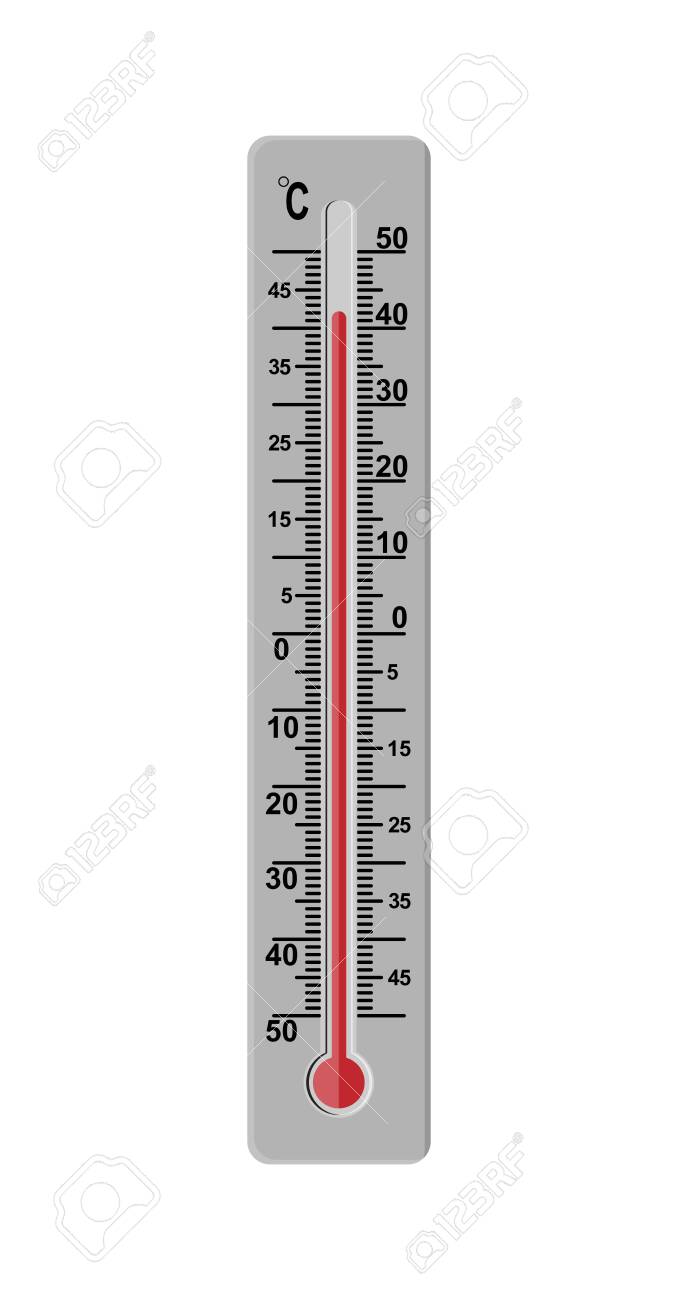
33.

What is this instrument?

a)

Thermometer

b)

Barometer

c)

Anemometer

d)

wind vane

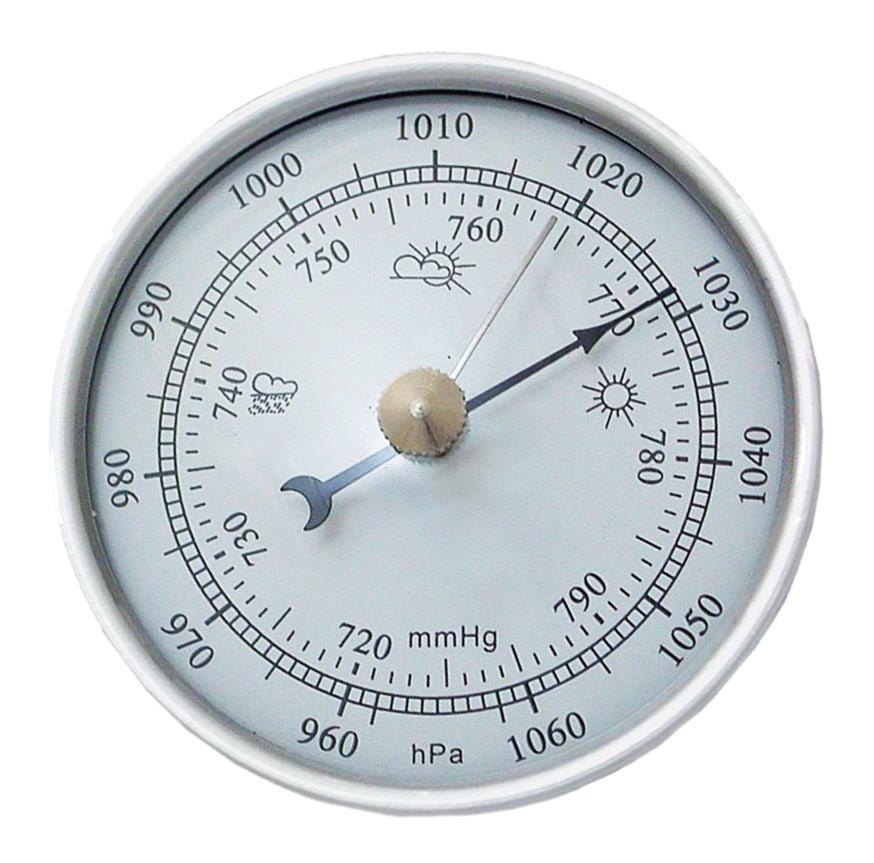
34.

What is this instrument?

a)

Thermometer

b)

Barometer

c)

Anemometer

d)

wind vane

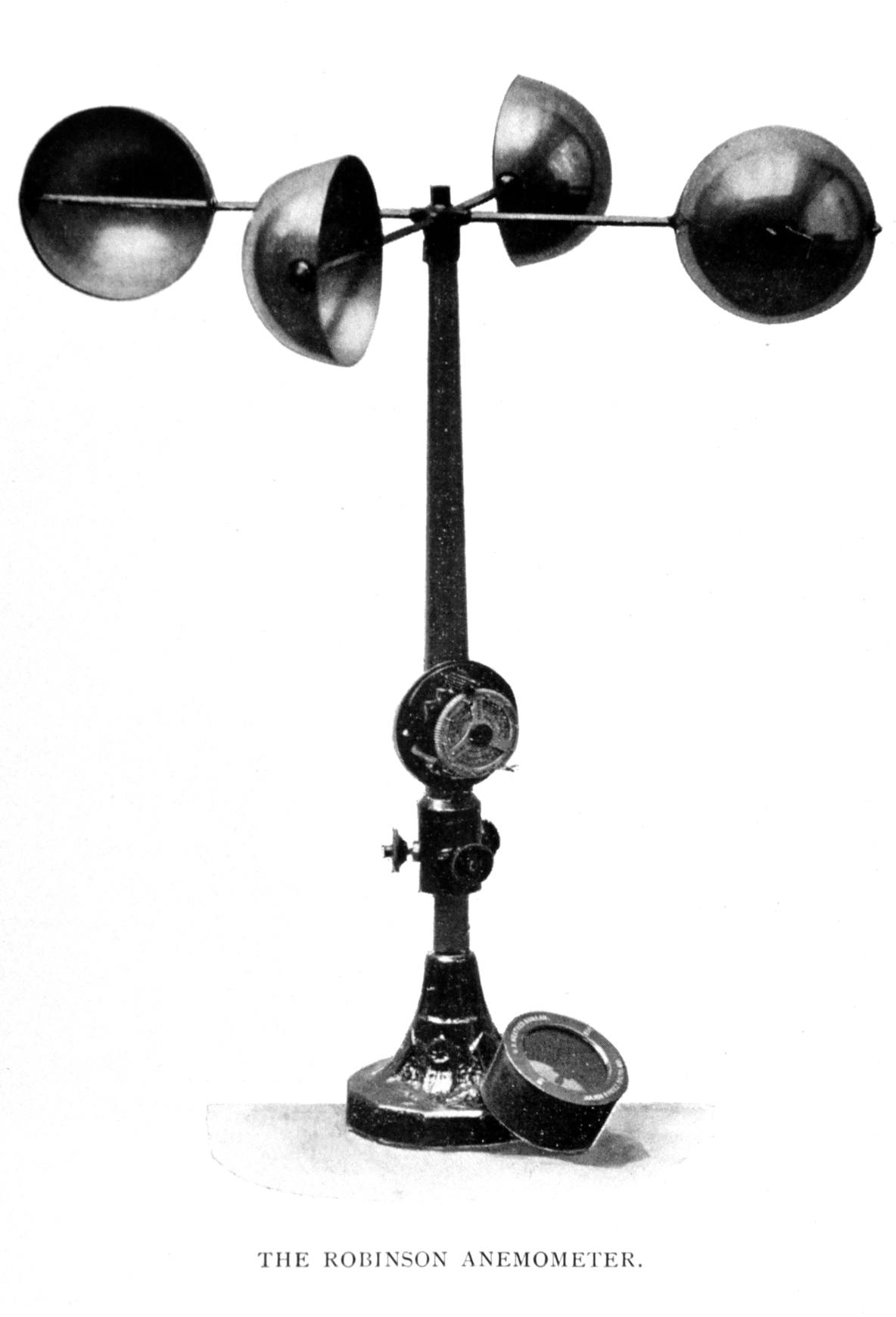
35.

What is this instrument?

a)

Thermometer

b)

Barometer

c)

Anemometer

d)

wind vane

36.

What is the barometer used for?

a)

To measure the wind speed

b)

To measure the air pressure

c)

To measure the temperature

d)

To measure the amount of water vapor in the air

37.

What is the thermometer used for?

a)

To measure the wind speed

b)

To measure the air pressure

c)

To measure the temperature

d)

To measure the amount of water vapor in the air

38.

What is the anemometer used for?

a)

To measure the wind speed

b)

To measure the air pressure

c)

To measure the temperature

d)

To measure the amount of water vapor in the air

39.

The short term state of the atmosphere

a)

Clouds

b)

Weather

c)

Humidity

d)

Climate

40.
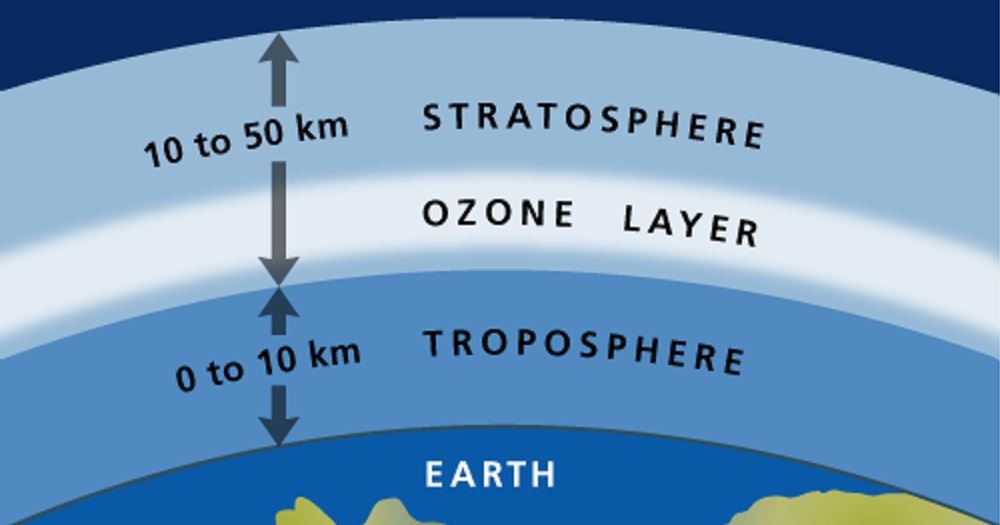
In which layer of the atmosphere does weather occur?
a)
Mesosphere
b)
Thermosphere
c)
Stratosphere
d)
Troposphere
41.
Where do we live?
a)
stratosphere
b)
thermosphere
c)
troposphere
d)
mesosphere
42.
The hottest layer of the atmosphere is the ________________.
a)
troposphere
b)
thermosphere
c)
exosphere
d)
mesosphere
43.
The function of the ozone layer is to _________________________. 
a)
allow UV rays to get to Earth
b)
block UV rays from getting to Earth
c)
keep oxygen in
d)
allow meteors to get to Earth
44.
Temperature decreases as altitude increases in the Troposphere.
a)
True
b)
False
45.
Layer of the atmosphere that is the coldest:
a)
troposphere
b)
stratosphere
c)
mesosphere
d)
thermosphere
46.
Which layer of the atmosphere has the greatest amount of air pressure?
a)
troposphere
b)
stratosphere
c)
mesosphere
d)
exosphere
47.
As altitude increases in the Troposphere, what happens to the air temperature?
a)
air temperature increases
b)
temperature decreases
c)
temperature fluctuates
d)
temperature rises
48.

According to this graph, which two layers are warmer at lower altitude and get steadily colder as altitude increases?

a)

Troposphere and Mesosphere

b)

Stratosphere and Thermosphere

c)

Mesosphere and Thermosphere

d)

Troposphere and Stratosphere

49.

The faster molecules move...

a)

The hotter the temperature

b)

The colder the temperature

c)

Speed of molecules has nothing to do with temperature.

50.

The slower molecules move...

a)

The hotter the temperature

b)

The colder the temperature

c)

Speed of molecules has nothing to do with temperature.

51.

Where do MARITIME air masses form?

a)

Over water

b)

Over land

52.

Where do CONTINENTAL air masses form?

a)

Over water

b)

Over land

53.

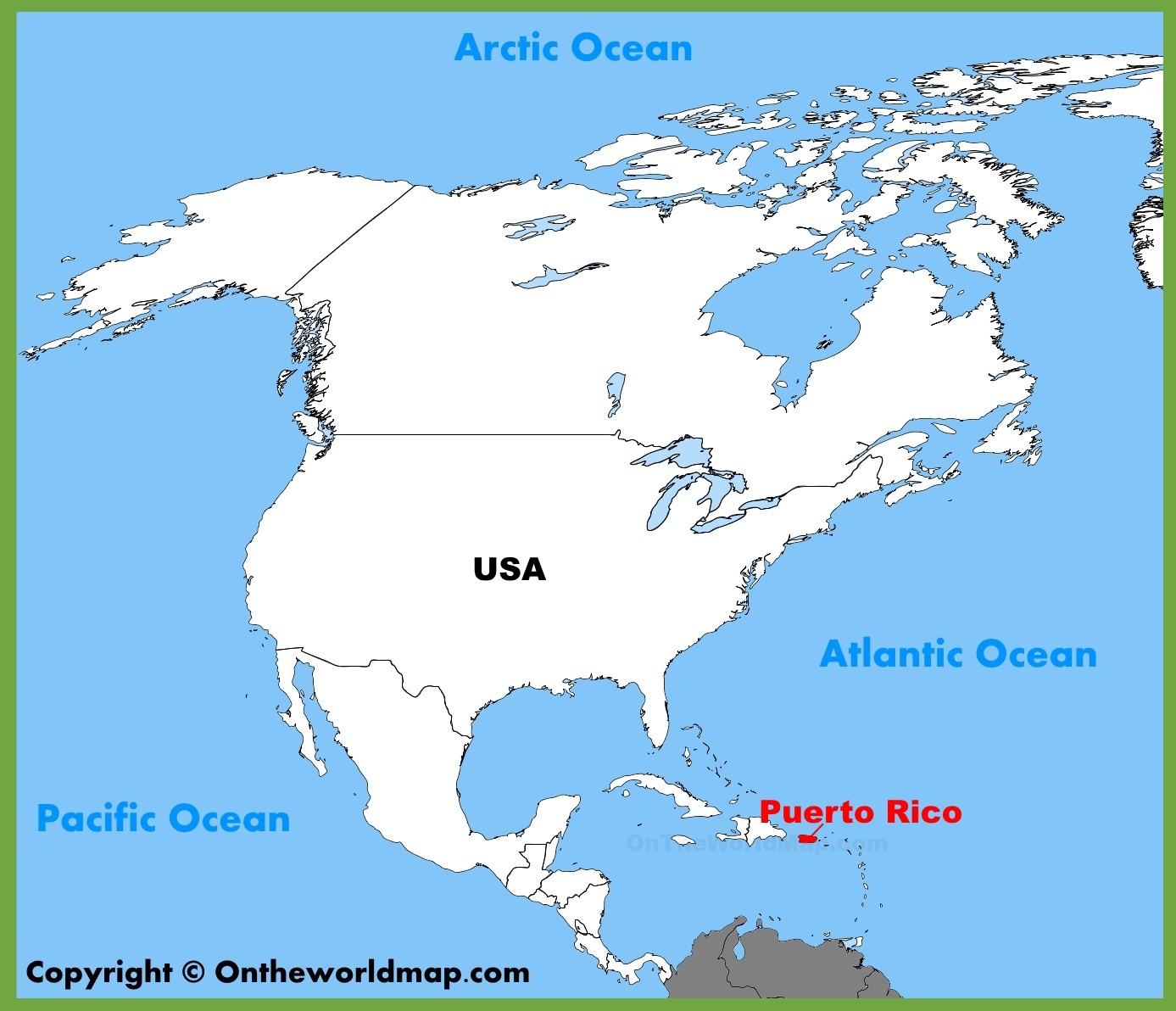
What type of air mass is found over PUERTO RICO?

a)

Maritime Polar

b)

Maritime Tropical

c)

Continental Polar

d)

Continental Tropical

54.

Which type of air mass is HOT and DRY?

a)

Maritime Polar

b)

Maritime Tropical

c)

Continental Polar

d)

Continental Tropical

55.

Which type of air mass is HOT and HUMID?

a)

Maritime Polar

b)

Maritime Tropical

c)

Continental Polar

d)

Continental Tropical

56.

Which type of air mass is COLD and HUMID?

a)

Maritime Polar

b)

Maritime Tropical

c)

Continental Polar

d)

Continental Tropical

57.

Which type of air mass is COLD and DRY?

a)

Maritime Polar

b)

Maritime Tropical

c)

Continental Polar

d)

Continental Tropical

58.
How do we name air masses?
a)
Water and temperature
b)
Air pressure
c)
Humidity and temperature
d)
Cold and warm
59.
How do we characterize an air mass that forms over the ocean?
a)
Dry
b)
Wet
c)
Cold
d)
Warm
60.
How do we characterize an air mass that forms over land?
a)
Dry
b)
Wet
c)
Cold
d)
Warm
61.
How do we characterize an air mass that forms over near the equator?
a)
Dry
b)
Wet
c)
Cold
d)
Warm
62.
How do we characterize an air mass that forms near the poles?
a)
Dry
b)
Wet
c)
Warm
d)
Cold