
 Worksheets
Midterm Review
Total questions: 68
Worksheet time: 40mins

Inner Planets are relatively...
Bigger
Smaller

Outer Planets are relatively...
Bigger
Smaller

An atmosphere is...
Gasses on the sun
Gasses surrounding a Planet
Gasses inside a Planet
Water on a Planet

The Only Planet that does not have an atmosphere is...
Jupiter
Earth
Neptune
Mercury

The only planet that we know can support life is...
Earth
Venus
Mars
Uranus

The inner planets have....... surfaces and are...
Gas and closer to the sun
Solid and closer to the sun
Gas and farther from the sun
Solid and farther from the sun
The outer planets have....... surfaces and are...
Gas and closer to the sun
Solid and closer to the sun
Gas and farther from the sun
Solid and farther from the sun
I am sometimes called Earth's Twin, Who Am I?
(a)
I am a a gas giant with a big red storm on me that has been going on for centuries. Who am I?
(a)
I am known as a dwarf planet because I am so small. Who am I?
Mercury
Neptune
Mars
Pluto

When the northern hemisphere is tilted towards the sun, it is
spring in the northern hemisphere
summer in the northern hemisphere
fall in the northern hemisphere
winter in the northern hemisphere


What type of eclipse is this an example of?
Lunar Eclipse
Solar Eclipse
seasons
each of four divisions of the year marked by particular weather patterns and daylight hours
the conditions of the atmosphere at a particular time and place
the weather conditions in a particular place over a long period of time
the air that surround the Earth
tides
the partial or total blocking of light of one object by another
water that falls to Earth's surface as rain, snow, sleet, or hail
the rising and falling of the ocean's surface
a large hole in the ground caused by an asteroid
eclipses
the rising and falling of the ocean's surface
the partial or total blocking of light of one object by another
the shape of the lit part of the moon as seen from Earth
the air that surrounds Earth
moon phases
the shape of the lit part of the moon as seen from Earth
a large hole in the ground caused by an asteroid
the air that surround the Earth
an object that orbits another object in space
Which season has the shortest hours of daylight?
Autumn
Summer
Spring
Winter
How long does it take the Earth to complete a full rotation around its axis?
31 days
24 hours
365 days
12 hours
Why is it dark at night?
We need to sleep
Clouds cover the Sun at night
The Sun goes to the other side of the world
The Sun is still shining but we are on the shadow side of the Earth
What is the main cause of the seasons?
the speed at which the Earth spins on its axis
the tilt of the Earth's axis
the distance between the Sun and Earth changing
the speed at which the Earth rotates around the Sun

Study this diagram carefully. Which season is the northern hemisphere experiencing?
Winter
Summer
Spring
Autumn
How long does it take the Moon to orbit the Earth?
24 hours
365 days
28 days
31 days

Which pole is pointed towards the Sun when the Northern Hemisphere is experiencing winter?
North Pole
the equator
South Pole
Earth's axis
What causes the Moon to light up?
it creates its own light
reflection of the sun
atmospheric gases
When does summer occur in Australia?
Dec, Jan, Feb
March, Apr, May
Jun, Jul, Aug
Sep, Oct, Nov
Where does Earth's energy come from?
boiling water
electricity
the Sun
heat inside the Earth
All of the Sun's energy makes it to Earth's surface.
True
False
Some of the Sun's energy is reflected off of clouds.
True
False
Most of the heat coming from Earth's surface is stopped by clouds and certain gasses
True
False

The way in which heat is trapped close to the surface of Earth by gases in our atmosphere is known as
The Trapping Effect
The Gaseous Effect
The Greenhouse Effect
The Earth Energy Budget Effect

What amount of incoming solar energy is absorbed by atmosphere and clouds ?
23%
51%
49%
19%

Electromagnetic waves of energy from the sun heat our atmosphere and this energy distribution is known as
convection
conduction
radiation
pressurization

Which color of light has the longest wavelength?
violet
green
blue
red

If greenhouse gases increase and build up in our atmosphere, what happens?
They trap more heat and global temperatures rise.
They trap more heat and global temperatures decrease.
They trap less heat and global temperatures rise.
They trap less heat and global temperatures decrease.

The energy coming in to from the sun minus the energy being radiated out is known as
the greenhouse effect
global warming
Earth's energy budget
the electromagnetic spectrum
The wavelengths of electromagnetic energy that can be seen by humans is known as
ultrared radiation
visible light
ultraviolet radiation
infrared radiation

According to the diagram, what can happen when solar energy hits clouds in Earth's atmosphere?
it can be reflected or absorbed
it can only be absorbed
it can only be reflected
it is neither reflected nor absorbed
Which type of solar energy has the longest wavelength?
ultraviolet radiation
they all have the same wavelengths
visible light
infrared radiation
Infrared Light is
the light you can see from the sun
this is where most of the warmth that you feel from the sun comes from
higher-energy radiation that can harm life
Ultraviolet light is
the light you can see from the sun
this is where most of the warmth that you feel from the sun comes from
higher-energy radiation that can harm life
True or False:
An unbalanced energy budget can increase or decrease global temperatures and disrupt the balance of energy in Earth's system.
True
False

Earth's energy budget is like an equation. Choose the correct equation.
energy in = energy out
energy in is less than energy out
energy in is more than energy out

The sun transfers energy to Earth by radiation
True
False
What are the 3 subatomic particles of an atom?
shell, proton, electron
cloud, neutrons, protons
nucleus, protons, electrons
protons, neutrons, electrons
Which subatomic particle has a negative charge?
proton
neutron
electron
Which subatomic particle has a positive charge?
proton
neutron
electron
Which subatomic particle has a neutral or no charge?
proton
neutron
electron

What two parts of an atom make up the nucleus of the atom?
Electron and Protons
Neutron and Protons
Proton and Electrons

What is "a" in the picture?
Proton
Electron
Neutron
What is "b" in the picture?
Proton
Electron
Neutron
What is "c" in the picture?
Proton
Electron
Neutron
A region around the nucleus of an atom where electrons are likely to be found.
Electron Cloud or shell
Nucleus
Protons
Electrons
How many atoms of O in CO2
2
1
0
3
a molecule made of 2 or more atoms
double atom
product
compound
reactants
Which example provides evidence of a chemical change?
Wood releases ash and smoke when burned.
Rock particles separate when soil is being sifted.
Boiling water bubbles when being heated.
Sugar is not visible when dissolved in water.

What kind of change is cutting paper?
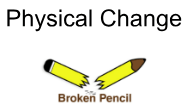
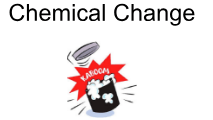
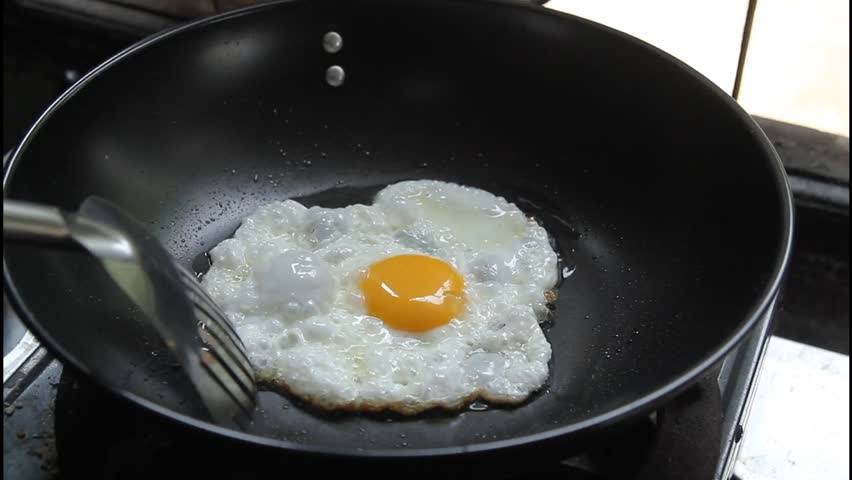
What kind of change is frying an egg?
How many oxygen atoms are in the products for the chemical reaction below?
4Fe + 3O2 → 2Fe2O3
2
3
5
6
How many atoms are in the products below?
4Fe +3O2 → 2Fe2O3
7
10
17
20
H2 + O2 --> H2O

