
 Worksheets
Unit 4 - Cycles and Patterns of Earth and the Moon
Total questions: 70
Worksheet time: 37mins
Air is made up of atoms and molecules.
True
False
Air is made up of a mixture of many different kinds of gases.
True
False
Which gas is the most common in our air?
Nitrogen
Hydrogen
Helium
Oxygen
What is altitude?
The weight of a column of air pushing down on an area
The amount of Mass in a given volume
The force pushing on an area
The distance/elevation above sea level
What is air pressure?
The weight of a column of air pushing down on an area
The Amount of Mass in a given volume
The force pushing on an area
The distance above sea level
What tool is used to measure air pressure?
thermometer
hot-air balloon
barometer
satellite
As I walk up Mount Everest, the density of air ________.
decreases
increases
During summer, many people visit Baguio city because of the cold weather. What do you think makes Baguio cold?
Altitude
Latitude
Topography
Distance from bodies of water

Based on the data, what is the relationship between altitude and temperature of a place?
As the altitude increases, the temperature decreases.
As the altitude decreases, the temperature decreases.
The Earth's atmosphere is mainly made of __________.
water
snow
wax
air
The layer of atmosphere closest to the Earth is called the _________.
mesosphere
stratosphere
troposphere
proctosphere
Air in the atmosphere is 21% ___________.
Einsteinium
nitrogen
oxygen
carbon dioxide
What is the job of the ozone layer?
It is green and purple and adds color to the sky.
It absorbs dangerous ultraviolet radiation from the Sun.
It adds smell to the atmosphere.
It is made of carbon dioxide from the greenhouse gases and keeps the earth warm.
The greenhouse effect causes the Earth's air to ________.
heat up
cool down
blow up
turn brown
The ozone layer is located in the__________.
biosphere
atmsophere
geosphere
cryosphere
The ozone layer occurs in the __________.
troposphere
thermosphere
stratosphere
exosphere
If the ozone layer were to be completely destroyed, life on Earth would ____________.
grow larger
become cold and get smaller
receive too much solar radiation
stay the same
The ___________ is the process by which gases in the atmosphere absorb and give off heat.
ozone layer
greenhouse effect
coriolis effect
thermosphere
Most of Earth's weather occurs in the __________.
troposphere
stratosphere
mesophere
thermosphere
True
False
Jet planes fly in this layer_______.
Mesosphere
Stratosphere
This is the coldest layer of the atmosphere.
Troposphere
Mesosphere
________ which come from outer space, burn up in Mesosphere.
Meteors
Stars

Where most water vapor is found.
Troposphere
Stratosphere
Mesosphere
Thermosphere
All of the above.
Hottest layer, thinnest air.
Troposphere
Stratosphere
Mesosphere
Thermosphere
All of the above.
Where satellites orbit.
Troposphere
Stratosphere
Mesosphere
Thermosphere
All of the above.
Air pressure decreases as altitude increases.
Troposphere
Stratosphere
Mesosphere
Thermosphere
All of the above.
Which layer of atmosphere is the farthest from Earth?
Mesosphere
Stratosphere
Thermosphere
Exosphere
In which layer of the atmosphere do we live?
stratosphere
thermosphere
troposphere
mesosphere
Which of Earth's spheres includes the interior and exterior of Earth's surface (soil, rocks, minerals, etc.)?
Biosphere
Hydrosphere
Geosphere
Atmosphere
Which sphere of Earth includes all living things?
Atmosphere
Biosphere
Geosphere
Hydrosphere
All of the water on Earth is in this sphere of Earth:
Hydrosphere
Geosphere
Atmosphere
The clouds and moon are part of this sphere of Earth:
Hydrosphere
Atmosphere
Biosphere

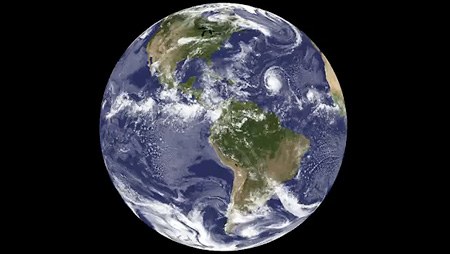
Which of Earth's spheres are in this picture?
Biosphere
Geosphere
Atmosphere
Hydropshere
All are correct

What is the Cryosphere?
Portions of Earth with animals
Very hot portion of Earth
A portion of Earth with solid water

What is SMOG?
polluted air; also known as ozone at ground level
polluted air that contains chemical compounds beneficial for health
an atmospheric phenomenon that occurs in inhabited areas
all of above
What is the lithosphere?
Part of Earth that includes the crust and upper mantle
Interior and exterior of Earth
Part of Earth where all living things can be found
Part of Earth where air can be found
What would happen to Earth without greenhouse gases?
The Earth would freeze and life as we know it would not exist.
The Earth would be too hot and would burn up.
The Earth would be the same as it is now.
What are 3 main greenhouse gases?
methane, nitrogen, and sulfur
carbon, nitrogen, and oxygen
carbon, methane, and water vapor
argon, hydrogen, and ozone
What is the negative impact of too many greenhouse gases in the atmosphere?
It would never stop raining.
The Earth would have too much water vapor.
The temperature on Earth would decrease.
The temperature on Earth would increase.
What are the chemicals in some refrigerators and aerosol sprays that damage the ozone layer?
mechanicalradons (MRs)
globameters
tropomites
chlorofluorocarbons (CFCs)
Which layer of the atmosphere resides within the other layers?
ionosphere
stratosphere
thermosphere
troposphere
Air pressure is the greatest in the:
mesosphere
exosphere
stratosphere
troposphere
Why is it more difficult to breathe at higher elevations?
There are more air molecules at higher elevations.
Air pressure decreases, and there is less oxygen.
Air pressure increases, and there is more oxygen.
There is no oxygen at higher elevations within the troposphere.
What has kept the amount of carbon within our global ecosystem fairly constant over a long period of time?
sulfur cycle
nitrogen cycle
carbon cycle
water cycle
What can add carbon to the atmosphere?
animals, factories, and volcanoes
plants, oceans, and rocks
What can absorb/take in carbon from the atmosphere?
animals, factories, and volcanoes
plants and oceans
When plant and animal material decay over a long period of time, they can be turned into:
water
clouds
fossil fuels
factories
Plants and animals cannot use ______ in its gas form.
argon
oxygen
nitrogen
Nitrogen from the atmosphere and soil enters the nitrogen cycle through nitrogen fixers such as:
bacteria
animals
humans
_______ absorb nitrogen and use it to build cells.
Bacteria
Plants
Animals
_______ get nitrogen by eating plants.
Bacteria
Factories
Plants
Animals
Animal ______ returns some nitrogen back to the environment.
waste
respiration
Uneven heating of air in the atmosphere creates air _______ differences.
layer
stream
temperature
________ is the result of air pressure and density differences caused by warm and cool air.
A Gulf Stream
A sun ray
Wind
Air flows from ________.
cold to hot
high pressure to low pressure
low pressure to high pressure
In which direction does air flow?
From high pressure areas (cold) to low pressure areas (warm)
From low pressure areas (warm) to high pressure areas (cold)
What causes wind?
equal heating of the Earth
uneven heating of the Earth
As air expands, it becomes _____ dense than the air around it.
more
less
When air cools, the gas molecules that make up the air move _______.
faster
slower
What gets hotter more quickly - land or water?
Land
Water
What determines the speed of wind?
Pressure differences between the high pressure area and low pressure area
Molecule movement of high pressure and low pressure areas
Dark surfaces versus light surfaces
Which has a higher density - cold air or warm air?
cold air
warm air
Daytime wind is called ______ because it flows from the sea to the land.
land breeze
sea breeze
At night, air flows from the land to the sea. This is called ______.
land breeze
sea breeze
What are huge convection currents cause by uneven eating of the Earth by the sun?
density measures
air pressures
global winds
The Earth rotates faster than global winds can blow, so the shape of the wind current ends up being curved. This is called the _____.
trade winds
Coriolis Effect
horse latitude
polar easterlies
A band of high speed wind that blows high in the atmosphere and separates warm air from cold air is the _______.
prevailing westerlie
horse latitude
polar front
jet stream

