
 Worksheets
7th Grade Science Term 1 Final Exam Review
Total questions: 65
Worksheet time: 55mins
SC.7.N.1.2
Scientists frequently repeat the experiments of others scientists. Why is this important in science?
a. Scientists often ask each other for help in performing experiments.
b. Replication of experiments helps to confirm and verify results.
c. Scientists frequently perform other scientists’ experiments in order to practice their technique.
d. Repeating experiments is an effective way to make sure a laboratory is in optimal condition.
a
b
c
d
SC.7.N.1.2
Cara read an article on why repetition and replication are so important, but she did not understand the difference between them. Which of the following best explains the two terms?
a. Repetition is when a scientist repeats an experiment; replication is when a scientist conducts an experiment on genetic material.
b. Repetition is when a scientist does the same experiment a number of times; replication is when other scientists reproduce a scientist’s experiment.
c. Repetition is when a scientist publishes in more than one scientific periodical; replication is when another scientist reproduces another scientist’s results.
d. Repetition is when a scientist commits an error in an experiment the first time and must repeat it; replication is when a scientist repeats an experiment to make sure it is valid.
a
b
c
d
SC.6.N.1.2
Experiments are often repeated many times by the same or different scientists. What is the most important reason more than one scientist should conduct an investigation using the same methods?
a. If the results are the same, replication of the investigation helps to confirm the results.
b. The competition makes the scientists work more carefully.
c. More than one scientist is interested in the problem.
d. Different scientists might perform the experiment differently.
a
b
c
d
Models can be helpful in scientific investigations because
It may not be possible to work safely with the real thing.
They can be smaller and easier to study than the real thing.
They can be larger and easier to examine than the real thing.
all of these answers are correct.
Which of the statements are INCORRECT about models.
Models must be exactly like what is being modeled.
Models communicate information.
Models can be modified and improved.
Models can be drawings with labels.
The one factor that a scientist changes during an experiment.
Controlled Variable
Dependent Variable
Independent Variable
The variable that is measured.
Controlled Variable
Dependent Variable
Independent Variable
In a controlled experiment, how many independent variables can be tested at a time?
one
none
two or more
how ever many makes sense.
Factors in an experiment that must be kept the same are called ___.
constants
variables
hypothesis
experimental error
A rock deep within the Earth experiences extreme temperature and pressure. After a long period of time it becomes which rock?
Magma
Igneous
Metamorphic
Sedimentary

This rock formed when bits of other rocks became pressed into a solid. What type of rock is it?
Sedimentary Rock
Metamorphic Rock
Igneous Rock
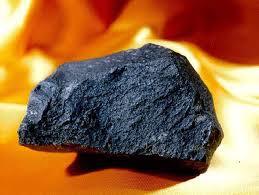
This rock was found near the mouth of a volcano. What type of rock is this?
Sedimentary
Igneous
Metamorphic


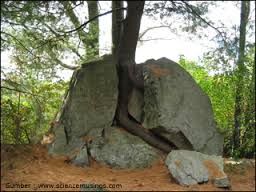
Sea caves are coastal landform made by
Erosion
Deposition
Beaches are form by
Erosion
Deposition
All above
Huge pieces of lithosphere that slowly move on the asthenosphere and consist of the crust and the rigid, uppermost part of the mantle
tectonic plates
North American Plate
Eurasian Plate
African Plate

Is there a pattern to the locations of earthquakes and volcanoes around the globe?
No, earthquakes and volcanoes are random.
Yes, earthquakes and volcanoes usually occur near the boundaries of tectonic plates.
yes, earthquakes and volcanoes usually occur in the middle of tectonic plates.
No, earthquakes and volcanoes usually occur under water.
What is an example of a convection current?
Touching a hot spoon that was in a soup bowl.
Feeling the suns rays on a nice summer day.
Touching an iron skillet after cooking and feeling the heat.
Movement of gas in a hot air balloon.
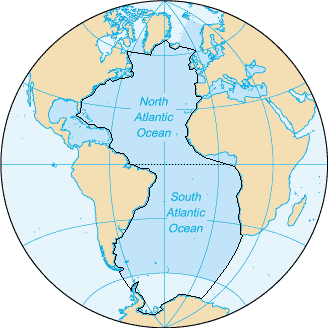

The process of ___________ continually adds new crust to the ocean floor along both sides of the mid-ocean ridge.
plate tectonics
seafloor spreading
continental drift
convection


____________ is an important material from Earth that living things need.
natural resources
renewable resources
non renewable resources
conservation
_______ is a resource that can be replaced in a fairly short time
natural resources
renewable resources
nonrenewable resources
conservation
_______a resource that cannot be replace once it is used
natural resources
renewable resources
nonrenewable resources
conservation
____is an attempt to preserve or protect an environment from harmful changes.
natural resources
renewable resources
nonrenewable resources
conservation
What is a natural resource?
trees
desk
pencil
What is a renewable resource?
soil
chair
shoes
________ is a nonrenewable resource
coal
water
trees
What is global warming
the normal temperature fluctuations of Earth's climate cycle
the melting of the polar ice caps
the trend of increasing temperatures on Earth
the changes in Earth's biosphere that affect the atmosphere
1. What is one of the greatest threats to biodiversity on Earth?
habitat destruction
loss of drinking water
decrease in food supply
pollution


What type of thermal energy transfer is the illustration an example of?
Conduction
Convection
Radiation
Evaporation
A hot rock is dropped into a pail of cool water. Heat energy transferred from the rock to the water by
Conduction
Convection
Radiation
Evaporation
A crayon placed on a dark driveway in bright sunlight melted into a colorful puddle. What caused the crayon to melt?
Solar radiation heated the driveway and then heat transferred to the crayon by conduction.
Solar radiation heated the driveway and then heat transferred to the crayon by radiation.
Solar convection heated the driveway and then heat transferred to the crayon by radiation.
Solar convection heated the driveway and then heat transferred to the crayon by conduction.
What thermal energy transfer causes your skin to feel warm when it is in the sun on a summer day?
Conduction
Convection
Radiation
Evaporation
The higher the average kinetic energy the __________________
the higher the volume
the higher the mass
the higher the temperature
the higher the density
The Law of Conservation of Energy states:
Energy can created or destroyed but not transformed
Energy cannot be created or destroyed, it can only transformed
Energy can't be created, destroyed or transformed
Energy can be destroyed
What is a solid?
particles that are tightly compacted
particles that are not tightly compacted
what is a liquid?
a substance that flows freely but is of constant volume
a substance or matter in a state in which it will expand freely
firm and stable in shape
what is a gas?
a substance or matter in a state in which it will expand freely to fill the whole of a container
the basic unit of a chemical element
an atom or molecule with a net electric charge due to the loss or gain of one or more electrons.
_____ waves NEED a medium to travel.
Seismic
Light
Mechanical
Radio Waves are an example of _________ waves.
mechanical
electromagnetic
light
The distance in between two waves.
wave speed
frequency
wavelength
Frequency is always measured in _________
kilometers
Hertz
centimeters
the number of waves that pass a certain point.
wave speed
frequency

This is a high frequency wave. Which part of the wave is "B"
crest/peak
wavelength
trough

Look at this wave. "A" is which part of a wave?
Crest/Peak
Wave Speed
Resting Point


