
 Worksheets
PASS Weather Review 2019
Total questions: 64
Worksheet time: 1hrs 3mins
Name
Class
Date
1.

Air current that brings the weather to North America and Canada
a)
polar easterlies
b)
prevailing westerlies
c)
trade winds
d)
doldrums
2.

Coriolis effect
a)
caused by Earth's rotation
b)
caused by Earth's revolution
c)
caused by Earth's tilt
d)
caused by Earth's winds
3.

Some Solar radiation doesn't reach Earth because _____
a)
it is reflected off particles in the atmosphere
b)
it is absorbed by clouds and particles in the atmosphere
c)
it is reflected off clouds
d)
all are correct
4.
Source of all energy in our atmosphere
a)
ions
b)
water cycle
c)
The Moon
d)
The Sun
5.

Convection
a)
transfer of heat by flow
b)
transfer of heat by touch
c)
transfer of heat by waves and rays
d)
transfer of heat by wind
6.

Conduction
a)
transfer of energy by flow
b)
transfer of energy by touch
c)
transfer of energy by waves and rays
d)
transfer of energy by wind
7.

Trade winds
a)
steady winds from 60 to 90 degrees latitude north or south
b)
steady winds between 30 and 60 degrees north or south
c)
steady winds between 0 and 30
d)
uneven winds between 30 and 60 degrees north or south
8.
Heated air moves which direction
a)
up
b)
down
c)
right
d)
left
9.

These arrows represent what in Earth's atmosphere?
a)
convection
b)
conduction
c)
radiation
d)
winds
10.
What do we call the air and gasses that surround the earth?
a)
Atmosphere
b)
Troposphere
c)
Mesospherre
d)
Thermosphere
11.
What part of our atmosphere is where the ozone layer is?
a)
Stratosphere
b)
Troposphere
c)
Mesosphere
d)
Thermosphere
12.
What is the part of our atmosphere that protects us from comets because it acts like a shield. It is also very cold. There are actually ice particles in the air.
a)
Atmosphere
b)
Stratosphere
c)
Mesosphere
d)
Thermosphere
13.
In which part of the atmosphere will we find a tree growing?
a)
Thermosphere
b)
Stratosphere
c)
Mesosphere
d)
Troposphere
14.
What part of our atmosphere is the coldest?
a)
Mesosphere
b)
Troposphere
c)
Thermosphere
d)
Stratosphere
15.
What is the order of the atmospheres from closest to earth to the farthest away from earth?
a)
Troposphere, Stratosphere, Mesosphere, Thermosphere
b)
Stratosphere, Troposphere, Thermosphere, Mesosphere
c)
Troposphere, Mesosphere, Thermosphere, Stratosphere,
d)
Atmosphere, Mesosphere, Troposphere, Thermosphere
16.

What does a barometer do?
a)
measures air pressure
b)
measures temperature
c)
measures humidity
d)
measures length
17.
How does air pressure change as you climb a mountain?
a)
it decreases (less air pressure)
b)
it increases (more air pressure)
c)
stays the same
d)
the temperature gets warmer
18.
Elevation, or how high up you are, is also called ...
a)
altitude
b)
atmosphere
c)
height
d)
decreasing
19.
What gas makes up the majority of the atmosphere?
a)
oxygen
b)
nitrogen
c)
water vapor
d)
carbon dioxide
20.
What layer of the atmosphere is closest to outer space?
a)
mesosphere
b)
exosphere
c)
troposphere
d)
stratosphere
21.
In what layer of the atmosphere would you find clouds and weather?
a)
troposphere
b)
stratosphere
c)
mesosphere
d)
thermosphere
22.

This weather instrument is a...
a)
thermometer
b)
wind vane
c)
anemometer
d)
rain gauge
23.

What does this tool measure?
a)
Wind speed
b)
Wind direction
c)
Air pressure
d)
Temperature
24.

What is the name of this tool?
a)
Barometer
b)
Hygrometer
c)
Rain Gauge
d)
Thermometer
25.

This weather instrument is a...
a)
anemometer
b)
barometer
c)
wind vane
d)
thermometer
26.

This weather instrument is an...
a)
wind vane
b)
anemometer
c)
barometer
d)
thermometer
27.
The weather forecast tomorrow says there will be a 15 mph northeast wind and a high temperature of 52 degrees. What three instruments will a meteorologist use to make this prediction?
a)
anemometer, wind vane, thermometer
b)
barometer, hygrometer, wind vane
c)
thermometer, satellite image, hygrometer
d)
wind vane, satellite image, barometer
28.
Which tool measures humidity or the amount of moisture in the air?
a)
wind vane
b)
barometer
c)
anemometer
d)
hygrometer
29.
Temperature is measured in...
a)
degrees
b)
inches
c)
centimeters
d)
feet
30.
A high pressure system means we might have this weather.
a)
Snow blizzard
b)
Sunny and dry
c)
Rain storm
d)
Tornado
31.
A low pressure system means we might have this weather.
a)
Sunny
b)
A clear sky
c)
Dry day
d)
Stormy or wet
32.
Clouds are made up of tiny drops of ______ or ice. The moisture in the cloud affects the weather.
a)
dust
b)
water
c)
cloud particles
d)
precipitation
33.
They are highest clouds in the sky. They look curly, white and feathery. Usually mean good weather.
a)
Cumulus
b)
Cumulonimbus
c)
Cirrus
d)
Stratus
34.
This is sometimes called a thunderhead cloud. It looks very tall like mountains and heavy rain comes from it.
a)
Cumulus
b)
Cirrus
c)
Stratus
d)
Cumulonimbus
35.
They are low in the sky and look soft and fluffy.
a)
Cirrus
b)
Cumulonimbus
c)
Cumulus
d)
Stratus
36.
Low clouds (like fog), that are thick, cover the sky, and block the sun. Usually bring continuous precipitation (rain or snow).
a)
stratus
b)
cumulus
c)
cirrus
d)
nimbo
37.

what type of cloud is shown?
a)
cumulus
b)
cirrus
c)
stratus
38.

what type of cloud is shown?
a)
cumulus
b)
cirrus
c)
stratus
39.
During which part of the water cycle does a cloud form?
a)
Evaporation
b)
Precipitation
c)
condensation
d)
Run off
40.

Identify this cloud type (in the pic behind the question)
a)
cirrus
b)
cumulus
c)
stratus
d)
cumulonimbus
41.
The amount of water vapor in the atmosphere compared to how much it could hold.
a)
Saturation
b)
Vaporicity
c)
Humidity
d)
Relative Humidity
42.
What is an example of gas in the atmosphere?
a)
Ice Crystals
b)
Water Droplets
c)
Water Vapor
43.
What is an example of a liquid in the atmosphere?
a)
Ice Crystals
b)
Water Droplets
c)
Water Vapor
44.
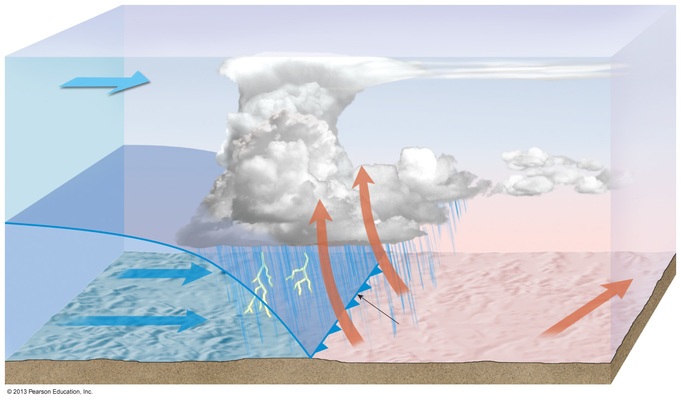
What type of storm front is this?
a)
warm front
b)
cold front
c)
stationary front
d)
occluded front
45.
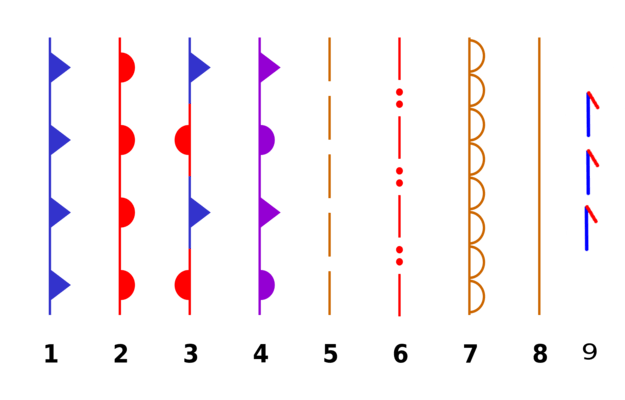
What does symbol # 3 mean?
a)
stationary front
b)
occluded front
c)
warm front
d)
cold front
46.
A front is
a)
where warm air is cooling at earth's surface
b)
a line where hot and cold air are separating
c)
a line where two different air masses meet
d)
where cold air is rising and forming rain clouds
47.
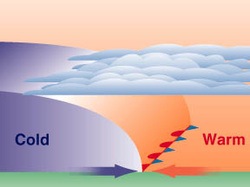
Which type of front is pictured?
a)
Cold front
b)
Warm front
c)
Occluded front
d)
Stationary front
48.
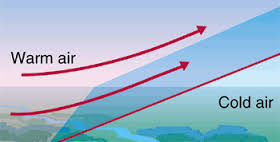
Which type of front is pictured?
a)
Cold front
b)
Warm front
c)
Occluded front
d)
Stationary front
49.

What symbol is this?
a)
warm front
b)
cold front
c)
stationary front
d)
occluded front
50.

What type of air mass is the highlighted arrow?
a)
cold/dry
b)
cold/humid
c)
warm/dry
d)
warm/humid
51.
What characteristics are used to classify air masses?
a)
temperature and humidity
b)
pressure and temperature
c)
latitude and longitude
d)
wind speed and location
52.
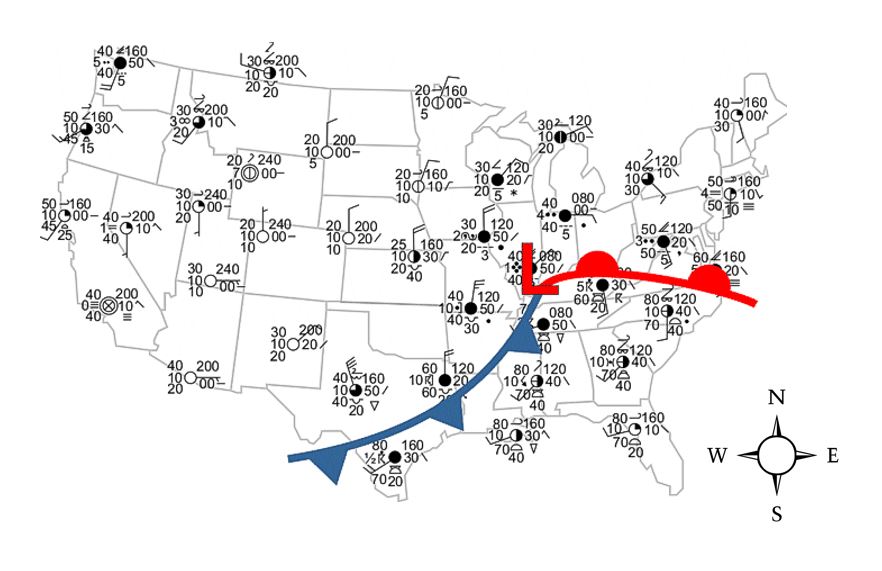
What direction is the cold front moving on the map?
a)
Southwest
b)
Northwest
c)
Southeast
d)
Northeast
53.
What direction is the warm front moving on the map?
a)
North
b)
South
c)
East
d)
West
54.

name this symbol
a)
warm front
b)
cold front
c)
stationary front
d)
occluded front
55.

What does this symbol indicate on a weather map?
a)
High pressure system
b)
Low pressure system
c)
Cold front
d)
Warm front
56.
A cold front moving into an area can bring this type of weather...
a)
Warmer Temperatures, Clear Skies
b)
Colder Temperatures, Clear Skies
c)
Warmer Temperatures, Clouds
d)
Colder Temperatures, Clouds, and Precipitation
57.

What does this symbol on a weather map indicate?
a)
High pressure system
b)
Low pressure system
c)
Cold Front
d)
Warm Front
58.

What does this symbol on a weather map indicate?
a)
High pressure system
b)
Low pressure system
c)
Cold front
d)
Warm front
59.
These are long narrow tubes of air and moves the weather across the country from west to east
a)
Wind
b)
Jet stream
c)
Monsoon
d)
Westerlies
60.
These are the winds that blow from the east to the west
a)
westerlies
b)
easterlies
c)
trade winds
d)
jet stream
61.

Air travels in patterns around the Earth called
a)
Global Winds
b)
Local Winds
c)
Ocean Winds
d)
Blowing Winds
62.

Water travels in definite paths around the ocean called
a)
Highways
b)
Currents
c)
Rivers
d)
Streams
63.

The warm, strong current off the coast of Florida is the
a)
Gulf Stream
b)
California Current
c)
North Equatorial Current
d)
Brazil Current
64.

Currents release heat energy and this can affect an area's
a)
Oxygen
b)
Climate
c)
Upwelling
d)
Sunlight
100 %

