
 Worksheets
Body Systems Assessment
Total questions: 60
Worksheet time: 46mins
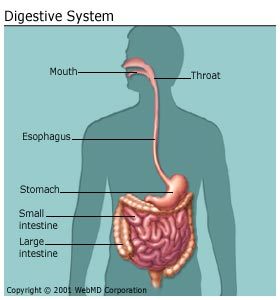

The stomach is an example of an:
organ
organ system
organism
tissue

Structures in a cell that have specialized jobs.
Similar concept to organs for the human body.
Tissue
Molecule
Atom
Organelles

Groups of cells with similar functions.
Organs
Molecules
Tissues
Organelles

Group of tissues with similar functions.
Organelles
Cells
Tissues
Organs

This picture represents which of the levels of organization?
tissue
organism
organ
organ system

This picture represents which of the levels of organization?
cell
organ
organ system
organism
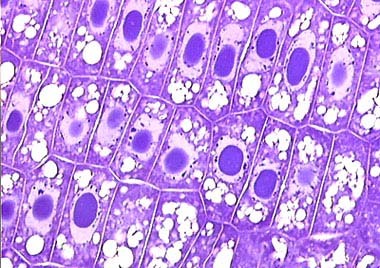
What is the site of gas exchange?
alveoli
bronchus
nose
trachea
What is the process of breathing in also called?
Respiration
Exhalation
Combustion
Inhalation
What is the process of breathing out also called?
Respiration
Exhalation
Combustion
Inhalation
What are the tiny air sacs on the surface of the lungs?
Alveolus
Capillaries
A-Levels
Alveoli

The diagram shows a section through the human thorax. Which part is the ribcage?
A
B
C
D

What occurs during inhalation?
A
B
C
D
Your classmate is late for the biology test and she runs op three stairs to the biology classroom. When she arrives, you notice that her breathing frequency is increased. At the same time, you note that her depth of breathing (how much she takes in with each breath) is:
Greater than normal
Less than normal
Unchanged
An experiment investigates the composition of the air a person breathes in and out. The composition of the air a test person breathes in is:
79% nitrogen
21% oxygen
0,04% carbon dioxide.
What will be the composition of the air this test person breathes out?
75% nitrogen, 21% oxygen, 4% carbon dioxide
79% nitrogen, 0% oxygen, 21% carbon dioxide
79% nitrogen, 16% oxygen, 4% carbon dioxide
83% nitrogen, 16% oxygen, 0.04% carbon dioxide
The large muscle that contracts and relaxes and moves air in and out of the lungs.
epiglottis
alveoli
diaphragm
trachea
When you exhale, the diaphragm
moves upwards
moves downwards
flattens
none of the above

Blood cells are produced in the bone marrow found in long bones.

Which life process is the skeleton the most important for?
Movement
Respiration
Excretion
Nutrition
Which type of joint gives you the largest range of motion?
Pivot joint
Ball-and-socket joint
Hinge joint
Gliding joint
What might happen if you snapped or tore one of your ligaments?
Your joints would not be able to move
Your bones would be in danger of breaking
Your joints might slide out of place easily
You would become double-jointed
A disease called osteoarthritis occurs when the cartilage between joints wears away. What can you infer about osteoarthritis?
It prevents joints from moving smoothly
It causes joints to dislocate easily
It causes bones to become more brittle
It reduces joints' range of motion
The main purpose of synovial fluid is:
Keeping bones moist
Lubrication
Strengthening tendons and cartilage
Protecting the spinal cord

Where can you find this joint?
Between femur and tibia
Between humerus and ulna
Between pelvic girdle and femur
Between carpals

What is the name of this joint?
Ball and socket joint
Hinge joint
Fixed joint
Slightly movable joint

What is the slippery surface that cover the bones?
synovial membrane
synovial fluid
ligament
cartilage

What muscle is the arrow pointing toward?
biceps
traps
pecs
triceps

What connects bone to bone?
Tendon
Ligament
Filament
Cartilage
Heart
Heart
Muscles you cannot control
Voluntary
Involuntary
Strain
Sprain

How does the heart work?
It pumps blood first to the lungs, back to the heart and then around the rest of the body.
It pumps blood first to the rest of the body, back to the lungs and then to the heart.
It pumps blood around the rest of the body, back to the heart and then to the lungs,


As the blood reaches the lungs, what is removed from the blood?
oxygen
carbon dioxide
red blood cells
white blood cells
Arteries carry oxygen rich blood away from the heart.
True
False
Veins carry oxygen poor blood back to the heart.
False
True

State the general relationship between exercise and heart rate in humans.
If a person exercises, then their heart rate will not change
If a person exercises, then their heart rate will increase
If a person exercises, then their heart rate will decrease
Person exercising and heart rate are not related
Alveoli are covered with a network of find blood vessels called
(a)
What are we trying to find out when investigating rate of breathing?
The amount of oxygen in the air
The speed of our breathing
The total energy our body produced
The energy used up from physical activities
What is the proper method when investigating rate of breathing?
Count the number of breath we take in two minutes
Count the number of breath we take in two hours
Measure the amount of oxygen we breathe in after one minute
Measure the amount of carbon dioxide we breathe out after one minute

Four students are investigating their rate of breathing. Why did they take 4 readings instead of only using 1 reading?
To check that everything is correct
To make the data more accurate
To calculate the average reading

What is the scientific term for the tube that is commonly known as your wind pipe?
esophogus
bronchi
trachea
alveoli
Which among them is not a blood vessel
Artery
Vein
Nerves
Capillaries
Which of the following options is correct for the circulation of deoxygenated blood
body - left atrium- left ventricle- lungs
lungs - left atrium - left ventricle - body
body - right atrium - right ventricle- lungs
lungs - right atrium - right ventricle - body
What is the function of the nervous system?
to control and coordinate body functions and systems.
to protect the body from harm.
to identify pain and begin healing.
to break down food.
Select all of the organs of the nervous system:
Brain
Heart
Spinal Cord
Nerves
Stomach
Which BEST describes the function of the skeletal system?
A. It transports oxygen to cells and tissues.
B. It gives shape and support to the human body.
C. It takes in and breaks down all necessary nutrients for the body.
In which system of the human body does the heart belong?
A. skeletal system
B. respiratory system
C. circulatory system
D. Nervous System
Which are parts of the digestive system?
A. mouth, lungs
B. mouth, teeth
C. mouth, brain
What is the function of the digestive system?
It transports blood and oxygen to your cells
It breaks down food so the nutrients can be absorbed by your body
It helps you breathe by taking in oxygen and transporting carbon dioxide out of your body
It helps you move

